What should I do now?
Call 911
Call 911 for new or unexplained chest pressure that persists or returns, severe trouble breathing, collapse without normal recovery, or sudden face/arm weakness or trouble speaking. Do not drive yourself.
Contact your care team
Unexplained fainting needs assessment. Fainting during exercise, with chest symptoms, or with known heart disease can require urgent care.
Keep your care plan
Follow the safety and driving plan from your care team; record a witness account when available.
SECTION 5
How is fainting treated?
Treatment addresses the cause. A reflex or positional cause may improve with recognizing triggers, position changes, and a personalized fluid or medication plan.
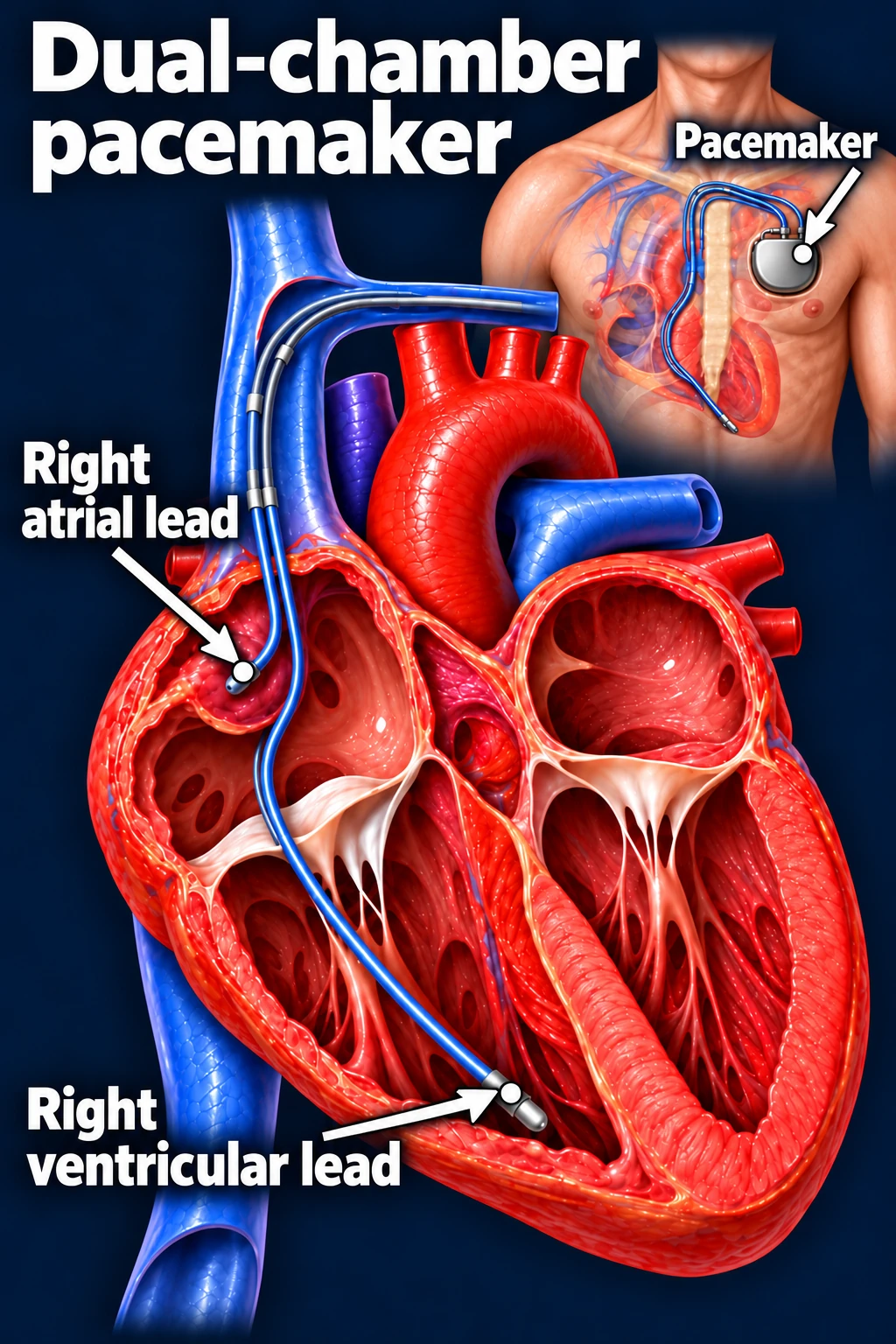
If a slow rhythm or heart block is responsible, a pacemaker may be appropriate. A dangerous fast rhythm may require different treatment. A pacemaker does not treat every cause of fainting.
Do not increase salt or fluid intake on your own if you have heart failure or kidney disease. Your clinician should also discuss driving and activity safety.
Updated October 2026. Educational information; your own care plan may differ. Medical illustrations are simplified examples for teaching.