PATIENT EDUCATION · THE SIMPLE EXPLANATION
Fainting and near fainting, made clear.
A few pictures. Short explanations. Start here, then explore the full guide when you’re ready.
01 · FAINTING AND NEAR FAINTING
Why does fainting happen?
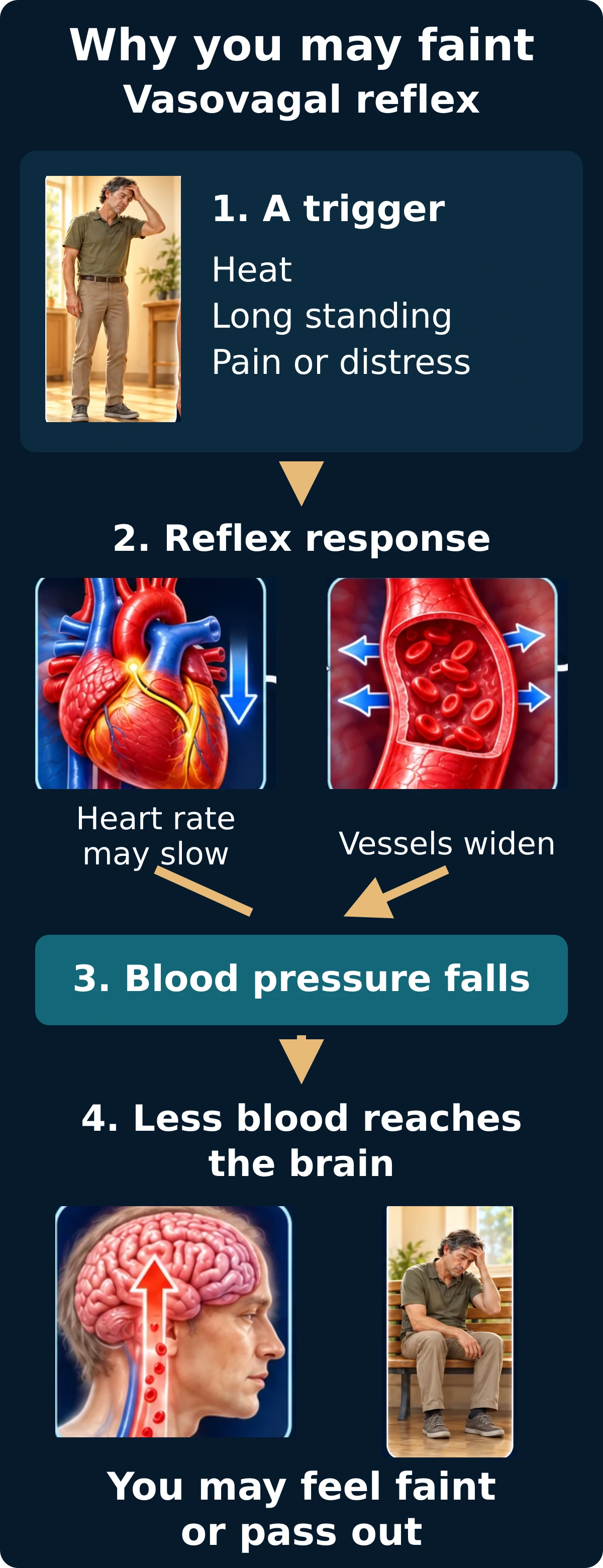
Fainting is a brief loss of consciousness from reduced blood flow to the brain. A reflex may lower blood pressure and sometimes slow the pulse.
Unexplained fainting needs medical assessment, even if you recover quickly.
02 · FAINTING AND NEAR FAINTING
What other causes are possible?
 Open full-size image →
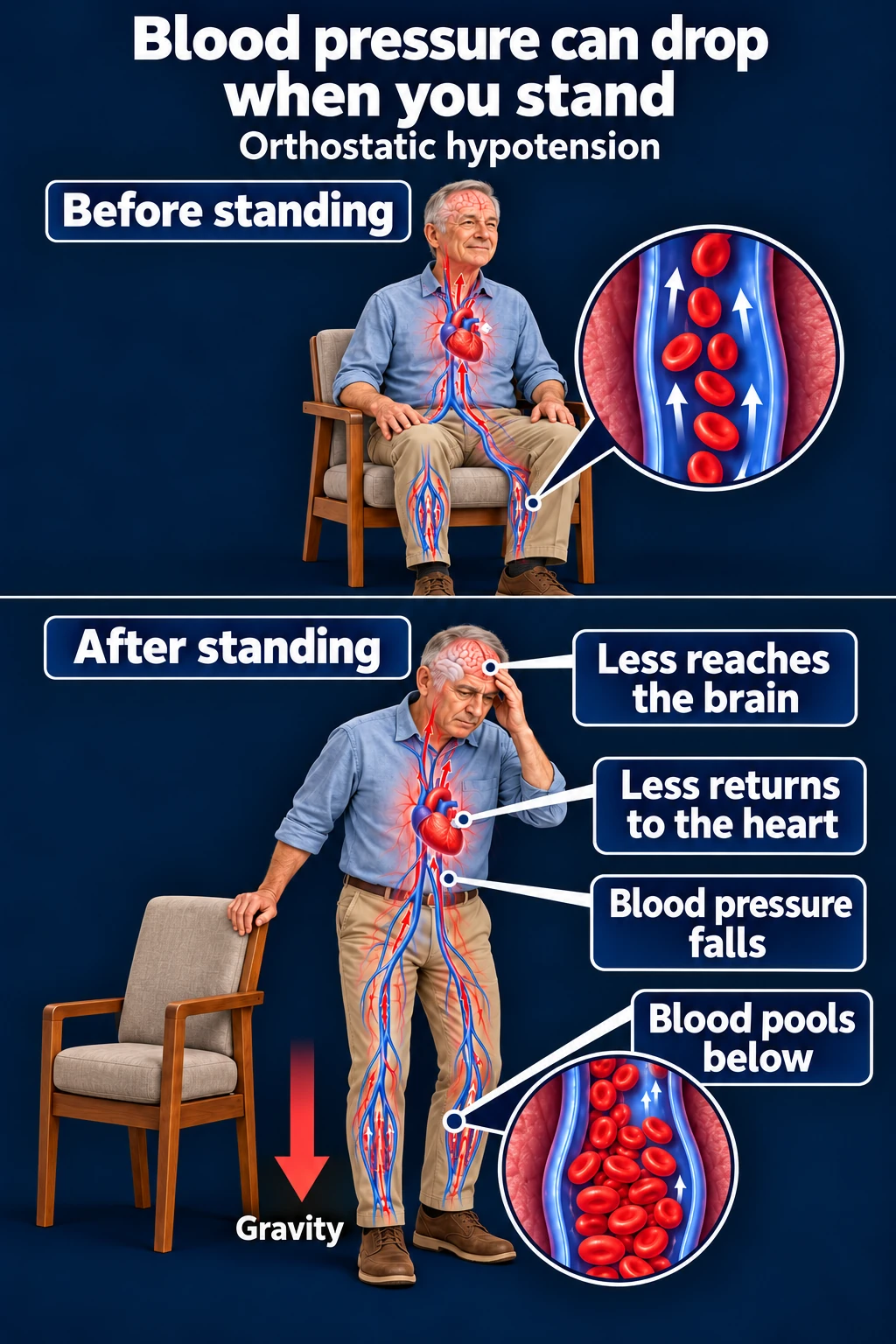
Blood pressure may drop after standing. A slow or fast rhythm can also reduce blood flow. Your symptoms and circumstances help guide the evaluation.
Fainting during exercise or with chest symptoms or known heart disease can require urgent care.
03 · FAINTING AND NEAR FAINTING
How can we find the cause?
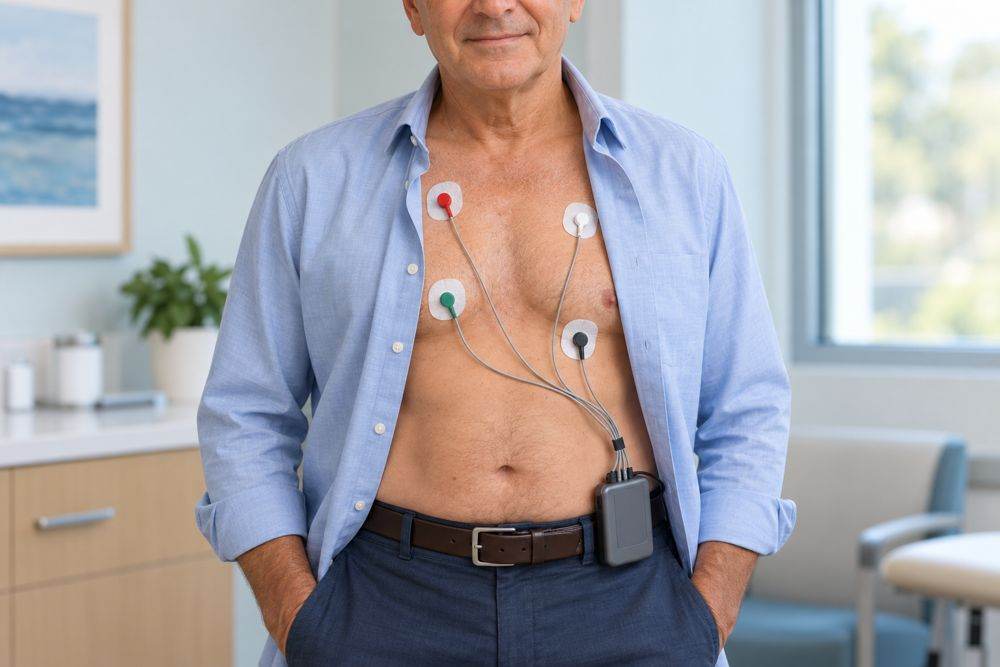
An EKG, heart monitor, and selected other tests can help. A witness account, medicine list, and description of warning symptoms are useful.
Follow your care team’s driving and safety restrictions. A monitor does not replace emergency care.
Updated October 2026. Educational information; your own care plan may differ. Medical illustrations are simplified examples for teaching.