What should I do now?
Call 911
Call 911 for new or unexplained chest pressure that persists or returns, severe trouble breathing, collapse without normal recovery, or sudden face/arm weakness or trouble speaking. Do not drive yourself.
Contact your care team
Unexplained fainting needs assessment. Fainting during exercise, with chest symptoms, or with known heart disease can require urgent care.
Keep your care plan
Follow the safety and driving plan from your care team; record a witness account when available.
SECTION 4
How is fainting evaluated?
The event history, physical exam, blood pressure, pulse, and EKG are important first steps. A witness’s description can be especially helpful.
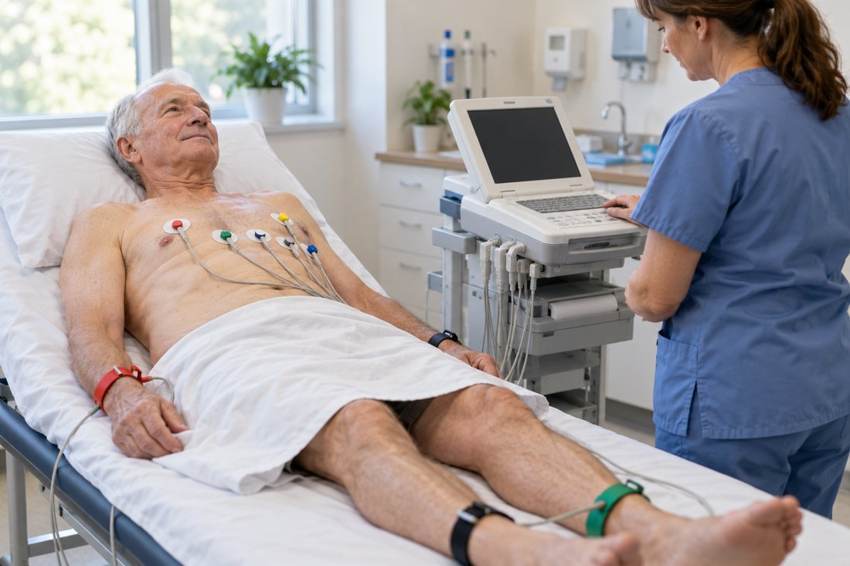
Monitoring and selected tests
A wearable monitor or an implantable loop recorder may be needed when episodes are intermittent. An echo assesses suspected structural heart disease. A tilt-table test may evaluate certain reflex or positional causes.
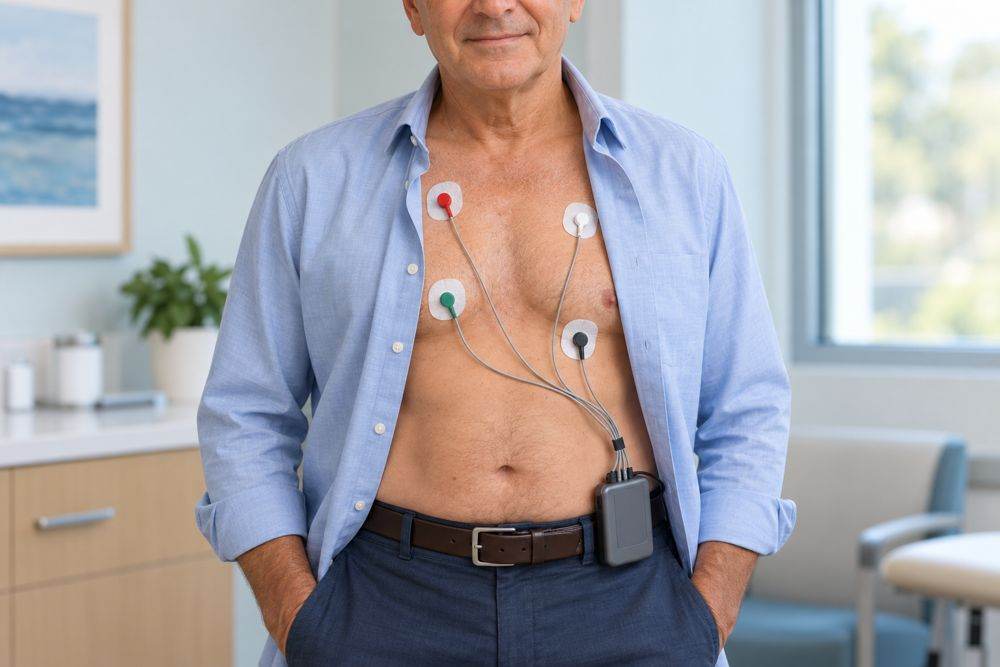
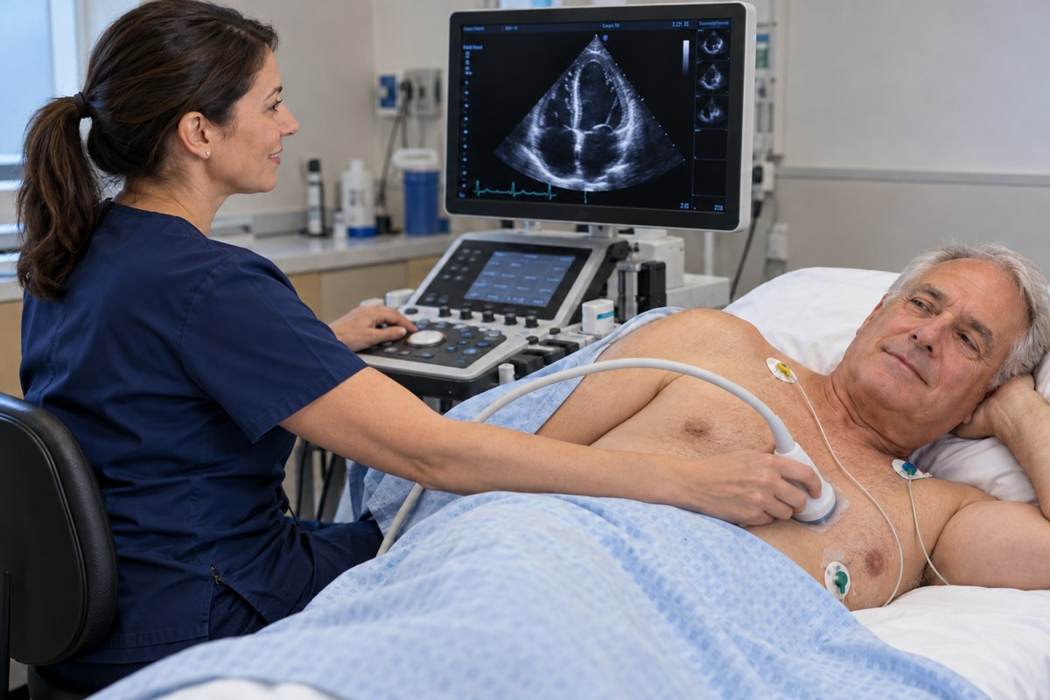
Testing is selected from the history and exam; everyone does not need brain scans or every heart test.
Updated October 2026. Educational information; your own care plan may differ. Medical illustrations are simplified examples for teaching.