What should I do now?
Call 911
Call 911 for new or unexplained chest pressure that persists or returns, severe trouble breathing, collapse without normal recovery, or sudden face/arm weakness or trouble speaking. Do not drive yourself.
Contact your care team
Unexplained fainting needs assessment. Fainting during exercise, with chest symptoms, or with known heart disease can require urgent care.
Keep your care plan
Follow the safety and driving plan from your care team; record a witness account when available.
SECTION 2
What can cause fainting?
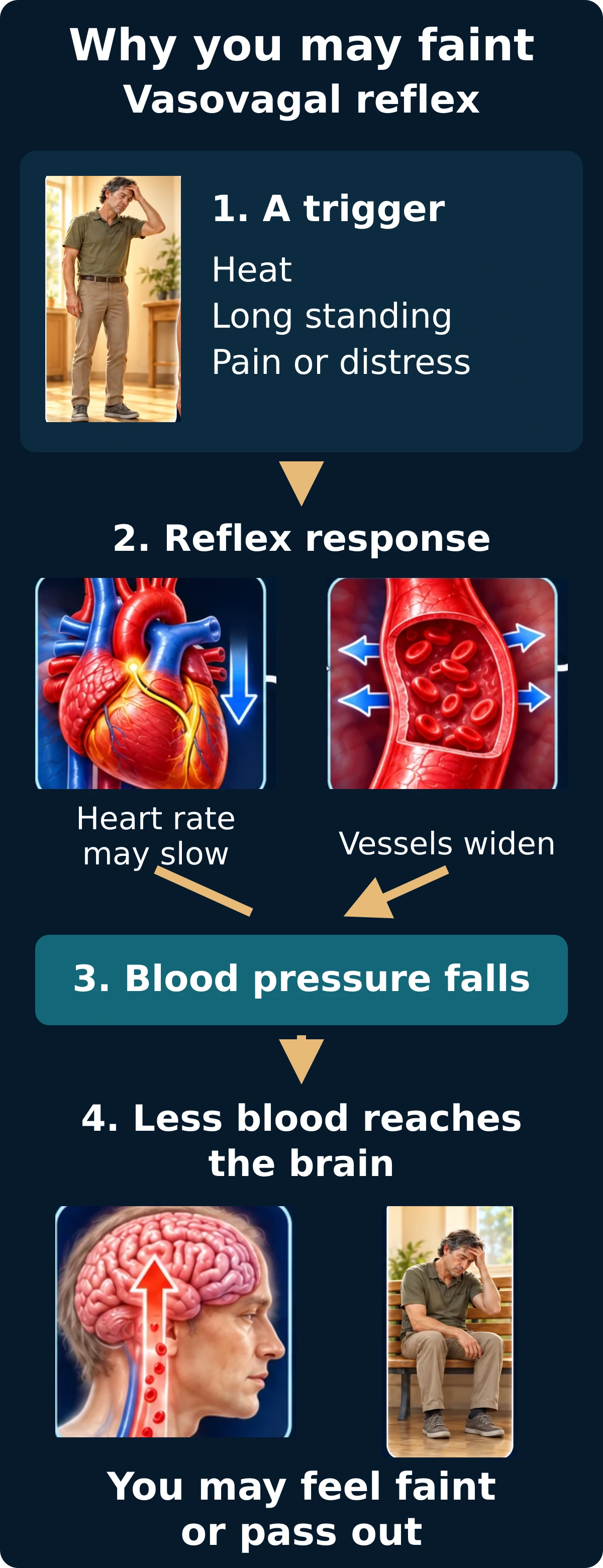
Reflex or vasovagal fainting
Pain, emotional distress, heat, or prolonged standing may trigger a reflex that lowers blood pressure and sometimes slows the pulse.
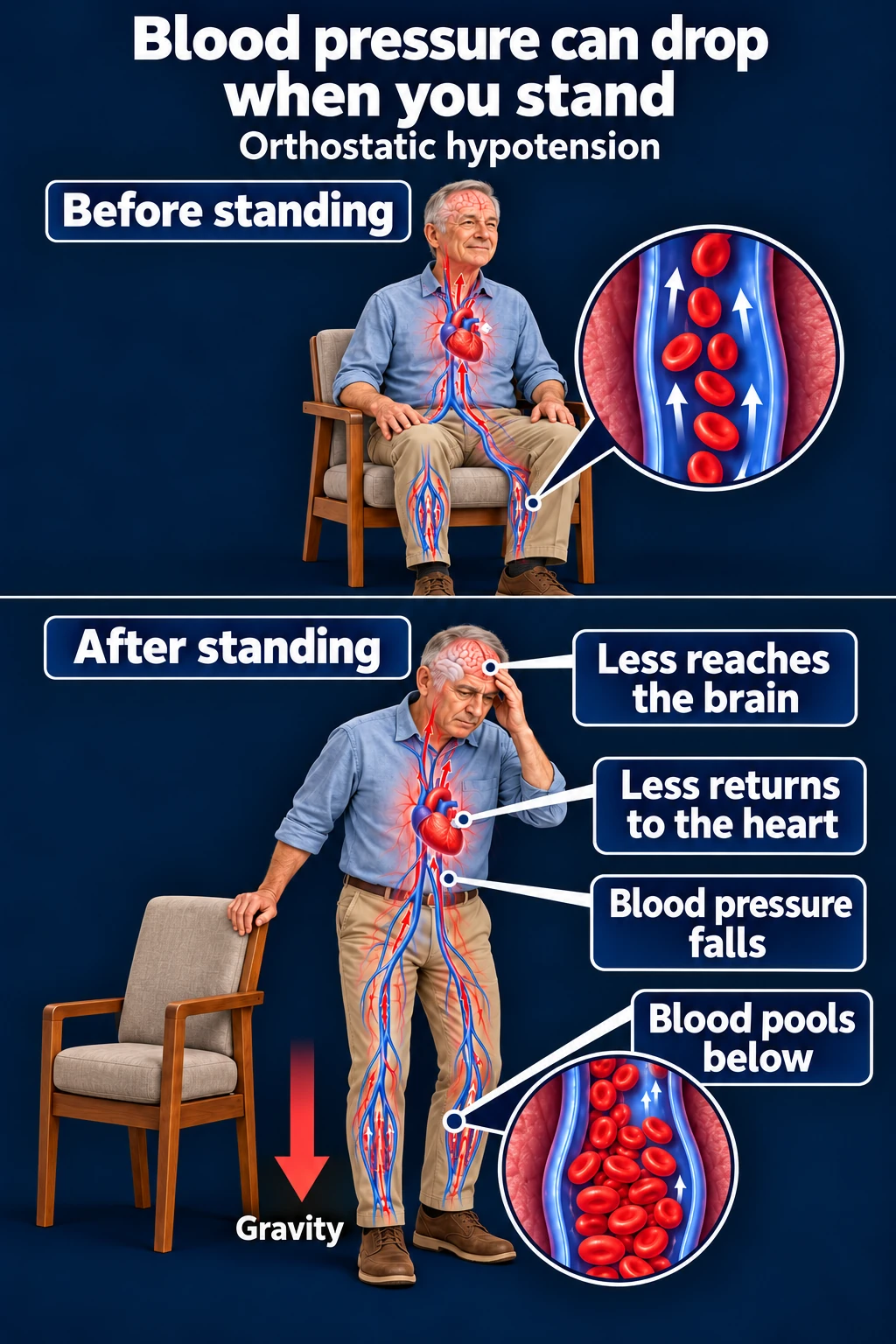
A blood pressure drop on standing
Dehydration, medicines, or problems regulating blood pressure may contribute.
Heart causes
Slow rhythms, heart block, rapid dangerous rhythms, or a severe valve problem may reduce blood flow to the brain.
A slow rhythm or blocked electrical signal is one possible heart-related cause of fainting.
EKG examples: rhythms that can cause fainting
Very slow beats, long pauses, or very fast ventricular rhythms can reduce blood flow to the brain. These simplified strips show the differences.
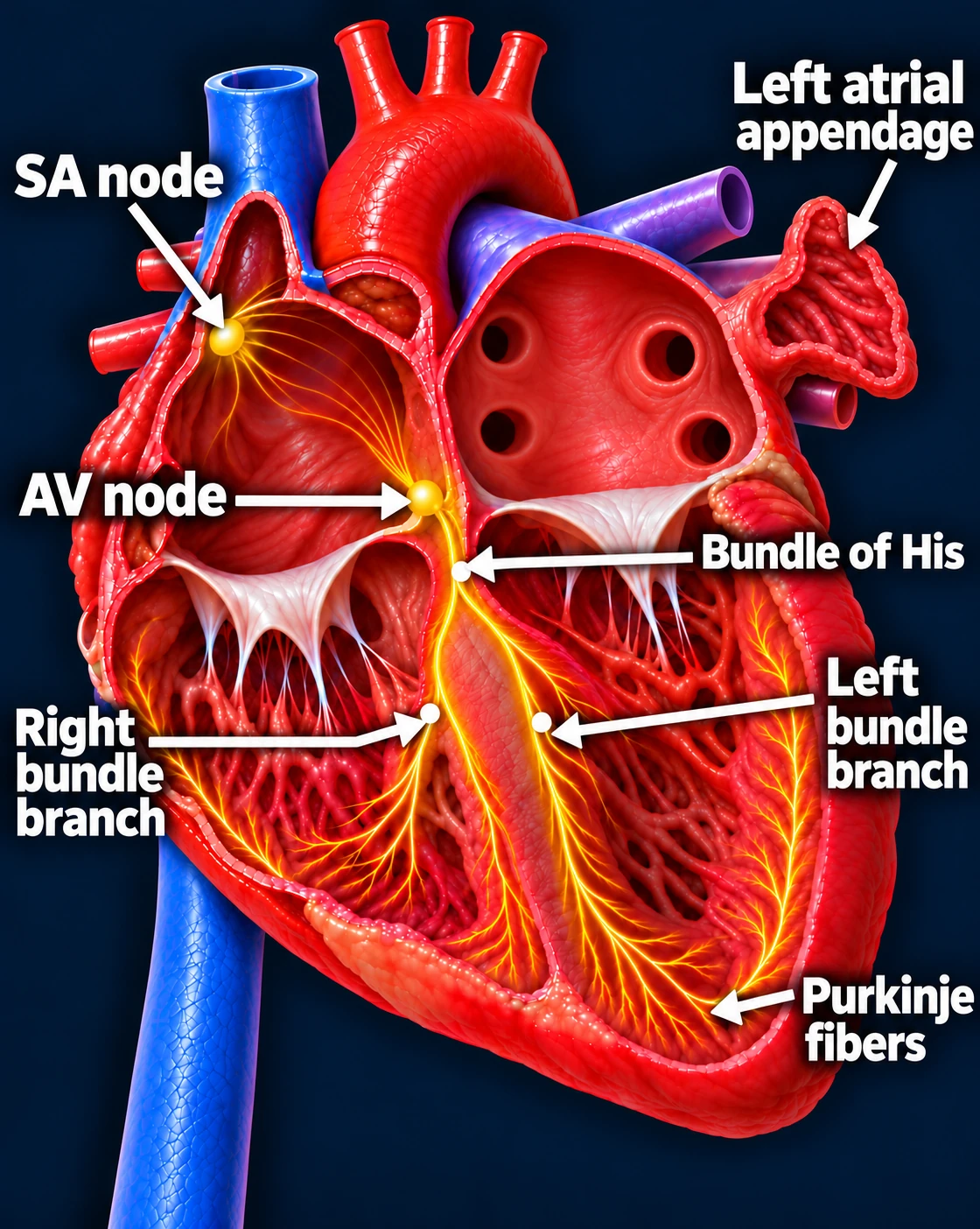
Follow one normal heartbeat
SA node → Atria → AV node → Ventricles
- The SA node starts the signal. The heart’s natural pacemaker in the right upper chamber begins each normal sinus beat.
- The signal spreads through both atria. The upper chambers contract, moving blood into the ventricles.
- The AV node briefly delays the signal. This pause gives the ventricles time to finish filling.
- The signal activates the ventricles. It travels through the bundle of His, right and left bundle branches, and Purkinje fibers. The lower chambers contract, pumping blood to the lungs and body.
The atria contract first; the ventricles follow. This organized sequence produces a coordinated heartbeat.
Normal sinus rhythm — comparison
A regular heartbeat for comparison. The tall spikes represent the electrical activation of the lower chambers.
A very slow heartbeat — sinus bradycardia
Longer gaps between beats. A very slow rate can cause symptoms when the heart cannot maintain enough blood flow. Some slow rates are normal and cause no symptoms.
A long pause — sinus pause
The normal pacemaker briefly stops producing signals. A long pause may cause sudden lightheadedness or fainting.
Blocked signals — complete heart block
The small waves from the upper chambers continue, but their signals do not reach the lower chambers. A slower backup rhythm runs independently and may not provide enough blood flow.
A dangerous fast rhythm — ventricular tachycardia
Rapid, wide beats arise from the lower chambers. The heart may not fill or pump effectively, causing near fainting, fainting, or cardiac arrest.
Illustrative 8-second rhythm strips, not patient recordings or a diagnostic guide. Symptoms must be matched to the rhythm. Blood pressure can also fall while the EKG remains normal.
Sources: American Heart Association: Fainting · Heart block and sinus node problems
Other conditions, including seizures, can resemble fainting. Your clinician uses the event details to distinguish them.
Updated October 2026. Educational information; your own care plan may differ. Medical illustrations are simplified examples for teaching.