What should I do now?
Call 911
Call 911 for chest pressure, severe trouble breathing, fainting during a racing heartbeat, or stroke signs such as face drooping, arm weakness, or trouble speaking. Do not drive yourself.
Contact your care team
Contact your care team for new or longer episodes, worsening fatigue, reduced activity, medication side effects, or bleeding concerns.
Keep your care plan
Keep your treatment and follow-up plan. Bring questions, readings, and your medication list.
03 / CONFIRM THE DIAGNOSIS
3. How is AFib diagnosed?
AFib is diagnosed by recording the heart’s electrical activity with an electrocardiogram (EKG or ECG) or an electrical rhythm strip. Your healthcare professional reviews the recording to confirm that the rhythm is AFib.
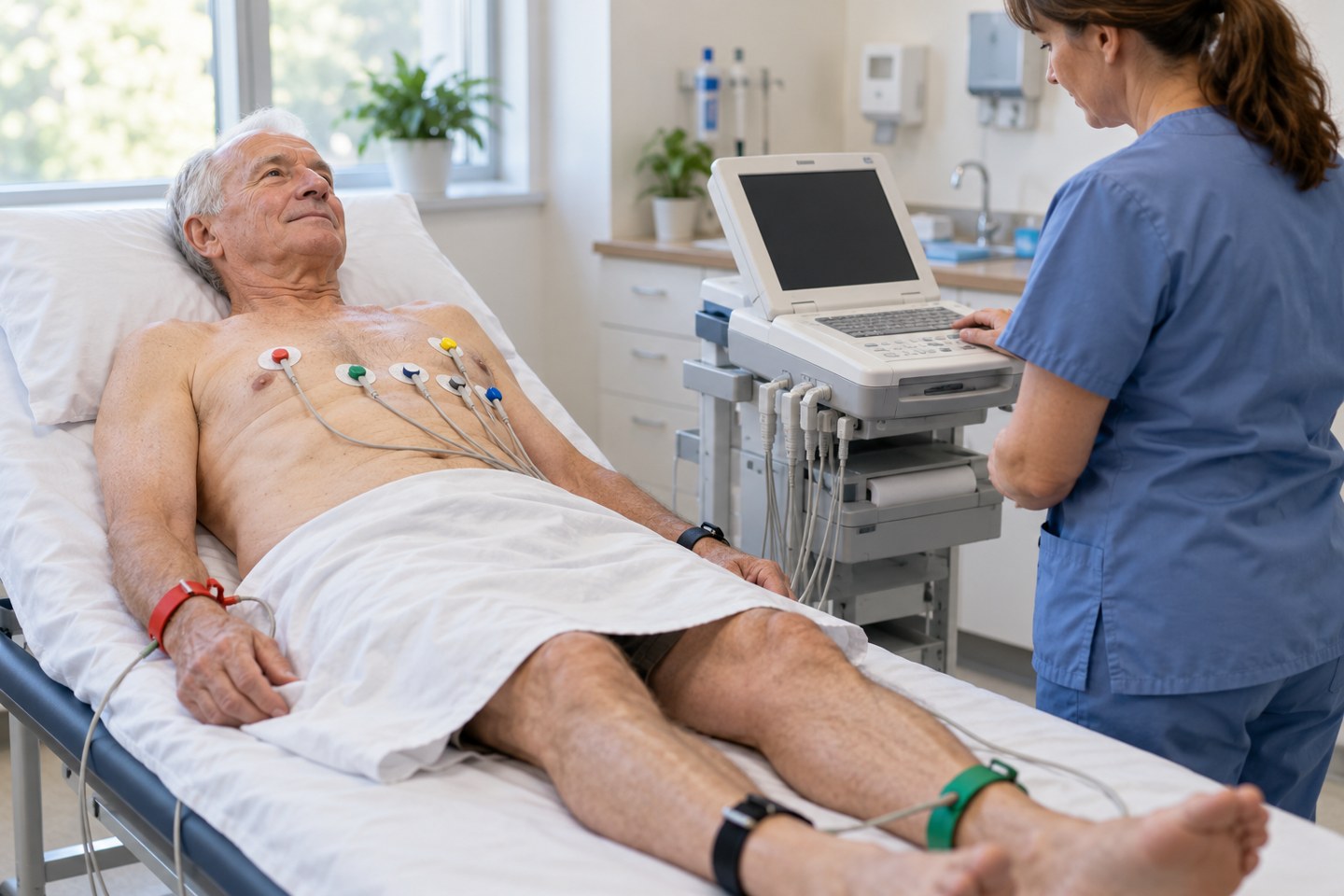
Because AFib can come and go, a brief office EKG may not capture an episode. Your doctor may recommend a wearable heart monitor that records your rhythm over several days or weeks.
Can a smartwatch diagnose AFib?
Some smartwatches can detect an irregular pulse, and certain models can also record a single-lead EKG rhythm strip. A clear EKG recording from a compatible watch can help confirm AFib when reviewed by your healthcare professional.
An “irregular rhythm” notification by itself does not confirm AFib. If your watch provides an alert or captures a recording, save it and share it with your care team.
What about a blood pressure cuff or finger oxygen monitor?
A home blood pressure cuff or finger pulse oximeter may alert you to an irregular pulse, but these devices cannot confirm AFib because they do not record the heart’s electrical activity. Extra beats and other rhythms can also cause an irregular pulse.
An irregular-pulse alert is a reason to investigate. An electrical rhythm recording is needed to confirm the diagnosis.
Updated October 2026. Educational information; your own care plan may differ.