SECTION 1
Your procedure day
This guide is for catheter ablation for AFib, atrial flutter, SVT, or premature beats. Your procedure team’s written instructions take priority because preparation and recovery can vary.
Before you arrive
- Confirm your arrival time and procedure location.
- Follow the fasting instructions provided by your procedure team.
- Follow your specific medication plan. Do not stop blood thinners, heart medicines, or diabetes medicines on your own.
- Arrange for an adult to drive you home and stay with you for the first 24 hours after sedation or anesthesia. Do not drive for 48 hours after the procedure.
- Bring identification, your medication list, and information about allergies. Leave valuables at home.
Checking in
Your team reviews your health history, medicines, allergies, and consent. A nurse checks your vital signs and places an IV. You may have blood tests or an EKG.
The groin area is cleaned and, if needed, hair is clipped.
Will I be asleep?
Your doctor will tell you whether your procedure will be performed with general anesthesia or moderate sedation. With general anesthesia, you are asleep. With moderate sedation, you may be relaxed and sleepy but sometimes aware of your surroundings.
During the ablation
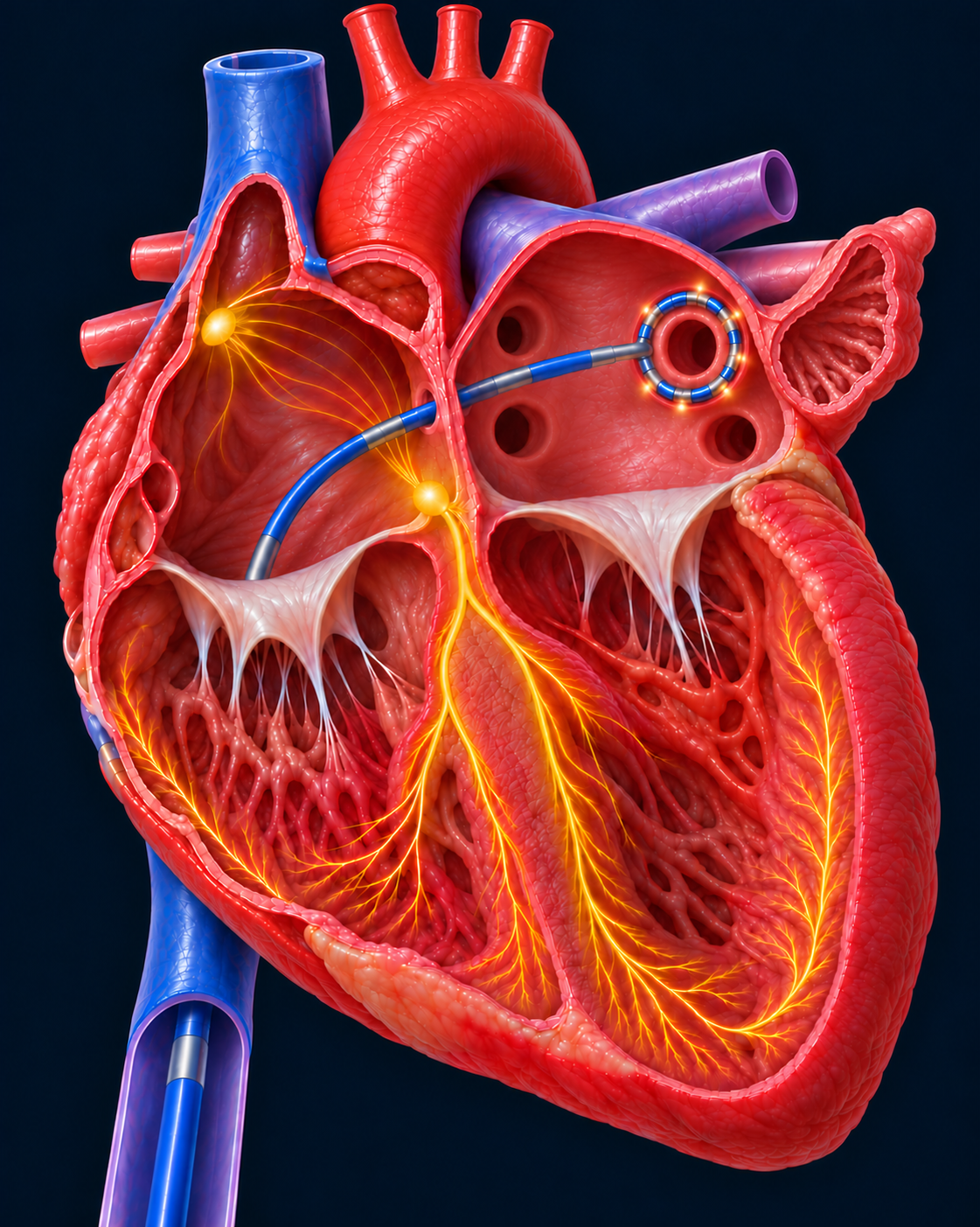
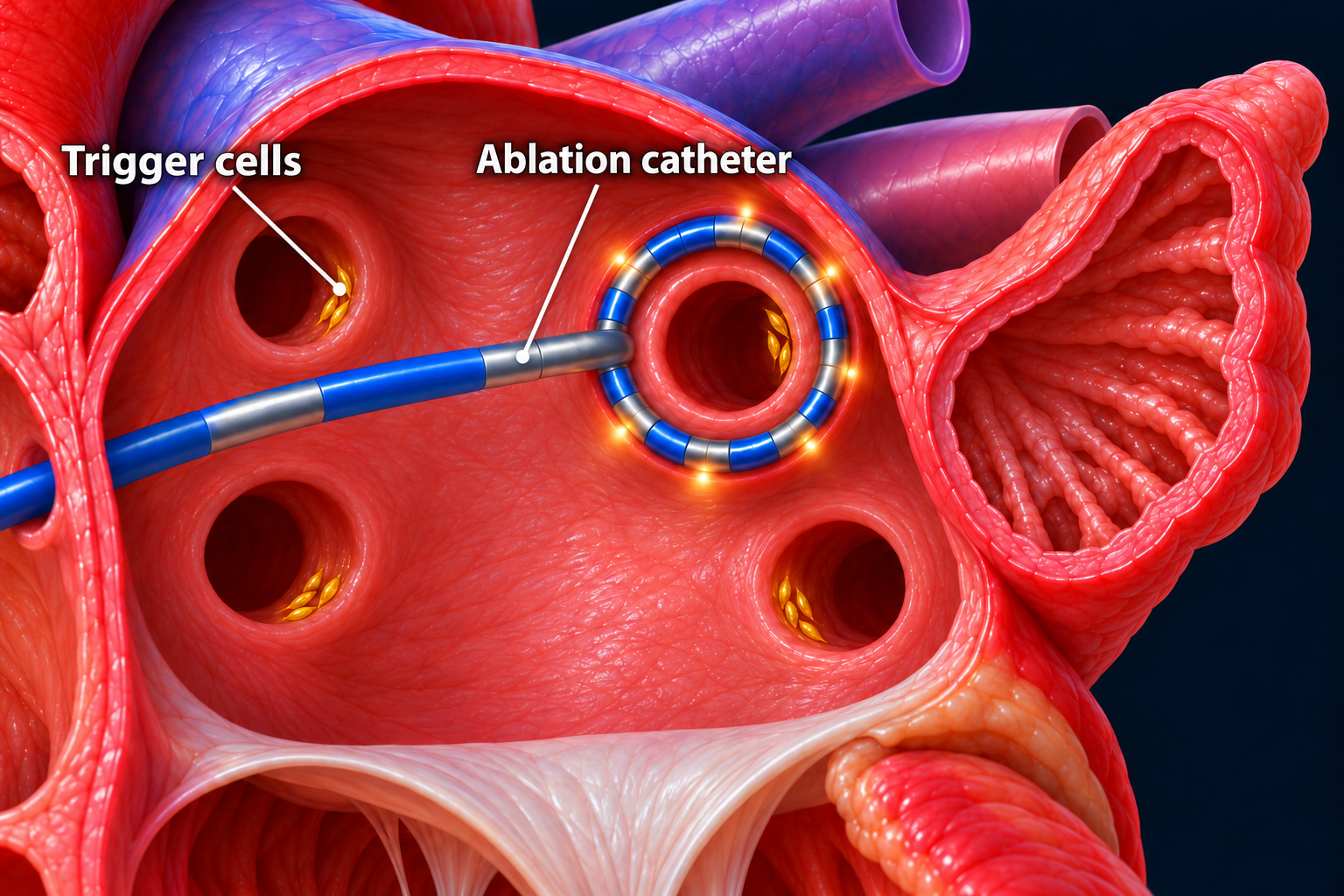
Your EP guides thin catheters through blood vessels to your heart, identifies the electrical signals involved in your rhythm, and delivers energy to the treatment area. Some procedures require testing or briefly bringing on the abnormal rhythm to locate its source.
For AFib: reaching the pulmonary veins
1. How the catheter reaches the left atrium
2. How ablation isolates the trigger cells
Procedure length varies by the rhythm and complexity. Allow time for check-in, preparation, the procedure, and recovery rather than planning around the ablation time alone.
Immediately afterward
After the catheters are removed, your groin access sites will be closed using a vascular closure device. Nurses monitor your heart rhythm, blood pressure, and groin sites while you recover.
You may need to lie flat and keep your leg straight for a period of time. Wait for your nurse’s permission before getting up. Tell the nurse immediately about bleeding, swelling, worsening pain, chest discomfort, or difficulty breathing.
Going home
Many patients leave the same day; some need overnight observation. Before discharge, your team checks that it is safe for you to walk and reviews your medicines, wound care, activity limits, and follow-up.
Before you leave: Know when to take your next medication doses, whom to call with a concern, and when your follow-up is scheduled.
Updated October 2026. Your procedure team’s instructions take priority.