PATIENT EDUCATION · THE SIMPLE EXPLANATION
Catheter ablation: procedure and recovery, made clear.
A few pictures. Short explanations. Start here, then explore the full guide when you’re ready.
01 · CATHETER ABLATION: PROCEDURE AND RECOVERY
What does catheter ablation do?
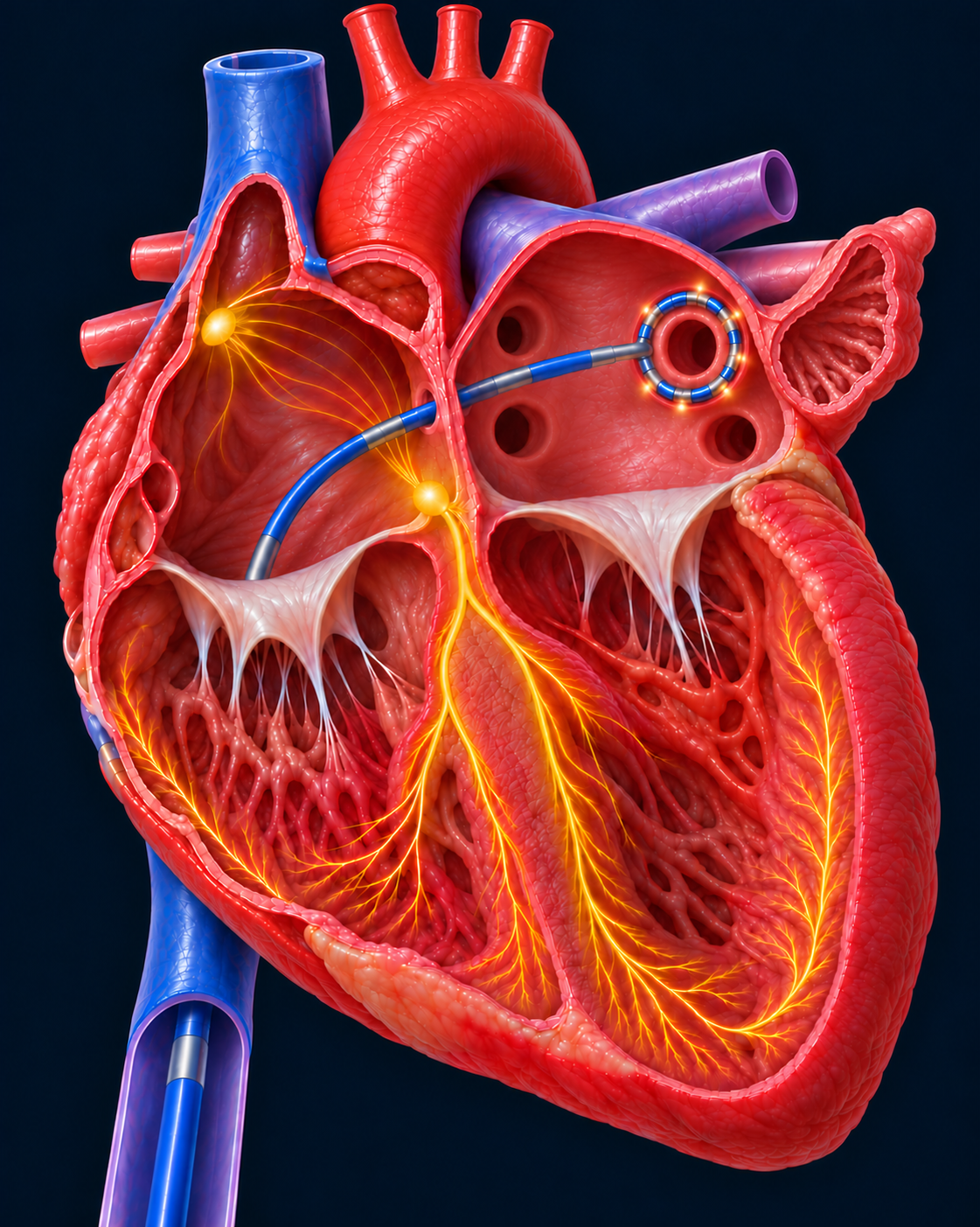
Thin catheters travel through blood vessels to the heart. Your electrophysiologist maps the electrical problem and treats the tissue keeping the abnormal rhythm going.
This picture shows an AFib approach through a femoral vein in the groin and across the wall between the atria. Other rhythms use different routes.
02 · CATHETER ABLATION: PROCEDURE AND RECOVERY
How do I prepare?
Confirm your arrival time, location, fasting instructions, and personal medication plan. Arrange for an adult to drive you home and stay with you for the first 24 hours after sedation or anesthesia.
Follow your procedure team’s written instructions. Do not stop medicines on your own.
03 · CATHETER ABLATION: PROCEDURE AND RECOVERY
What matters during recovery?
Follow the groin-care and activity instructions, take prescribed medicines, and keep follow-up visits. Some bruising is expected; persistent bleeding, a growing lump, or a cold or numb leg needs urgent attention.
No driving for 48 hours after ablation. Your team may give longer restrictions based on your condition.
Updated October 2026. Your procedure team’s instructions take priority.