What should I do now?
Call 911
Call 911 for new or unexplained chest pressure that persists or returns, severe trouble breathing, collapse without normal recovery, or sudden face/arm weakness or trouble speaking. Do not drive yourself.
Contact your care team
Contact your care team for persistent or worsening fatigue or a meaningful decline in your usual activity.
Keep your care plan
Record how symptoms affect daily tasks, and review sleep and medications with your clinician.
SECTION 4
How is fatigue evaluated?
Your clinician reviews sleep, activity, mood, medicines, and other symptoms. The exam and history guide testing.
Blood tests
Selected tests may assess anemia, thyroid function, kidney function, or other suspected problems.
Heart testing when indicated
An EKG or monitor may assess rhythm. An echo can evaluate pumping and valves.


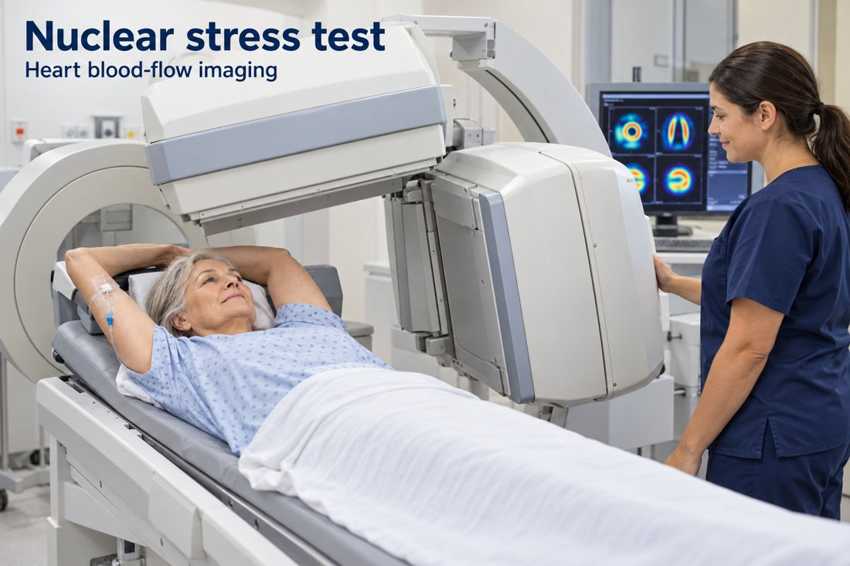
A stress test may be appropriate if symptoms suggest reduced coronary blood flow or an abnormal response to exercise.

Sleep testing may be appropriate for loud snoring, witnessed breathing pauses, or excessive daytime sleepiness.
Updated October 2026. Educational information; your own care plan may differ. Medical illustrations are simplified examples for teaching.