All diagnoses

PATIENT EDUCATION · FATIGUE & REDUCED EXERCISE TOLERANCE

Fatigue and reduced exercise tolerance

Understand low energy and reduced exercise tolerance, possible causes, warning signs, testing, and treatment.

Section 4 of 6 · Evaluation

← Fatigue and reduced exercise tolerance: the short explanation
Download complete topic (PDF)

All 6 sections, including text and pictures · 22 pages

What should I do now?

Call 911

Call 911 for new or unexplained chest pressure that persists or returns, severe trouble breathing, collapse without normal recovery, or sudden face/arm weakness or trouble speaking. Do not drive yourself.

Contact your care team

Contact your care team for persistent or worsening fatigue or a meaningful decline in your usual activity.

Keep your care plan

Record how symptoms affect daily tasks, and review sleep and medications with your clinician.

SECTION 4

How is fatigue evaluated?

Your clinician reviews sleep, activity, mood, medicines, and other symptoms. The exam and history guide testing.

Blood tests

Selected tests may assess anemia, thyroid function, kidney function, or other suspected problems.

Heart testing when indicated

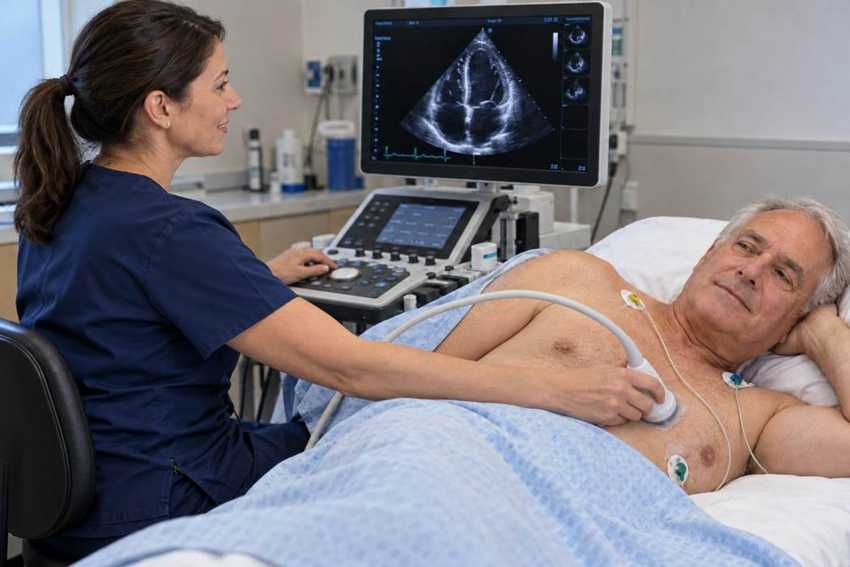
An EKG or monitor may assess rhythm. An echo can evaluate pumping and valves.
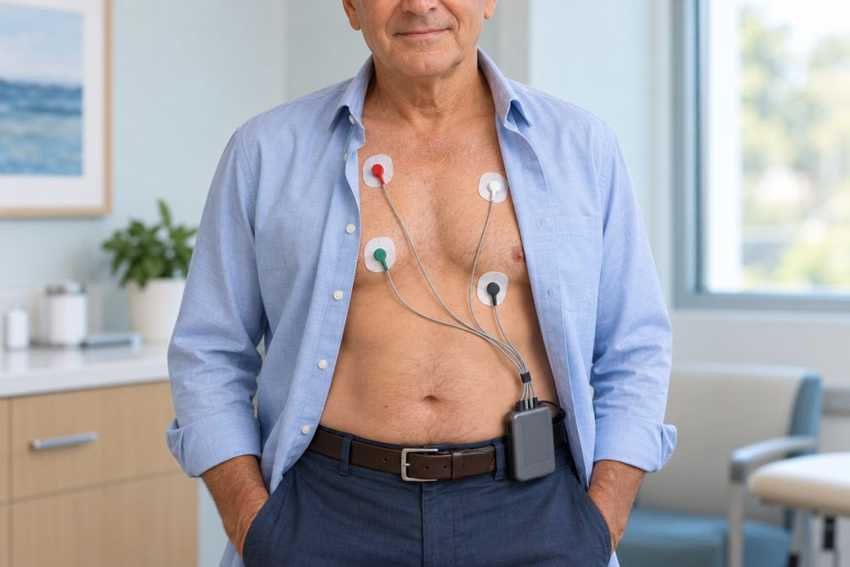
Patient wearing a portable Holter monitor.
A Holter monitor records your heart rhythm during normal activities and can help connect fatigue with an abnormal heartbeat.
Open larger image (new tab)
Patient having an echocardiogram.
An echo is useful when symptoms or examination suggest a heart problem.
Open larger image (new tab)

A stress test may be appropriate if symptoms suggest reduced coronary blood flow or an abnormal response to exercise.
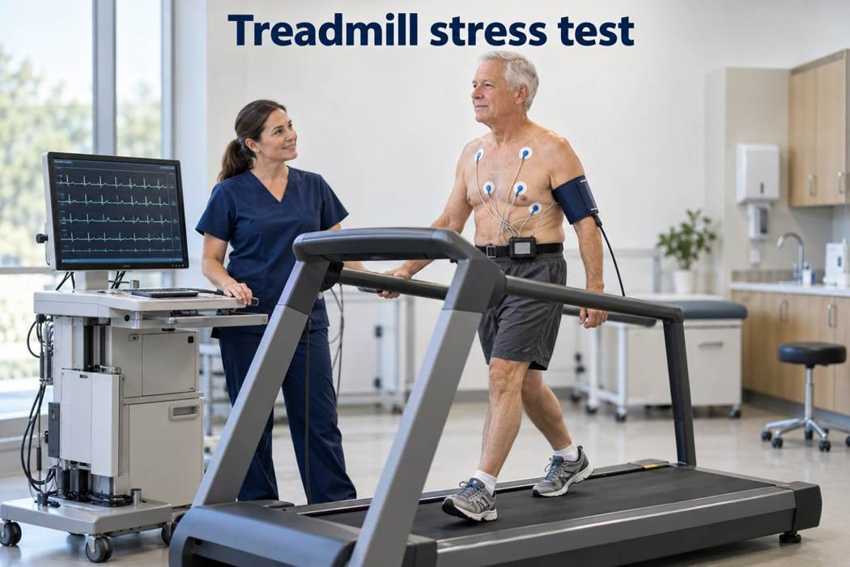
Patient exercising on a treadmill during a monitored stress test.
A stress test evaluates selected patients during activity. It is not needed for every case of fatigue.
Open larger image (new tab)
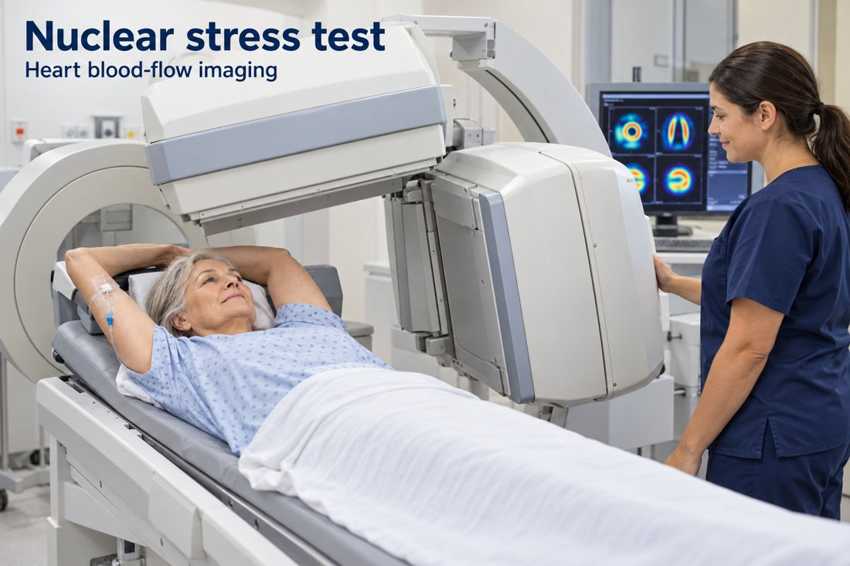
Patient lying under a nuclear cardiac imaging camera during a nuclear stress test.
A nuclear stress test compares blood flow to the heart muscle at rest and during stress. Stress can be produced by exercise or medication.
Open larger image (new tab)

Sleep testing may be appropriate for loud snoring, witnessed breathing pauses, or excessive daytime sleepiness.

Sources & further readingMedlinePlus: FatigueMayo Clinic: Causes of fatigueAmerican Heart Association: Heart failure symptomsAmerican Heart Association: Valve disease symptoms

Updated October 2026. Educational information; your own care plan may differ. Medical illustrations are simplified examples for teaching.