What should I do now?
Call 911
Call 911 for new or unexplained chest pressure that persists or returns, severe trouble breathing, collapse without normal recovery, or sudden face/arm weakness or trouble speaking. Do not drive yourself.
Contact your care team
Contact your care team for new or recurrent dizziness or near-fainting. Seek urgent assessment if symptoms are severe.
Keep your care plan
Sit or lie down safely during symptoms and note timing and medication changes.
SECTION 4
How is dizziness evaluated?
Your clinician reviews your symptoms and medicines and checks your heart, balance, and nervous system. Blood pressure and pulse may be measured while lying down and after standing.
Heart rhythm testing
An EKG may identify a rhythm problem. If symptoms come and go, a wearable monitor may be more useful.
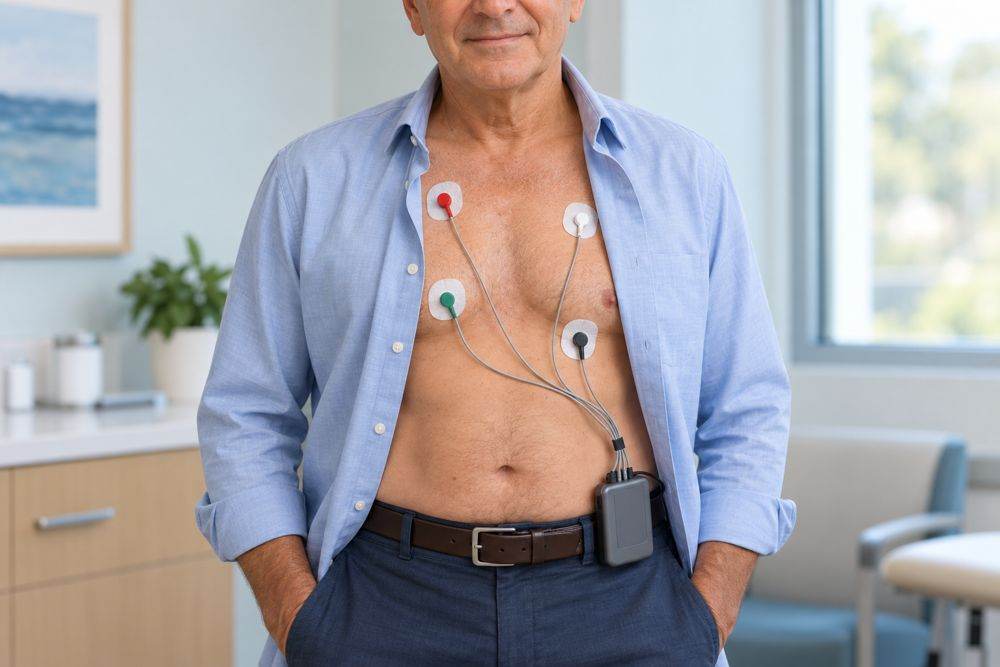
Other selected tests
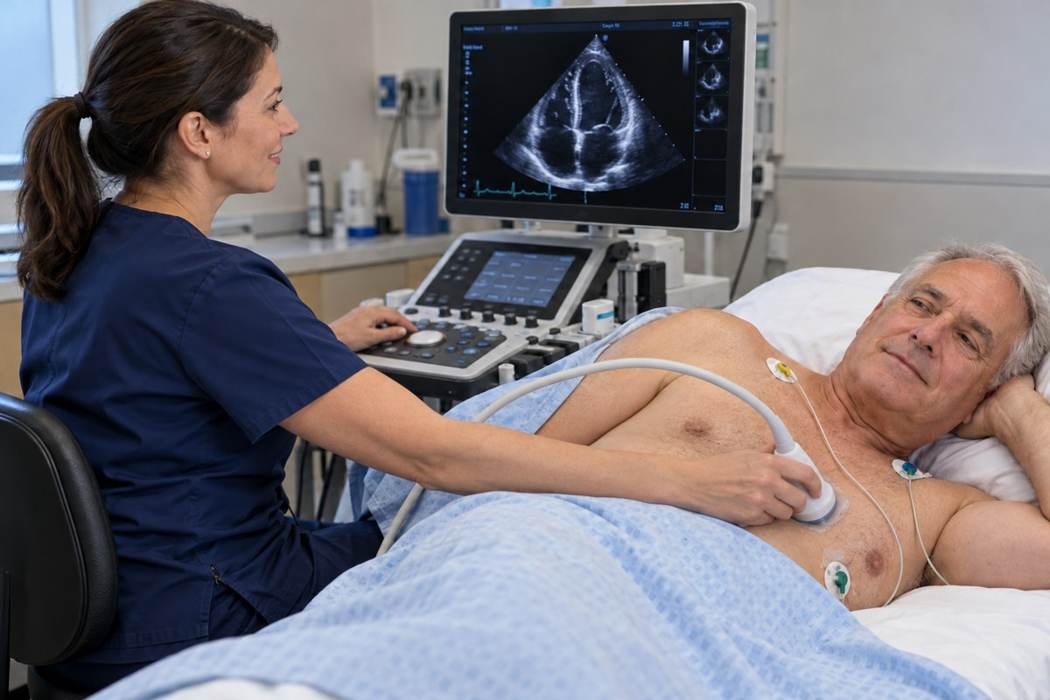
Blood tests may check for anemia or low blood sugar. An echo may be used if a structural heart problem is suspected. Inner-ear testing or brain imaging is reserved for relevant findings. Not every patient needs every test.
Updated October 2026. Educational information; your own care plan may differ. Medical illustrations are simplified examples for teaching.