What should I do now?
Call 911
Call 911 for new or unexplained chest pressure that persists or returns, severe trouble breathing, collapse without normal recovery, or sudden face/arm weakness or trouble speaking. Do not drive yourself.
Contact your care team
New or changing chest symptoms need prompt assessment. Ongoing or recurrent concerning discomfort belongs on the emergency pathway.
Keep your care plan
For an established diagnosis, follow your written symptom plan and keep follow-up appointments.
SECTION 5
How is chest discomfort treated?
Treatment depends on what is causing your symptoms. The goal is to relieve discomfort, treat the underlying problem, and reduce the risk of future complications.
1. Narrowed coronary arteries
When cholesterol plaque reduces blood flow to the heart, treatment may include:
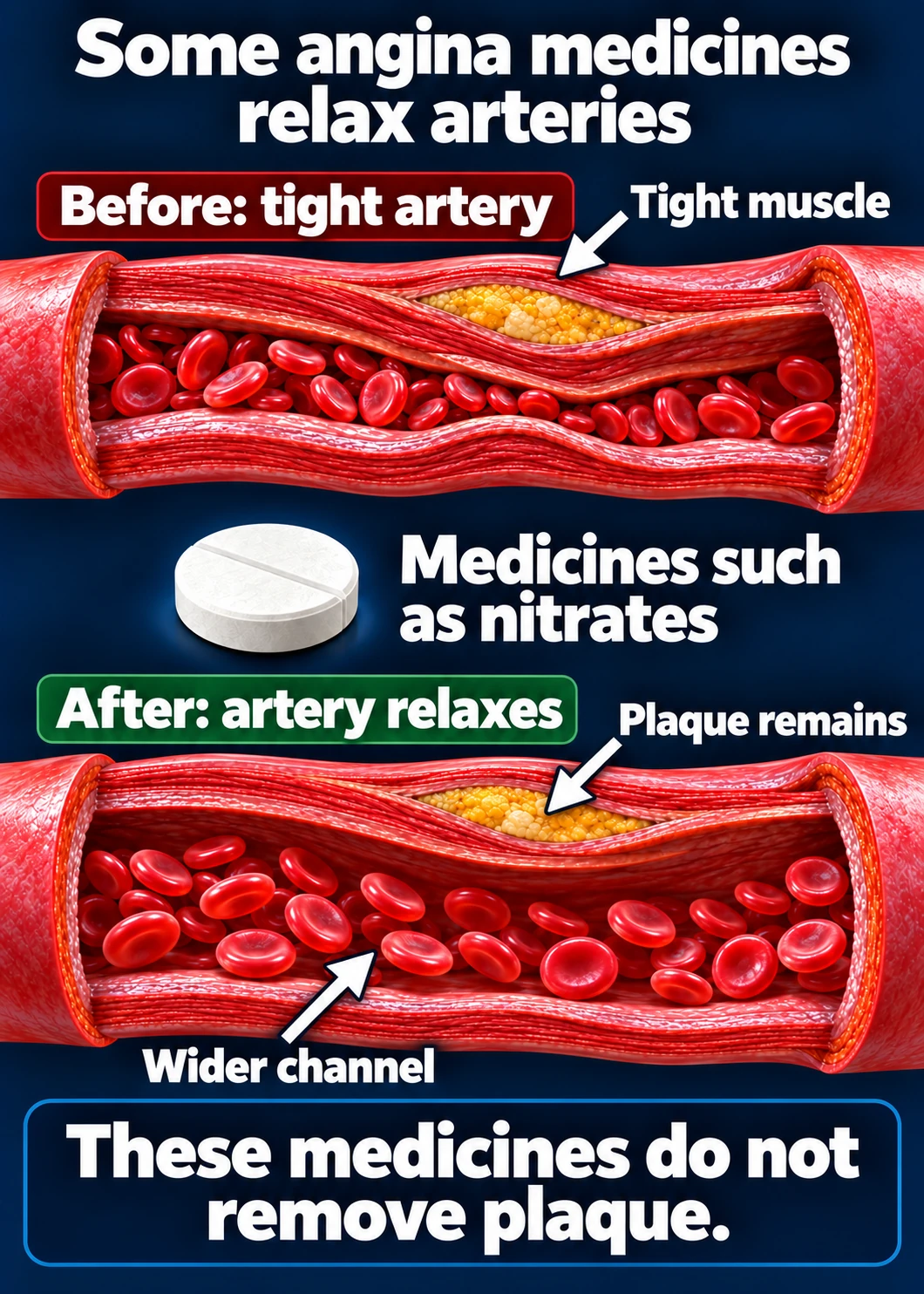
- Medicines for angina: These can improve blood flow or reduce how hard the heart works.
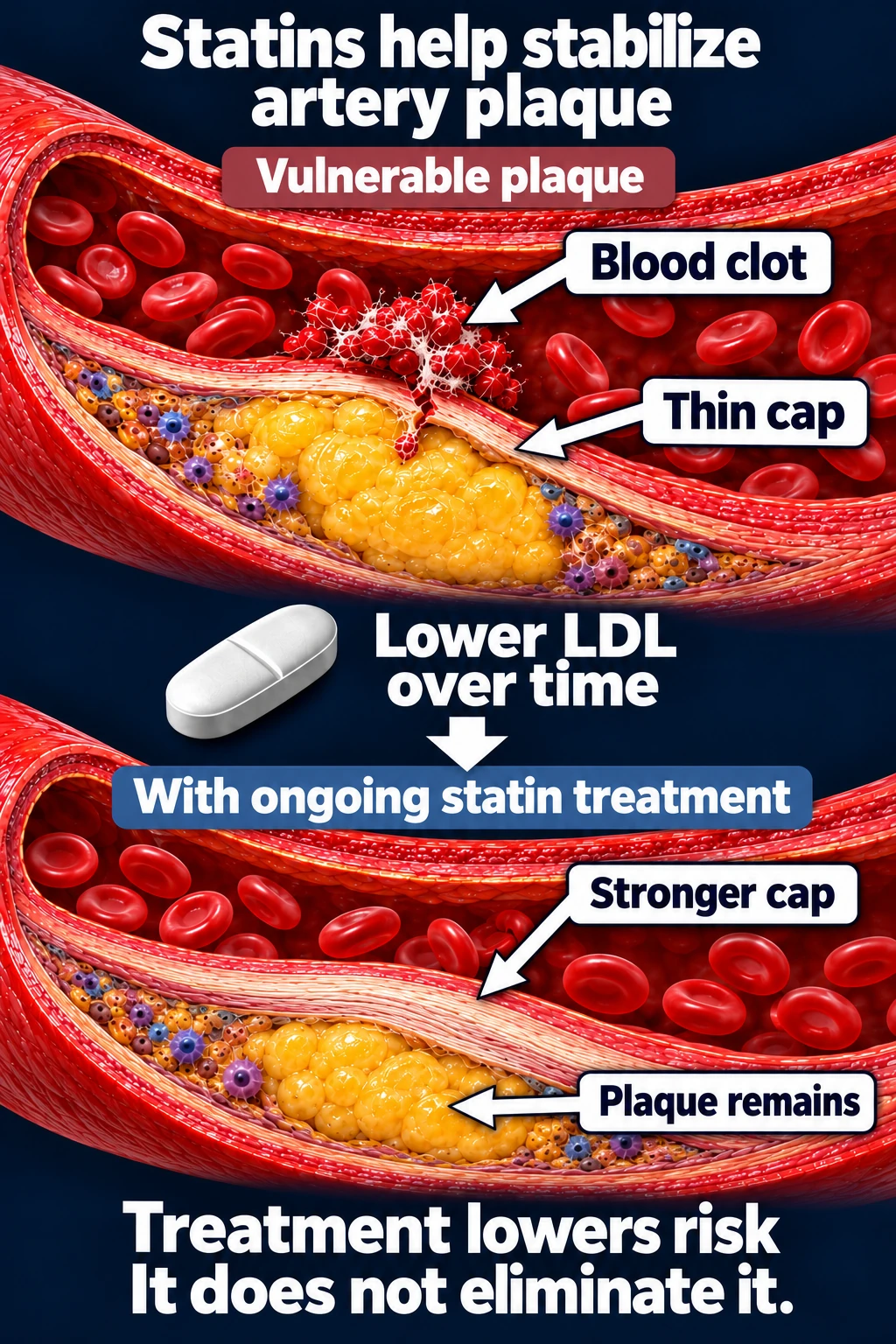
- Cholesterol treatment: Statins and other medicines lower LDL cholesterol and help reduce cardiovascular risk.
- Antiplatelet medicines: Your clinician may prescribe these to reduce the risk of blood clots.
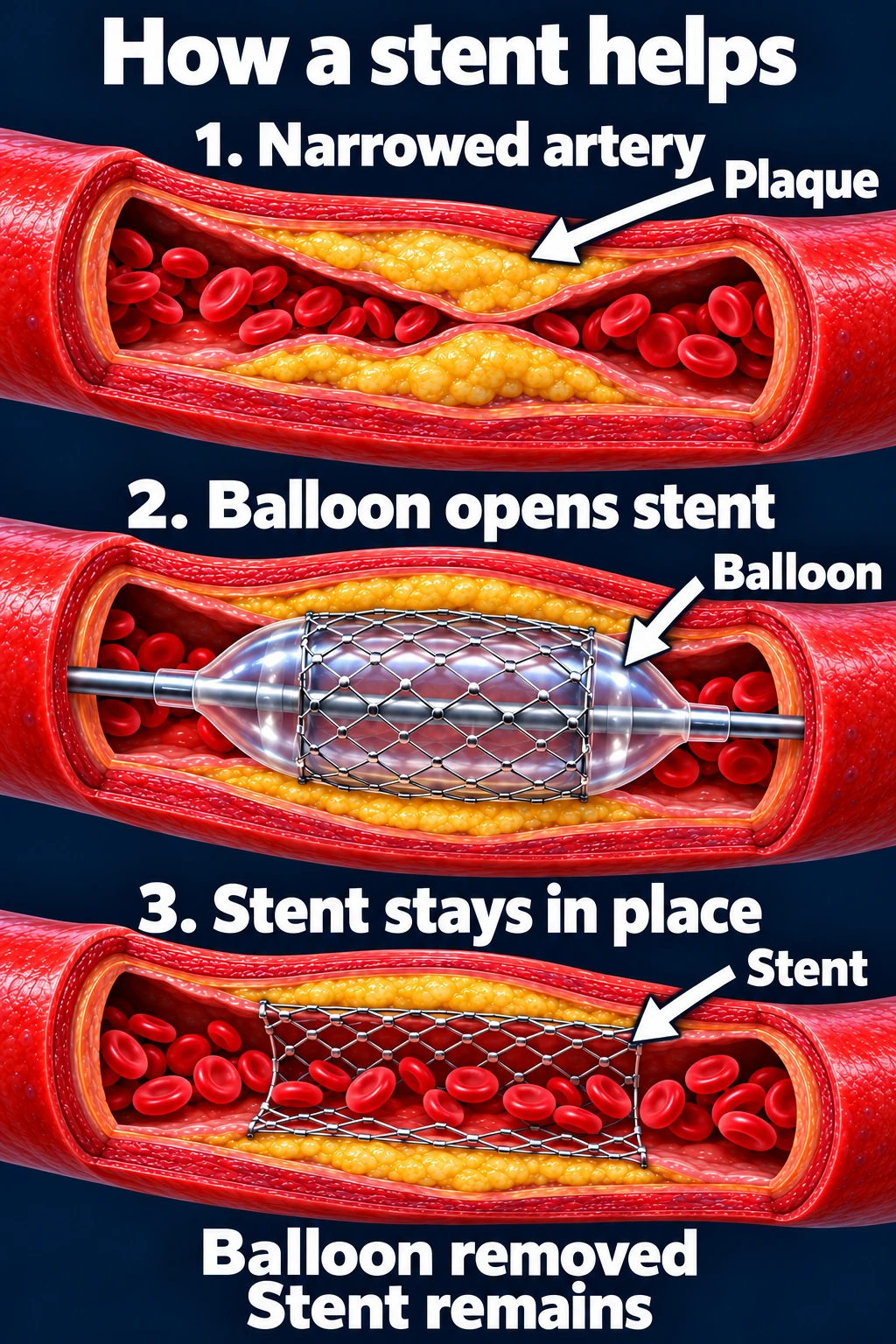
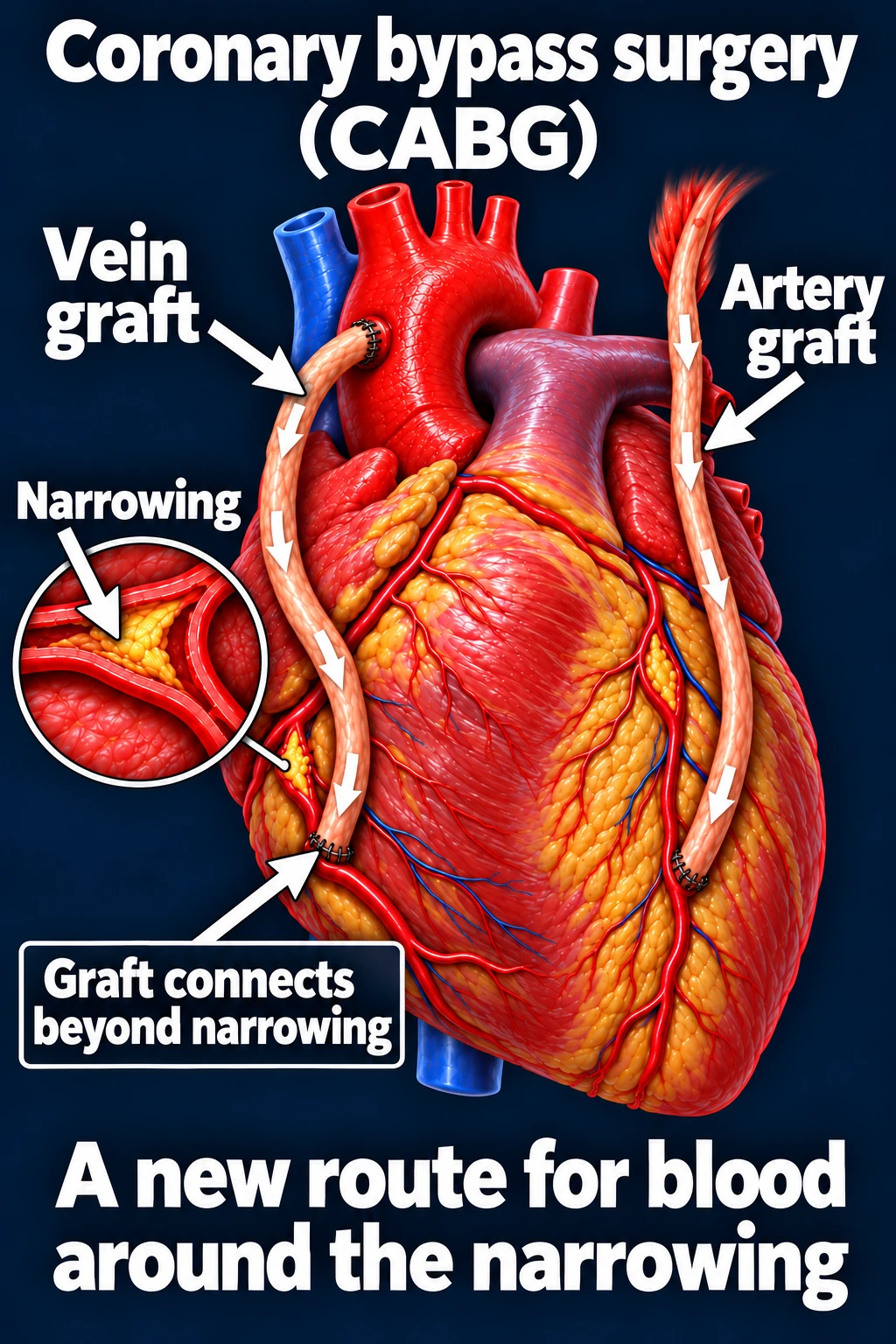
- Stents or bypass surgery: Some patients need a procedure to improve blood flow, depending on their symptoms, test results, and the location and severity of their blockages.
Not every narrowing requires a stent or surgery. Your cardiologist will help choose the best approach.
Cholesterol treatment helps protect artery plaque
A stent helps open a narrowed artery
Bypass surgery creates a new route for blood flow
2. A heart attack
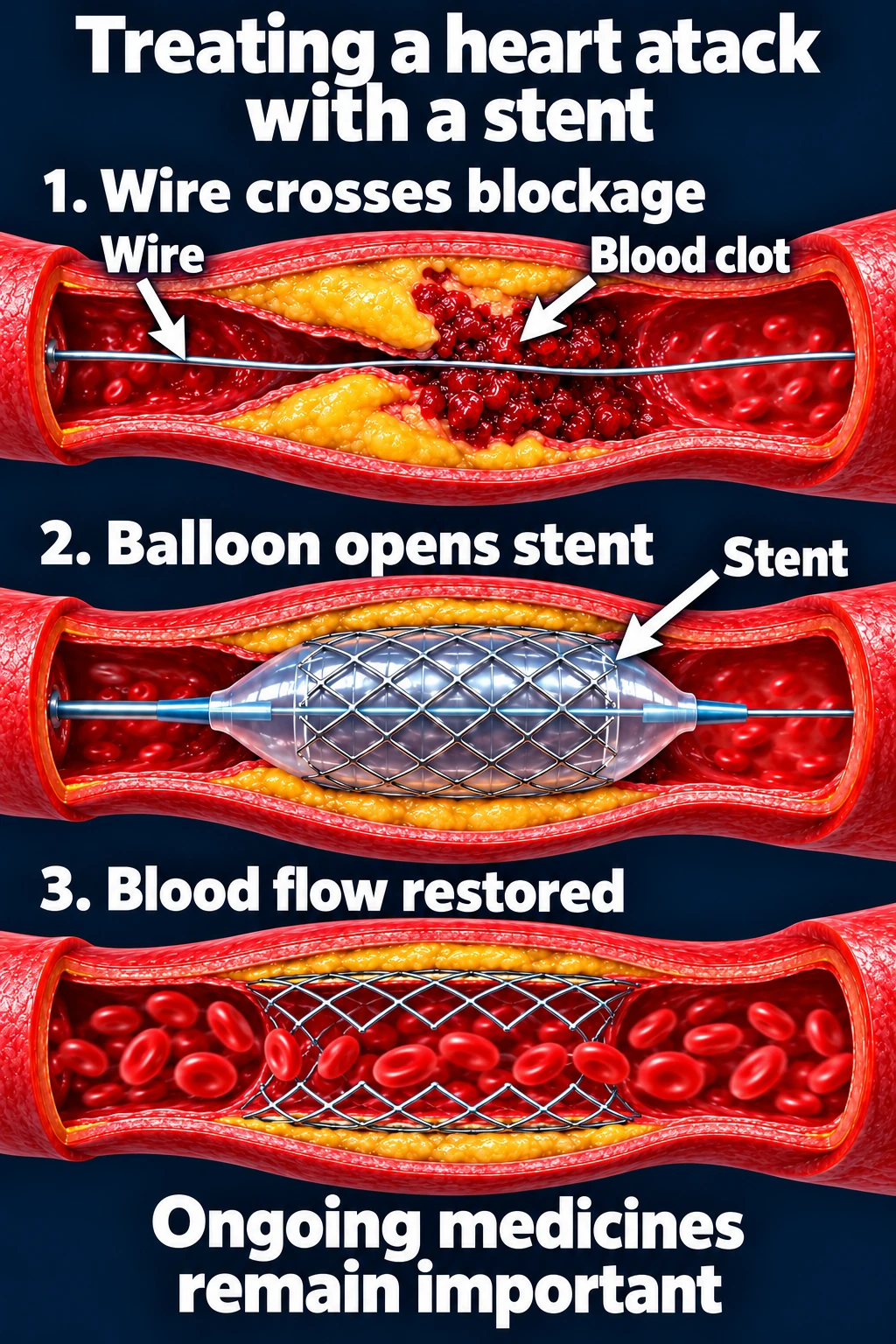
A heart attack requires emergency treatment. When a clot blocks a coronary artery, doctors may urgently restore blood flow with a catheter procedure and stent. Other treatments may be needed depending on the situation.
Why antiplatelet medicines are important after a heart attack or stent
A stent opens the artery, but a blood clot can still form inside it. Antiplatelet medicines make platelets—small blood cells involved in clotting—less likely to stick together. They help prevent clots in the coronary arteries and inside the stent, helping keep blood flowing to the heart.
After a heart attack or stent, your doctor may prescribe aspirin together with another antiplatelet medicine, such as clopidogrel (Plavix), prasugrel (Effient), or ticagrelor (Brilinta). Your cardiologist will decide which medicines you need and how long to take them.
Take these medicines exactly as prescribed, even when you feel well. Do not stop them on your own. Stopping too early can allow a clot to suddenly block the stent and cause another heart attack.
Before surgery or dental work, make sure your treating clinician coordinates any medication changes with your cardiologist. Contact your care team promptly about bleeding, side effects, or difficulty getting refills so they can help you follow a safe plan.
Sources: NHLBI: Living with a stent · MedlinePlus: After angioplasty and stenting
Call 911 for possible heart attack symptoms. Do not wait at home to see whether they improve.
3. Coronary artery spasm
Treatment aims to relax the artery and prevent episodes of tightening. Calcium channel blockers and nitrates are commonly used.
The medicines used for coronary spasm can differ from those used for other types of angina. Your clinician will choose treatment for your specific condition.
4. Small-vessel disease
Treatment helps improve blood flow through the heart’s tiny vessels and reduce symptoms. Your clinician may use medicines such as beta blockers, calcium channel blockers, or ranolazine, along with treatment for cholesterol and other risk factors.
The best combination varies from person to person.
5. Causes outside the heart
Treatment may instead focus on acid reflux, chest-wall pain, a lung condition, or another identified cause. Anxiety-related symptoms may improve with appropriate treatment, including counseling.
Anxiety should not automatically be assumed to be the cause of new chest discomfort. Medical assessment helps determine the appropriate treatment.
6. Your everyday treatment plan
Avoiding tobacco, eating heart-healthy foods, and following your prescribed treatment plan can help manage angina. Ask your clinician what level of physical activity is appropriate for you.
Take medicines as prescribed, and report new, worsening, or changing symptoms.
Updated October 2026. Educational information; your own care plan may differ. Medical illustrations are simplified examples for teaching.