What should I do now?
Call 911
Call 911 for new or unexplained chest pressure that persists or returns, severe trouble breathing, collapse without normal recovery, or sudden face/arm weakness or trouble speaking. Do not drive yourself.
Contact your care team
New or changing chest symptoms need prompt assessment. Ongoing or recurrent concerning discomfort belongs on the emergency pathway.
Keep your care plan
For an established diagnosis, follow your written symptom plan and keep follow-up appointments.
SECTION 4
Section 4: How is chest discomfort evaluated?
The first priority is to identify or rule out dangerous causes. Your care team will ask about your symptoms, examine you, and select tests based on your situation. Not everyone needs every test.
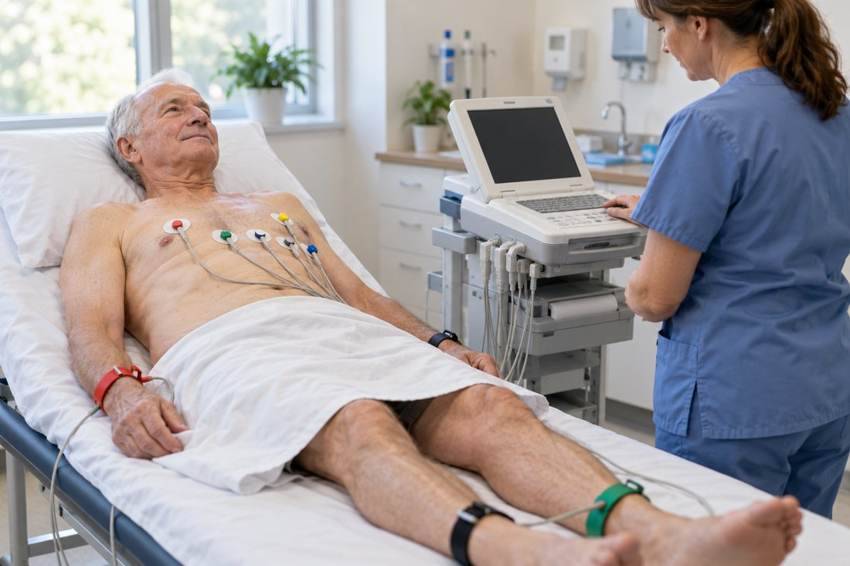
1. An EKG
An EKG records your heart’s electrical activity through patches placed on your skin. It can reveal rhythm problems or changes suggesting reduced blood flow.
A normal EKG alone does not rule out a heart attack or another heart-related cause of discomfort.
2. Blood tests
When a heart attack is suspected, blood tests check for troponin, a protein released when heart muscle is injured. Testing may need to be repeated because changes can take time to appear.
Your team interprets these results together with your symptoms and EKG.
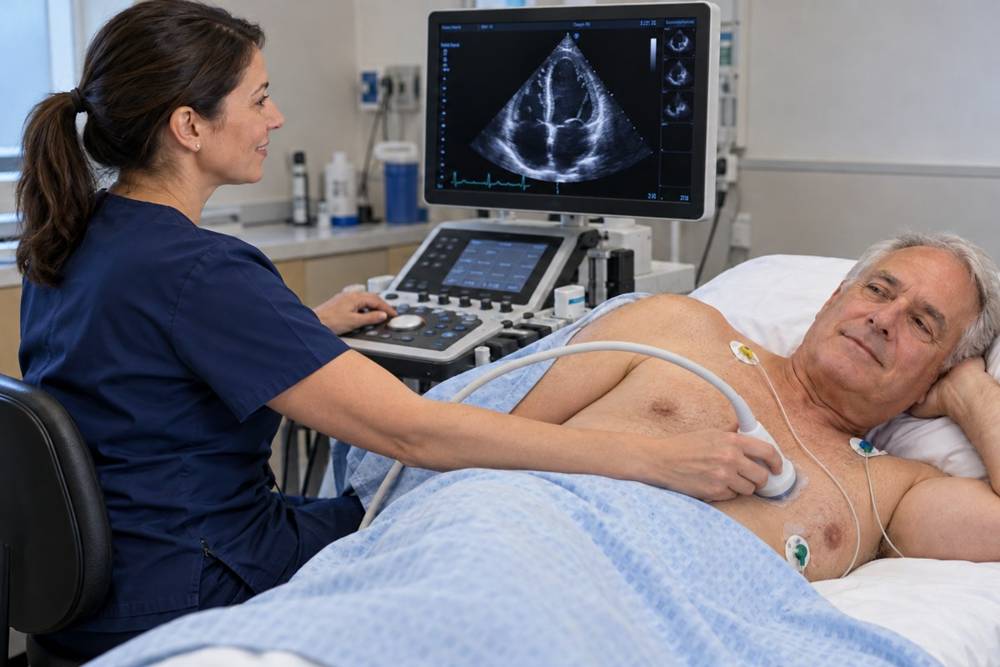
3. An echocardiogram
An echocardiogram, or echo, uses ultrasound to examine the heart’s pumping function and valves. It can help identify structural problems that may contribute to symptoms.
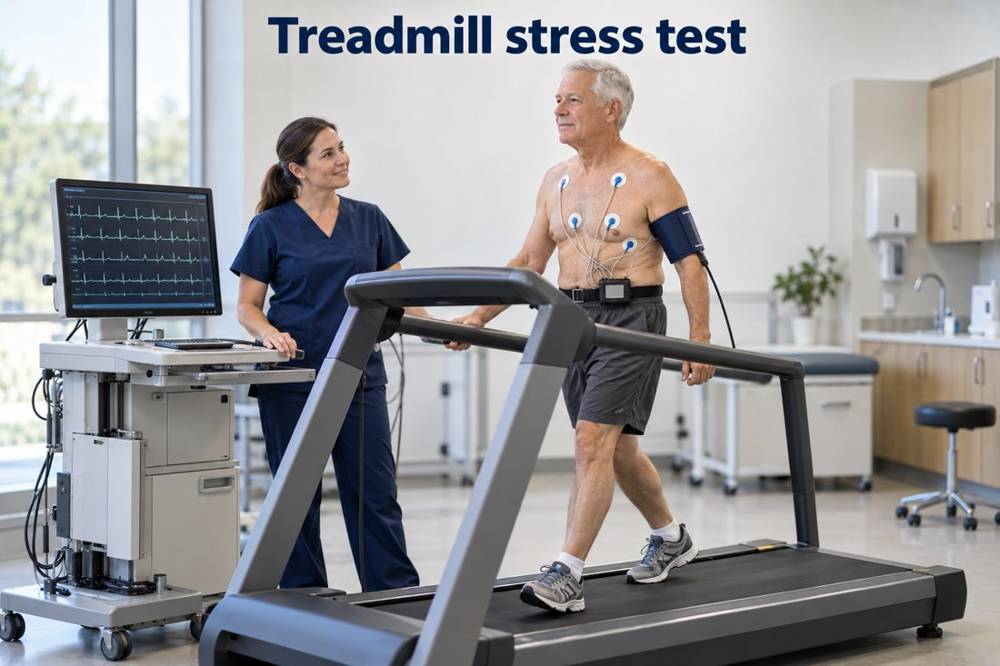
4. A stress test
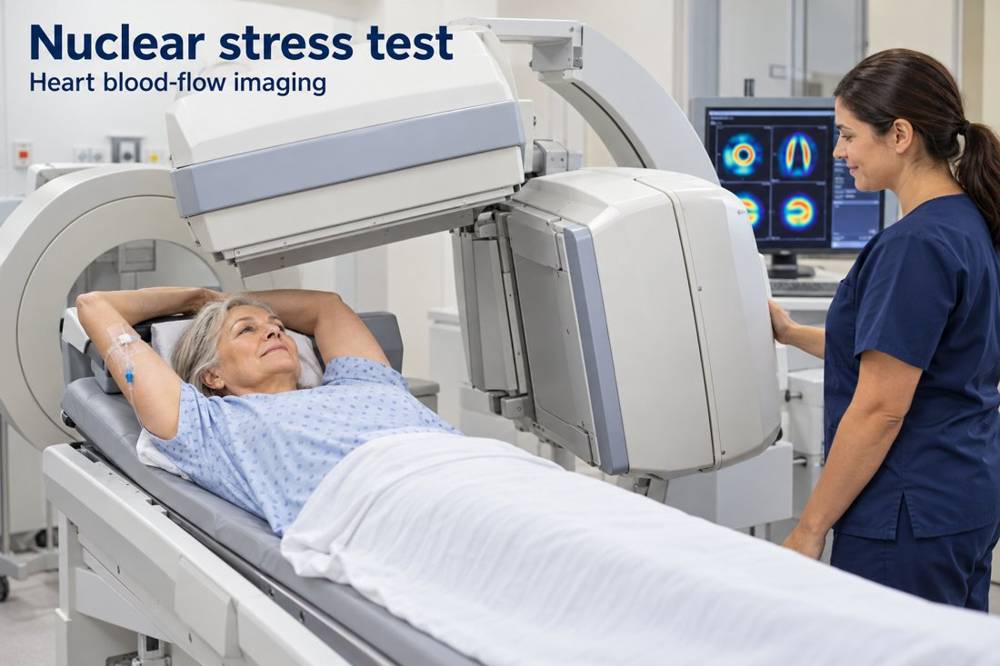
For selected patients, a stress test checks how the heart responds to increased workload.
You may walk on a treadmill or receive medication if exercise is not appropriate. Some tests include ultrasound or nuclear images to assess the heart’s function or blood supply.
A stress test is not a substitute for emergency evaluation of possible heart attack symptoms.
5. Looking at the coronary arteries
- Coronary CT angiography: A CT scan that examines the arteries supplying the heart.
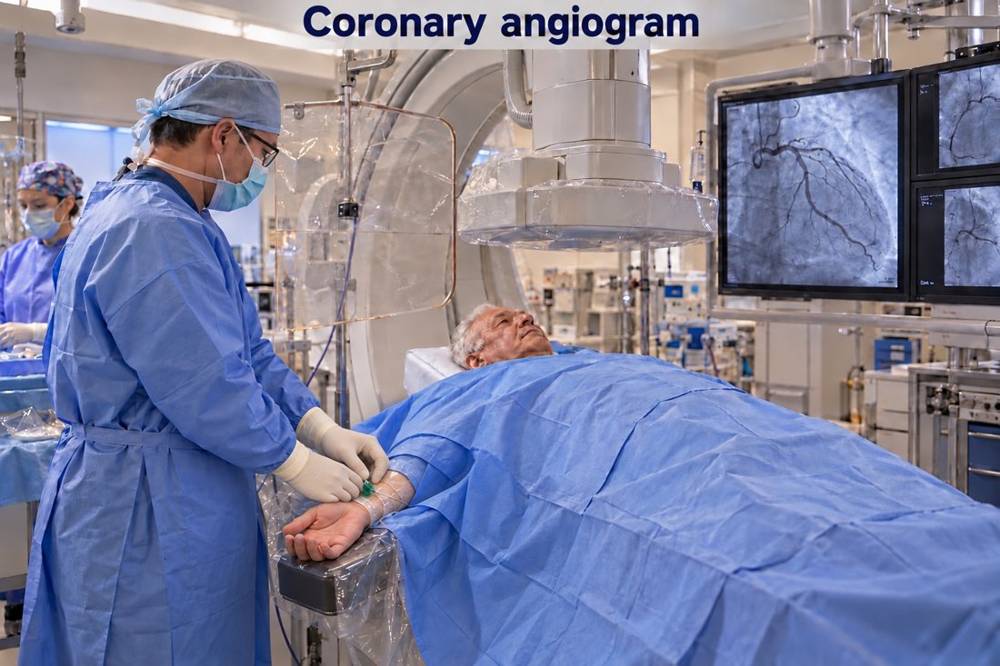
- Coronary angiography: A catheter procedure using contrast dye and X-ray images to identify narrowed or blocked arteries.
Your doctor chooses these tests when the findings could help guide treatment.
6. Testing for other causes
Chest X-rays or other scans may be needed to look for lung problems, blood clots, or problems involving the aorta.
If symptoms persist despite no major coronary blockage, selected patients may need further evaluation for coronary spasm or small-vessel dysfunction.
The goal is to explain your symptoms and choose the right treatment—not simply to order every available test.
Updated October 2026. Educational information; your own care plan may differ. Medical illustrations are simplified examples for teaching.