What should I do now?
Call 911
Call 911 for new or unexplained chest pressure that persists or returns, severe trouble breathing, collapse without normal recovery, or sudden face/arm weakness or trouble speaking. Do not drive yourself.
Contact your care team
New or changing chest symptoms need prompt assessment. Ongoing or recurrent concerning discomfort belongs on the emergency pathway.
Keep your care plan
For an established diagnosis, follow your written symptom plan and keep follow-up appointments.
SECTION 2
Section 2: What can cause chest discomfort?
Chest discomfort can come from the heart, lungs, digestive system, muscles, or other structures. The sensation alone cannot reliably identify the cause.
1. Reduced blood flow to the heart
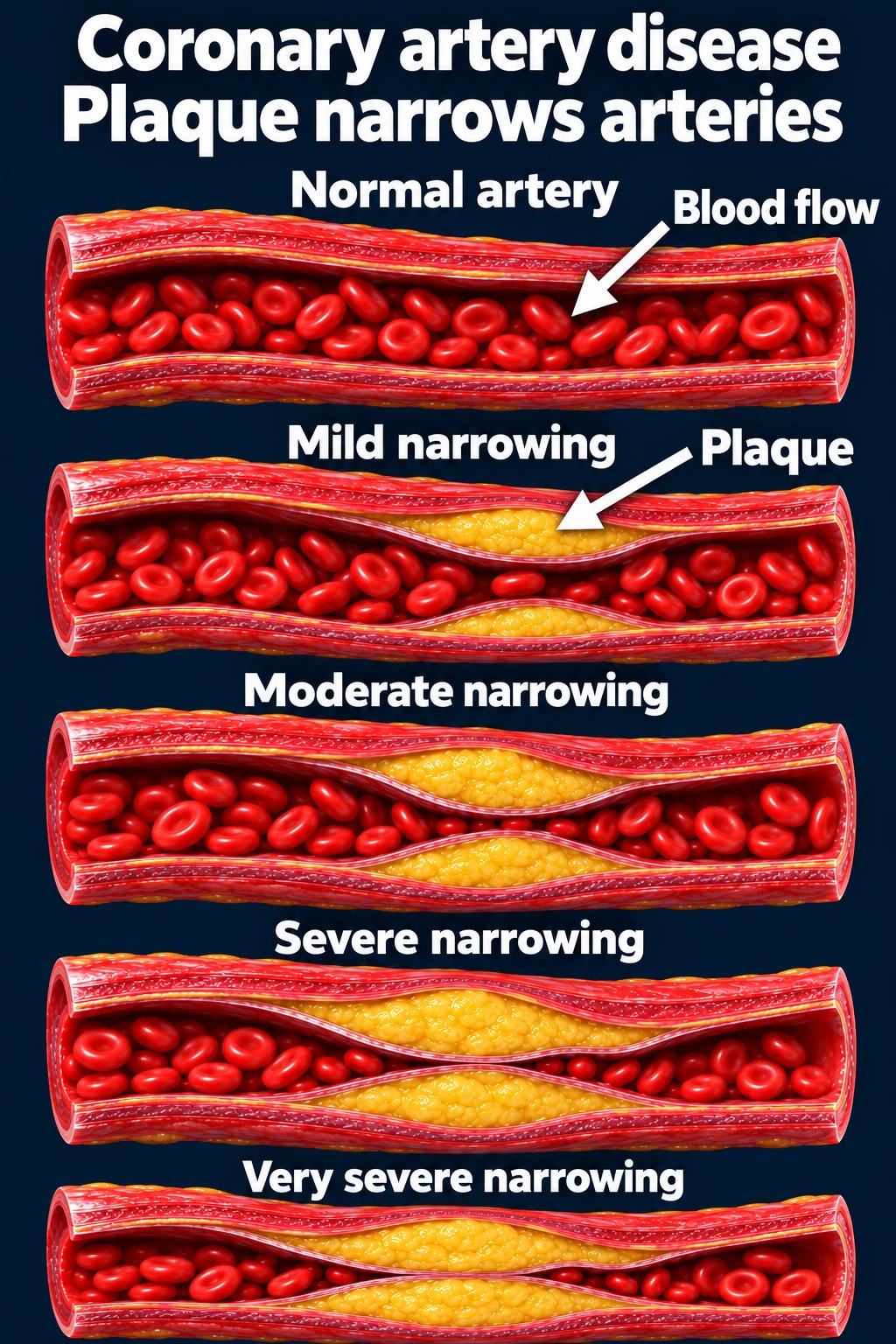
Coronary artery disease
Plaque narrows the arteries supplying the heart. When the heart muscle does not receive enough oxygen-rich blood, it can cause discomfort called angina.
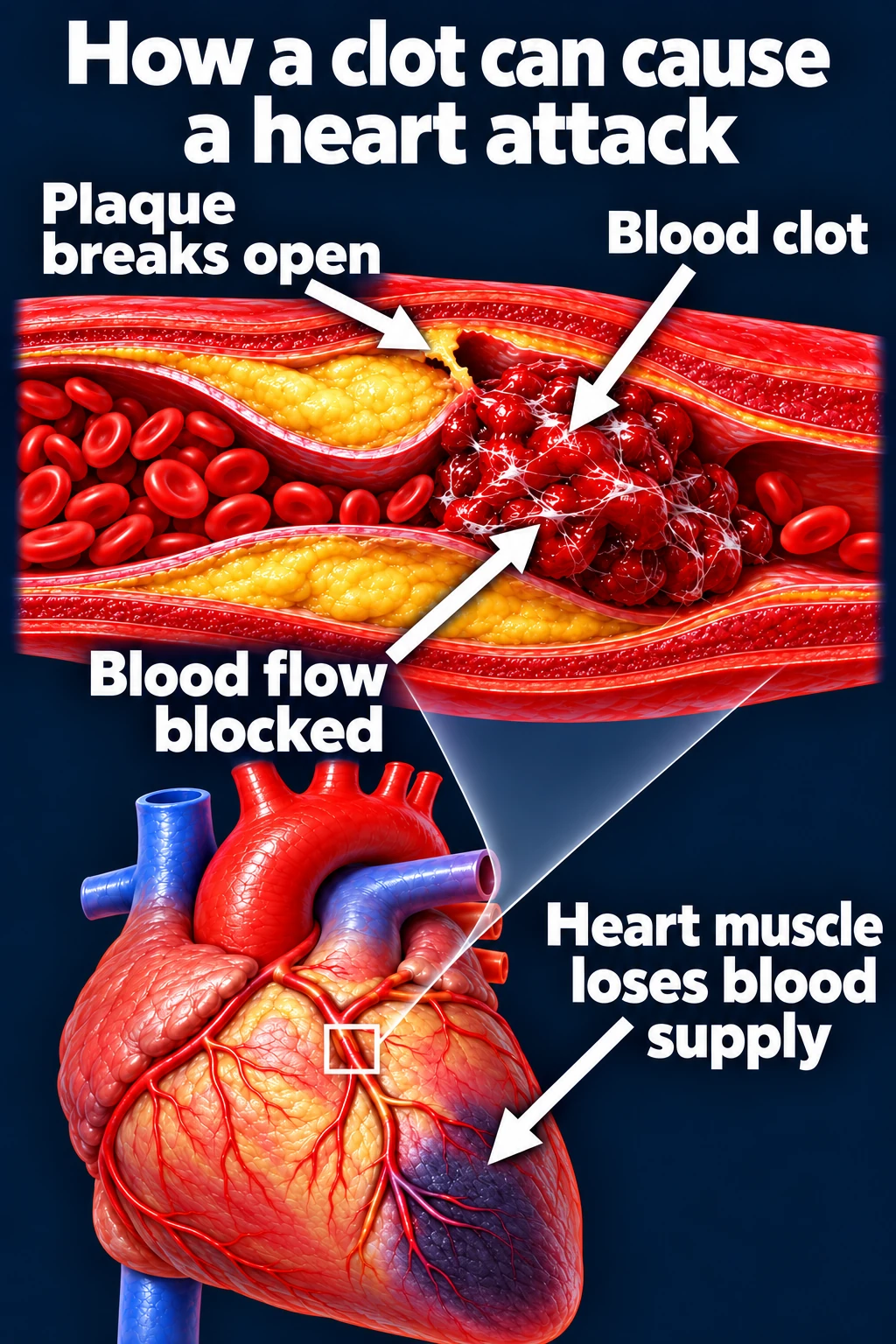
Heart attack
A sudden interruption of blood flow damages heart muscle, often after a plaque breaks open and a clot forms.
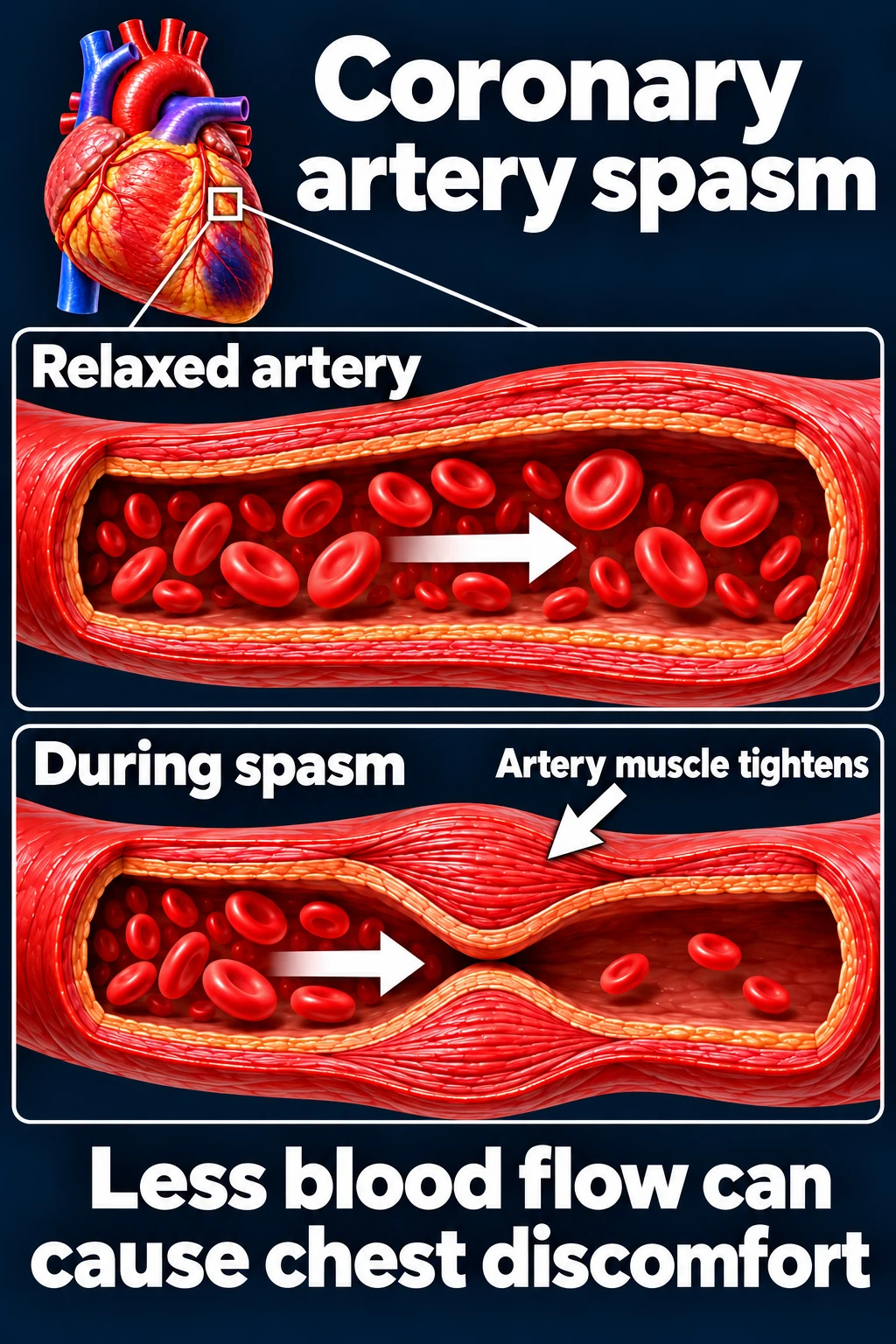
Coronary artery spasm
An artery temporarily tightens, reducing blood flow to heart muscle and causing angina.
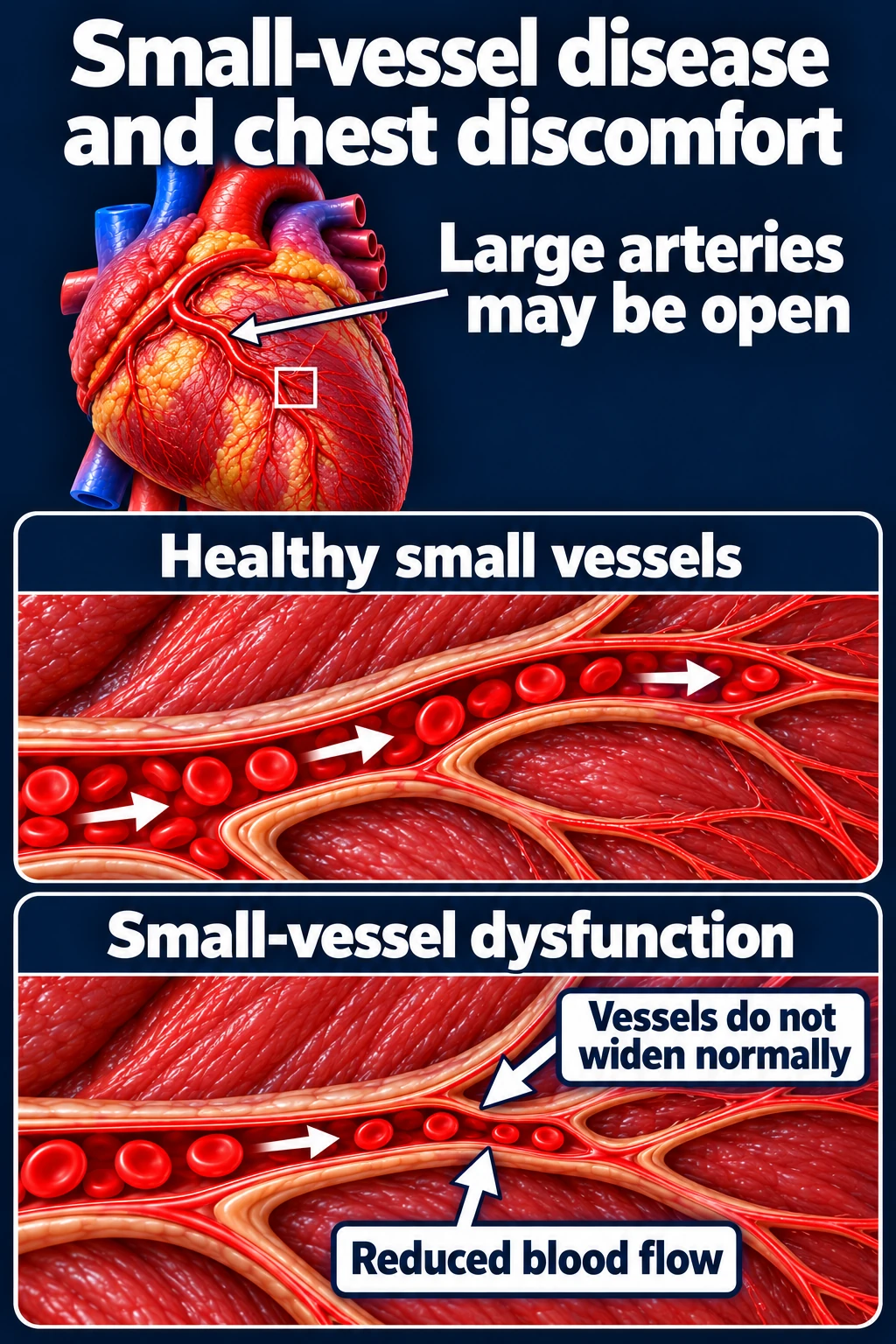
Small-vessel disease
The heart’s smaller blood vessels do not regulate blood flow normally. Heart-related discomfort can occur even without a major blockage in a large coronary artery.
2. Other heart conditions
Inflammation around the heart, called pericarditis, can cause chest pain. Certain valve problems or fast heart rhythms can also cause discomfort.
3. Causes outside the heart
Examples include:
- Digestive problems: Acid reflux or spasms of the esophagus.
- Chest-wall problems: Muscle strain or inflammation where ribs meet the breastbone.
- Lung problems: Pneumonia, inflammation around the lungs, a collapsed lung, or a blood clot in the lungs.
- Anxiety or panic attacks: These can cause chest discomfort and rapid breathing.
A tear in the wall of the aorta—the body’s main artery—is another serious cause. Some causes outside the heart are also life-threatening emergencies.
Avoid diagnosing yourself by the feeling alone
Burning discomfort is not always reflux, and sharp pain is not always harmless. New or unexplained symptoms should be assessed rather than automatically attributed to indigestion, muscle pain, or anxiety.
Updated October 2026. Educational information; your own care plan may differ. Medical illustrations are simplified examples for teaching.