SECTION 3
How is it implanted?
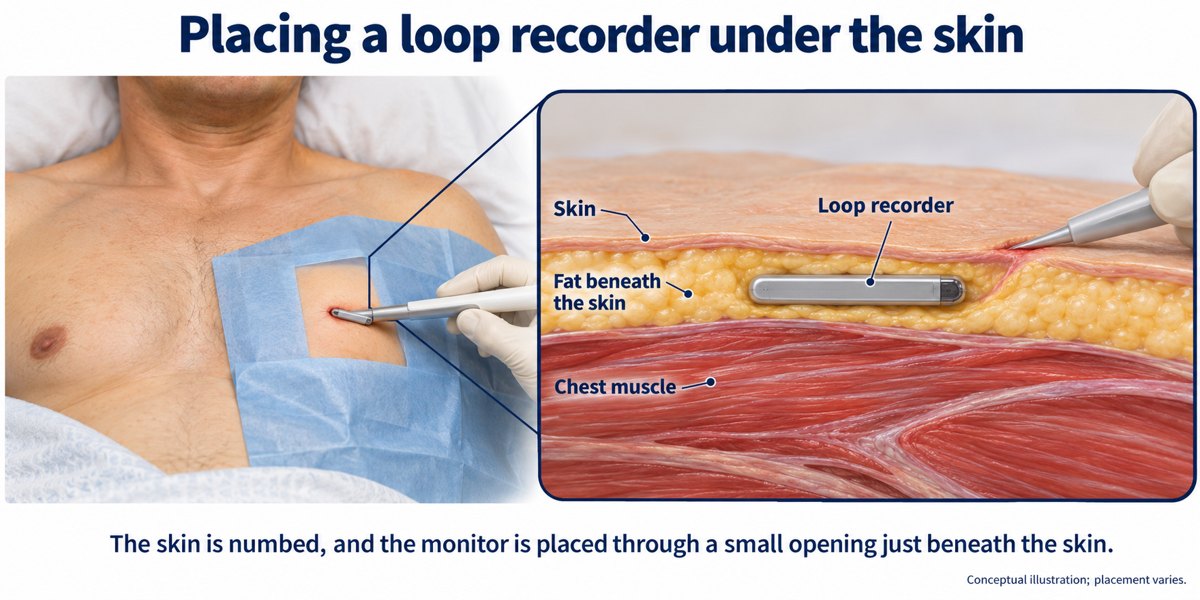
The skin is numbed with local anesthetic, and no sedation is given. Your doctor makes a small opening and places the recorder beneath the skin. It stays outside the heart, and patients generally go home shortly afterward.
Driving after loop recorder insertion
You may drive immediately after loop recorder insertion because no sedation is given. Local anesthetic numbs the skin without making you sleepy. Any existing driving restriction from your doctor still applies.
Sources & further readingMayo Clinic: Implantable loop recordersJohns Hopkins: Loop recorder implantation
Updated October 2026. Educational information; your own care plan may differ. Medical illustrations are simplified examples for teaching.