What should I do now?
Call 911
Call 911 for chest pressure, severe trouble breathing, or fainting. Do not drive yourself.
Contact your care team
Contact your care team promptly for increasing breathlessness, swelling, reduced activity, new palpitations, dizziness, or near-fainting.
Keep your care plan
Keep your treatment and follow-up plan. Bring questions, readings, and your medication list.
SECTION 1
What is heart valve disease?
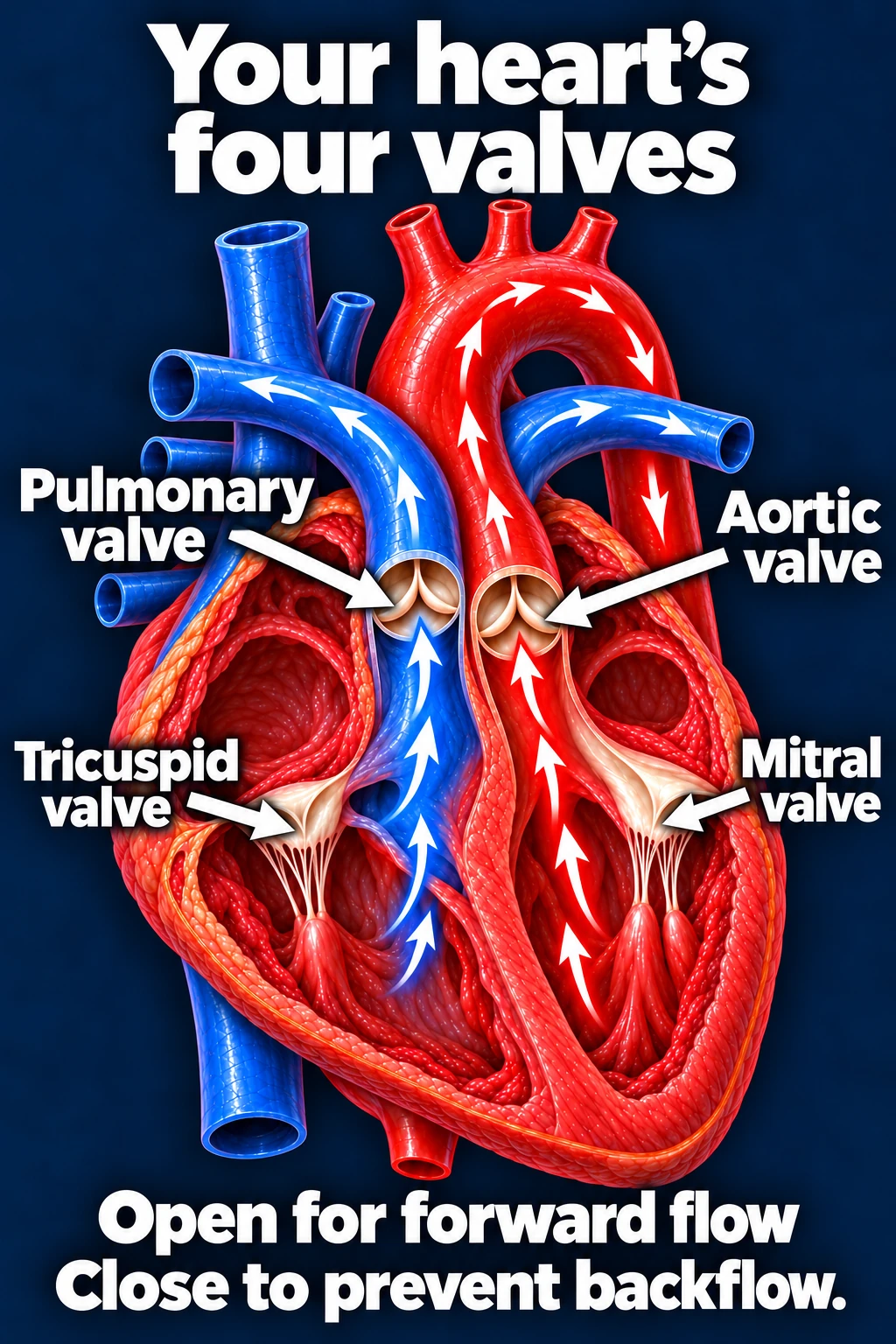
Your heart has four valves that act like one-way doors. They open to allow blood to move forward and close to prevent it from flowing backward. Heart valve disease occurs when one or more valves do not work properly.
How do normal heart valves work?
The four valves guide blood through your heart, toward your lungs, and out to your body.
Tricuspid valve
From the right atrium into the right ventricle
Pulmonary valve
From the right ventricle toward the lungs
Mitral valve
From the left atrium into the left ventricle
Aortic valve
From the left ventricle into the aorta, which carries blood to the body
When these valves open and close normally, blood moves in the correct direction with each heartbeat.
What can go wrong?
Two common problems are narrowing and leakage. A valve can sometimes have both.
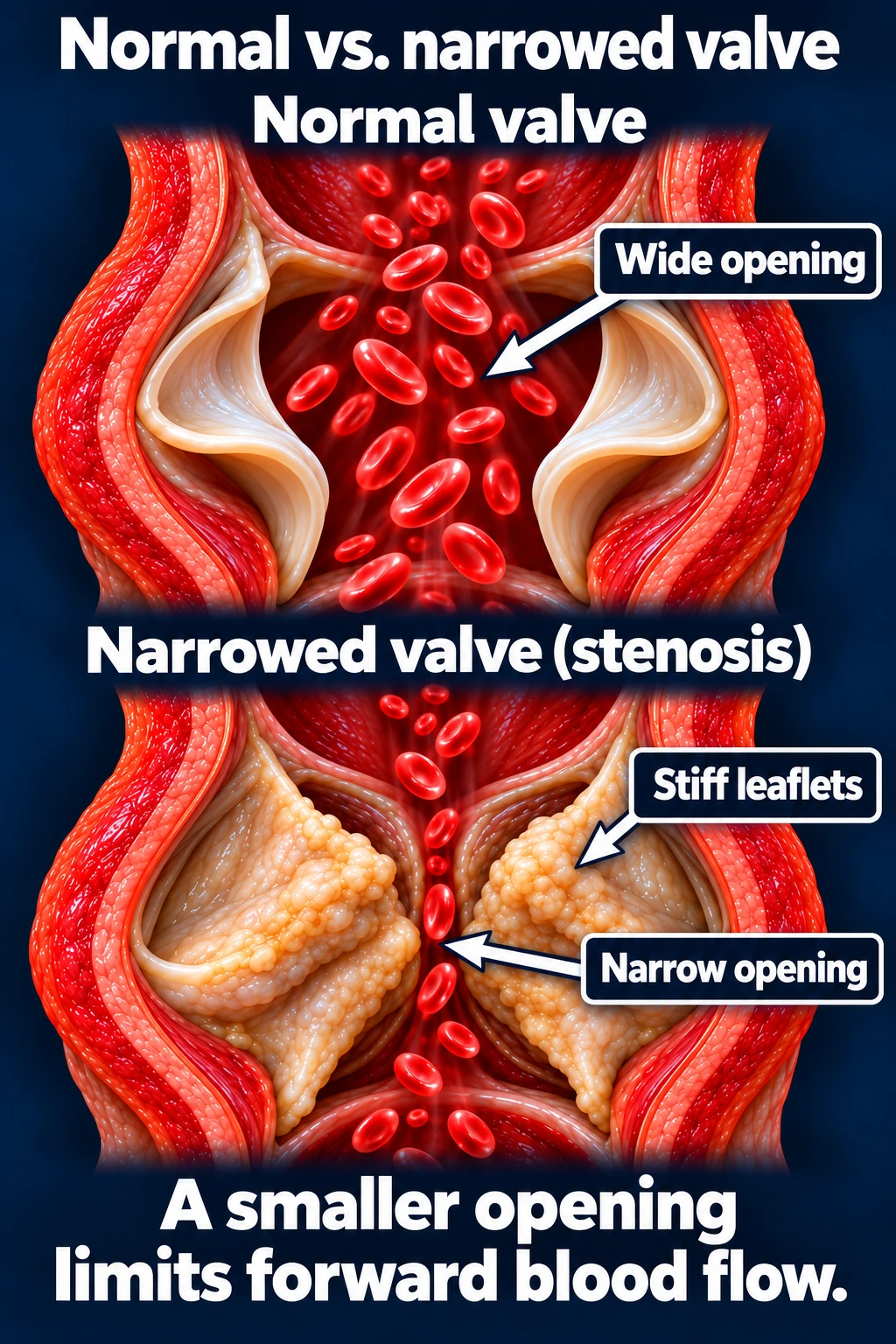
Stenosis: a valve that does not open fully
A narrowed valve limits the opening through which blood can pass. The heart may need to work harder to push blood through it.
For example, aortic stenosis makes it harder for blood to leave the left ventricle and reach the body.
Regurgitation: a valve that leaks
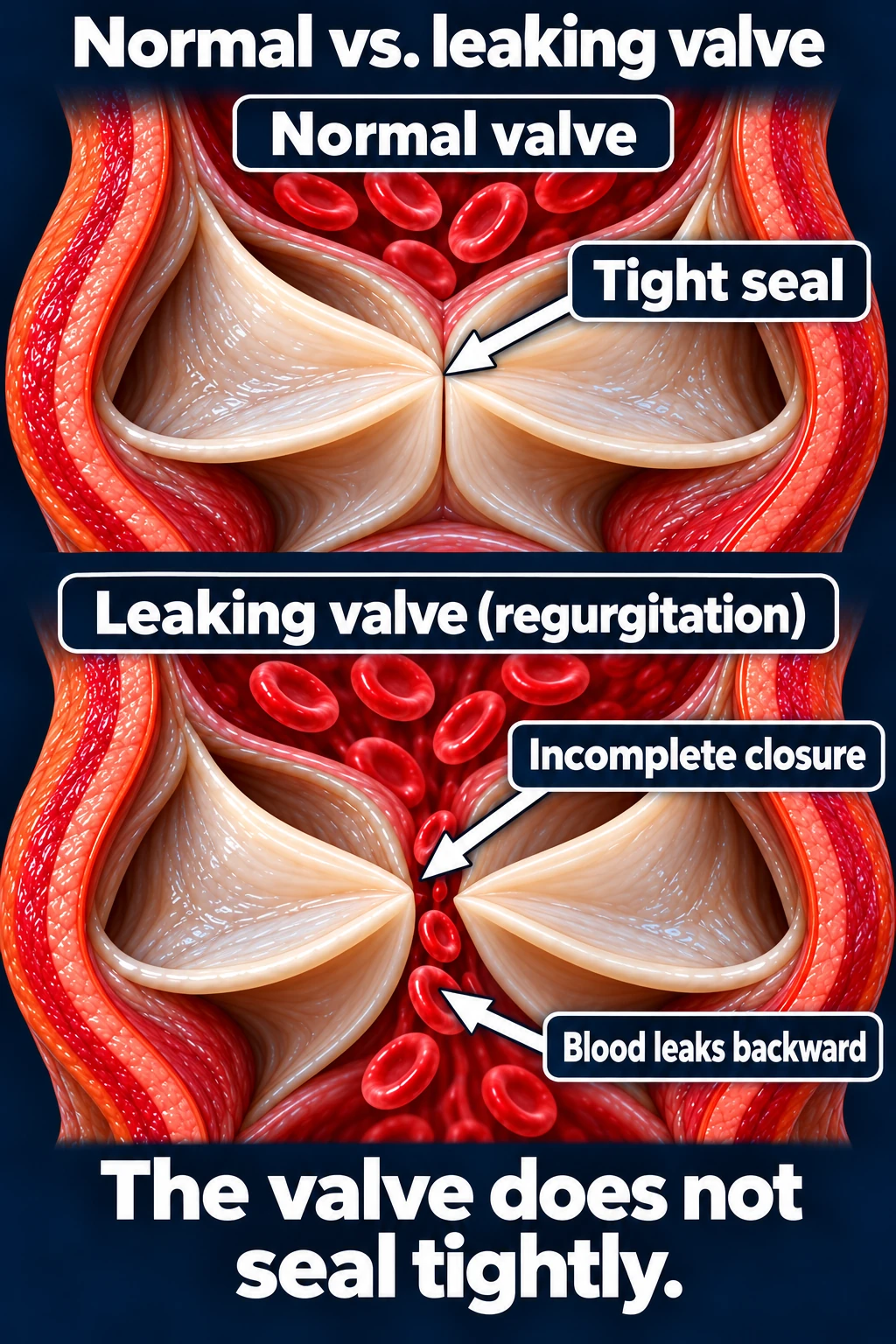
A leaking valve does not close tightly, allowing some blood to flow backward.
For example, mitral regurgitation allows blood to leak from the left ventricle back into the left atrium when the heart squeezes.
Which valve problems might I hear about?
Your diagnosis usually identifies the valve affected and the problem it has:
Aortic stenosis
A narrowed aortic valve.
Aortic regurgitation
A leaking aortic valve.
Mitral regurgitation
A leaking mitral valve.
Mitral stenosis
A narrowed mitral valve.
Tricuspid regurgitation
A leaking tricuspid valve.
The pulmonary valve can also become narrowed or leaky. More than one valve may be affected.
Why does valve disease develop?
Some people are born with an abnormal valve. Others develop valve problems later because of calcium buildup, changes in valve tissue, infection, or other heart conditions.
For example, a bicuspid aortic valve has two flaps instead of the usual three. It may work well for years but can become narrowed or leaky over time. Enlargement of the heart can also prevent certain valves from closing properly.
How serious is heart valve disease?
Valve disease can range from mild to severe. Some mild problems remain stable and only need monitoring. More significant problems can place extra strain on the heart and eventually contribute to heart failure.
You can have important valve disease even without obvious symptoms. Your cardiologist considers the valve’s severity, your symptoms, and its effect on your heart to decide when treatment is needed. Not everyone needs a procedure, but regular follow-up helps identify changes before lasting damage occurs.
Updated October 2026. Educational information; your own care plan may differ. Medical illustrations are simplified examples for teaching.