What should I do now?
Call 911
Call 911 for fainting, chest pressure, severe trouble breathing, or severe dizziness that makes you feel you may pass out. Do not drive yourself.
Contact your care team
Contact your care team for new dizziness, unusual fatigue, near-fainting, or a drop in activity. Report device-site concerns promptly after implantation.
Keep your care plan
Keep your treatment and follow-up plan. Bring questions, readings, and your medication list.
SECTION 4
How are a slow heartbeat and heart block treated?
Treatment depends on which electrical problem is present, whether it causes symptoms, and whether the cause can be corrected. Not everyone with a slow pulse needs a pacemaker.
1. Observation: when treatment is not needed
A slow heart rate can be normal during sleep or in physically active people. Some mild electrical delays can also be safely monitored.
Your clinician may recommend follow-up and rhythm monitoring rather than immediate treatment.
2. Treating a reversible cause
Sometimes the heart rate improves when an underlying problem is addressed. Treatment may include:
- Adjusting medications that slow the heart rate.
- Treating an underactive thyroid.
- Correcting an electrolyte imbalance.
- Treating sleep apnea.
Do not stop or change prescribed medications on your own. Your care team will determine which changes are appropriate.
3. A pacemaker: supporting the heart’s electrical system
When the electrical problem cannot be corrected, a pacemaker may be needed. This small implanted device sends electrical impulses to help the heart beat when its own signals are too slow or unreliable.
The goal is to maintain an adequate heart rate, reduce symptoms caused by slow rhythms, and protect against dangerous pauses or blocked signals.
For sinus node dysfunction: A pacemaker may help when a slow rate, pauses, or an inadequate rise in heart rate during activity causes symptoms. The decision depends on how your symptoms relate to the recorded rhythm—not simply one low pulse reading.
For heart block: Certain serious forms, including Mobitz II, high-grade block, and complete heart block, generally require a pacemaker when there is no reversible cause. Treatment may be needed even if you feel well.
Which type of pacemaker will I receive?
The type of pacemaker is determined by many factors, including your electrical problem, which chambers need support, your heart’s pumping strength, your anatomy, and your overall health. Your physician will explain the options and recommend the pacemaker best suited to you.
These are three examples. They are not the only pacing options.
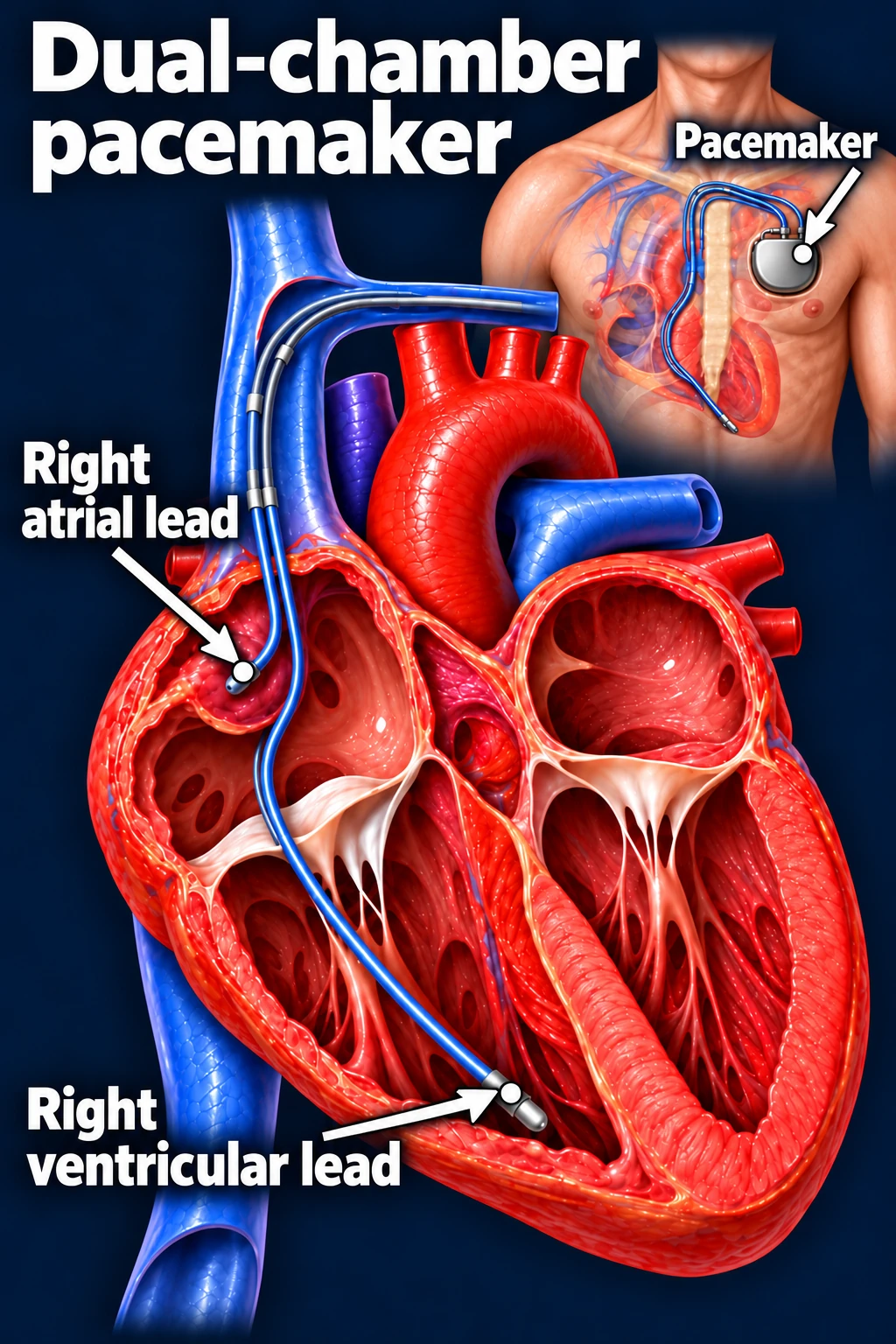
Standard transvenous dual-chamber pacemaker
The battery and electronics, called the pulse generator, sit under the skin in the left upper chest. Two thin wires, called leads, travel through a vein into the heart: one in the right atrium and one in the right ventricle. They help coordinate the upper and lower chambers.
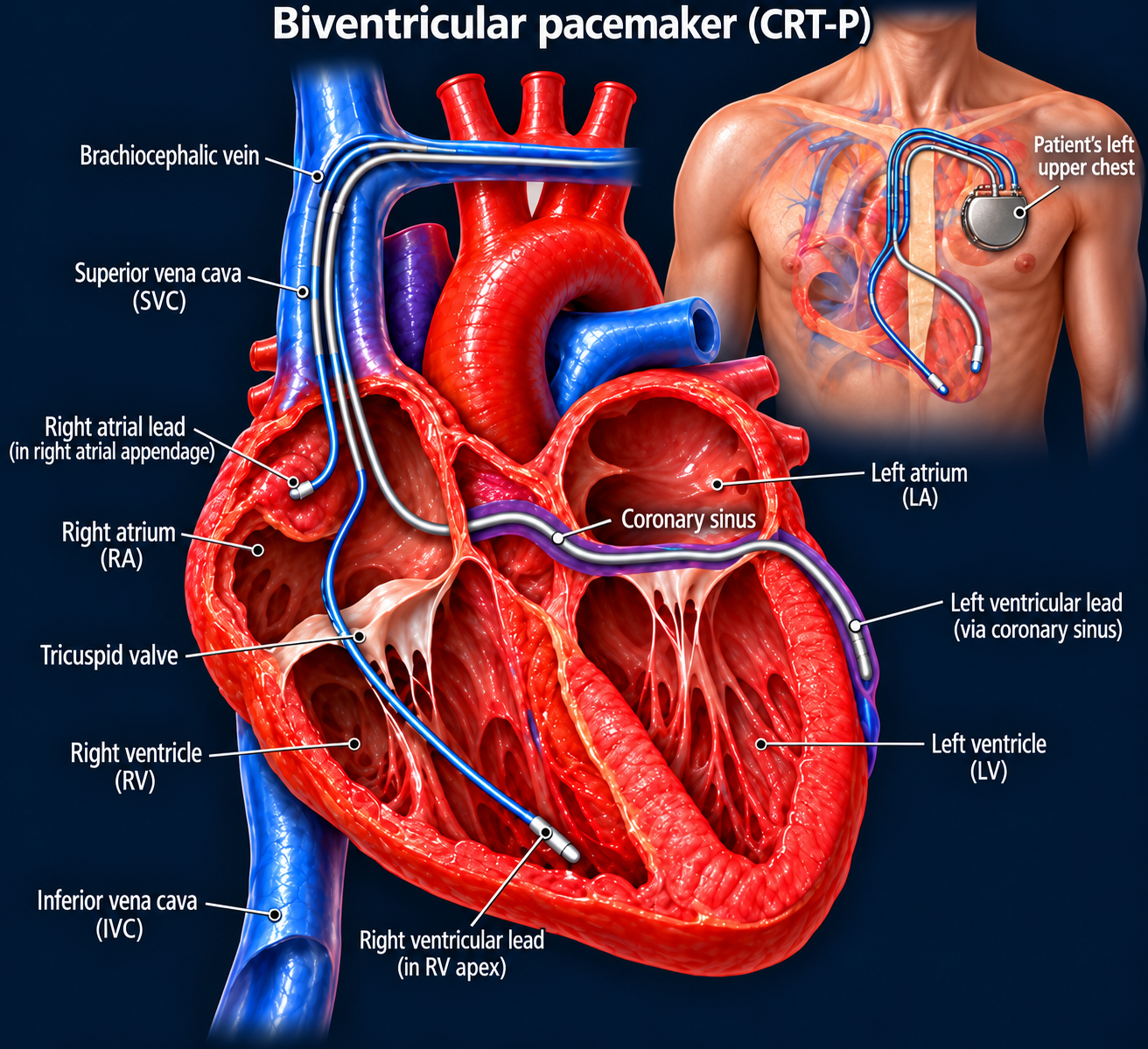
Standard transvenous biventricular pacemaker
Also called cardiac resynchronization therapy, or CRT-P, this example has three leads: one in the right atrium, one in the right ventricle, and a third that travels through the coronary sinus into a vein on the outside of the left ventricle.
It helps the lower chambers pump together and is used for selected patients who need this additional support.
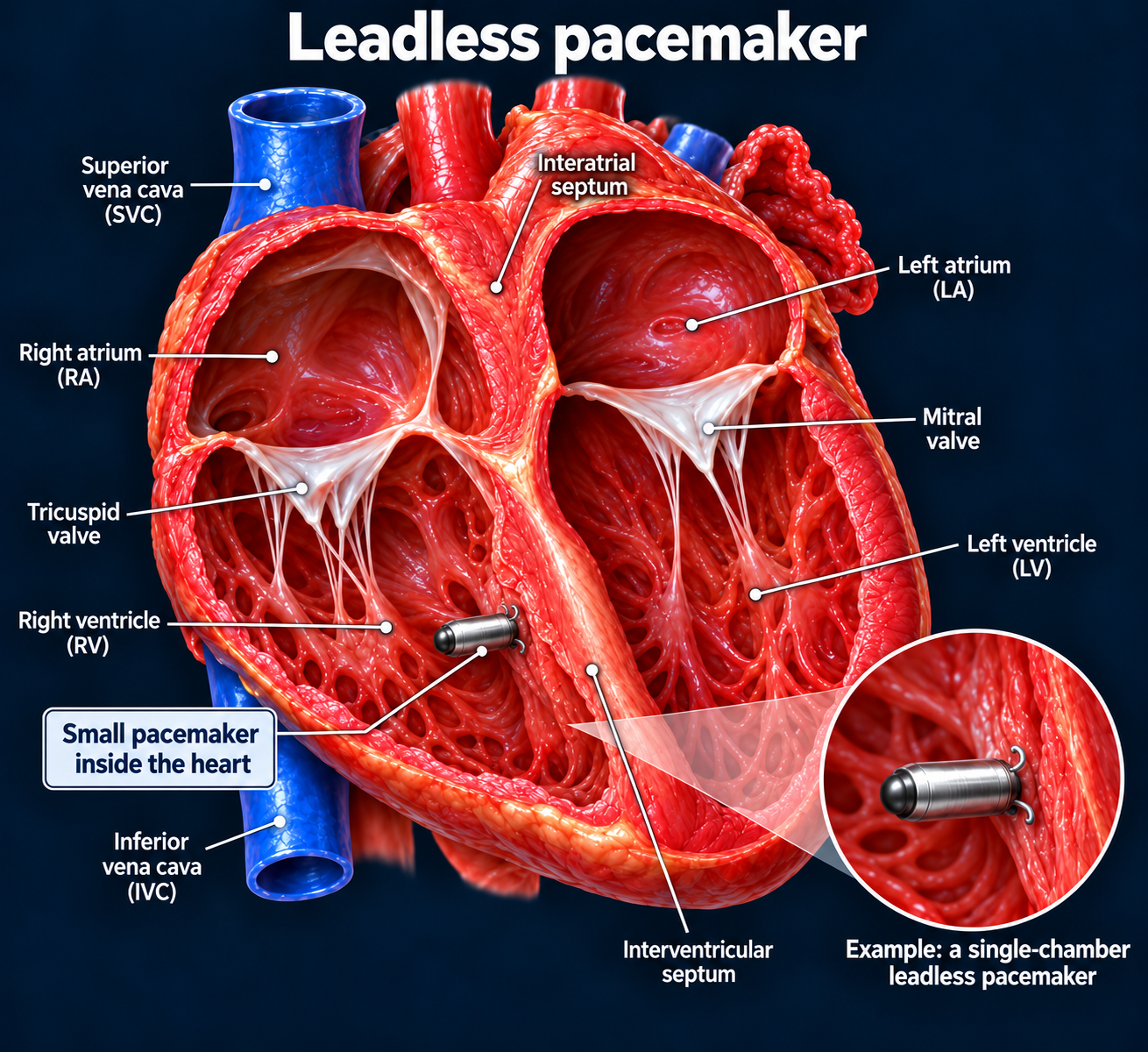
Leadless pacemaker
A small pacemaker is placed directly inside the heart, without a chest generator or the long wires used by a transvenous system. The picture shows one example placed in the right ventricle. Other leadless systems can support both the right atrium and right ventricle.
Leadless pacing is an option for selected patients. Your physician will determine whether it provides the type of support you need.
What is the main goal?
We want your heart to beat reliably enough to support your daily activities and keep you safe. Your cardiologist or electrophysiologist will explain whether monitoring, treating an underlying cause, or implanting a pacemaker is the best next step for you.
Updated October 2026. Educational information; your own care plan may differ. Heart illustrations are simplified for teaching.