What should I do now?
Call 911
Call 911 for fainting, chest pressure, severe trouble breathing, or severe dizziness that makes you feel you may pass out. Do not drive yourself.
Contact your care team
Contact your care team for new dizziness, unusual fatigue, near-fainting, or a drop in activity. Report device-site concerns promptly after implantation.
Keep your care plan
Keep your treatment and follow-up plan. Bring questions, readings, and your medication list.
SECTION 3
How are a slow heartbeat and heart block diagnosed?
An EKG or heart rhythm recording shows how your heart’s electrical signals are working. Your clinician uses this information to identify the problem and determine whether it explains your symptoms.
An EKG: checking the electrical signals
An electrocardiogram—also called an ECG or EKG—uses small electrodes placed on your chest and limbs.
It shows how often electrical signals begin and whether they reach the lower chambers normally. This helps distinguish sinus node dysfunction from heart block.

A heart monitor: catching problems that come and go
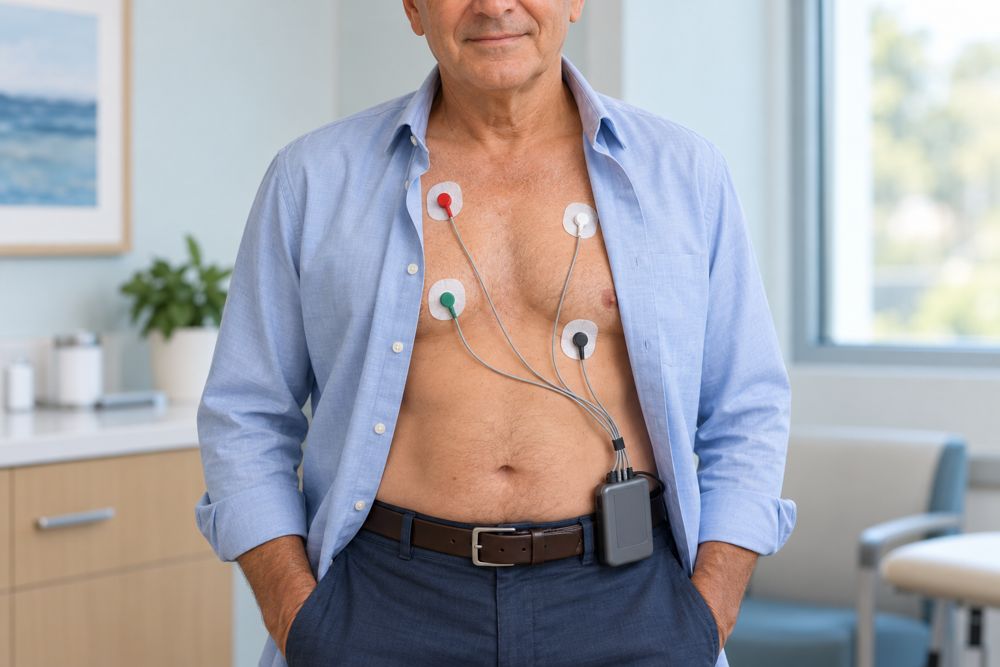
A short office EKG may miss an intermittent slow rhythm or pause. A Holter or patch monitor records your rhythm during daily activities.
While wearing it, record when you feel dizzy, weak, short of breath, or faint. Your care team can compare those times with the recording.
If symptoms are infrequent, longer monitoring may be needed. Selected patients may benefit from a small monitor placed under the skin, called an implantable loop recorder.
Looking for contributing causes
Your clinician reviews your medications and may order blood tests for problems such as low thyroid function or an electrolyte imbalance. Sleep apnea may also be considered, especially when slow rates occur during sleep.
Do not stop prescribed medicines on your own.
Other tests, when needed
- Echocardiogram: Checks the heart’s structure and pumping function.
- Exercise test: Shows whether your heart rate increases appropriately with activity.
Not everyone needs every test.
What if my watch shows a low pulse?
A low-rate alert can be useful to share with your clinician, but the pulse number alone cannot identify heart block or determine whether you need a pacemaker.
The key idea: We want to know which electrical problem is present, when it occurs, and how it relates to your symptoms.
Updated October 2026. Educational information; your own care plan may differ. Heart illustrations are simplified for teaching.