What should I do now?
Call 911
Call 911 for severe trouble breathing at rest, chest pressure, fainting, or new confusion with severe illness. Do not drive yourself.
Contact your care team
Contact your care team promptly for increasing swelling, rapid weight change, worsening breathlessness, or needing more pillows to breathe comfortably.
Keep your care plan
Keep your treatment and follow-up plan. Bring questions, readings, and your medication list.
SECTION 4
How is heart failure treated?
Treatment aims to help you feel better, reduce hospital visits, and improve long-term health. Your plan depends on your type of heart failure, its cause, your kidney function, blood pressure, and other medical conditions. Several treatments often work together.
1. Removing extra fluid
Diuretics, often called water pills, help your kidneys remove extra salt and water through urine. Examples include furosemide (Lasix), torsemide, and bumetanide.
Reducing fluid buildup can improve breathing and swelling. Your doctor adjusts the dose based on your symptoms, weight, kidney function, and blood tests.
Removing fluid helps you feel better, but it is only one part of heart failure treatment. Other medications help protect the heart over time.
2. Treating a weakened heart: reduced EF
For many patients with reduced EF, treatment includes four main groups of medications, sometimes called the four pillars:
ARNI—or an ACE inhibitor or ARB
Sacubitril/valsartan (Entresto) helps reduce strain on the heart. An ACE inhibitor or ARB may be used when an ARNI is unsuitable. These are alternatives within this treatment group.
Evidence-based beta-blockers
Carvedilol, metoprolol succinate, and bisoprolol reduce the effects of stress hormones on the heart and can help heart function improve over time.
Mineralocorticoid receptor antagonists (MRAs)
Spironolactone or eplerenone blocks a hormone that contributes to fluid retention and harmful changes in the heart.
SGLT2 inhibitors
Dapagliflozin (Farxiga) or empagliflozin (Jardiance) helps reduce heart failure hospitalizations and provides heart protection. These medications can benefit patients with or without diabetes.
These medications work together to reduce hospitalization and the risk of death. Your doctor chooses appropriate doses and adjusts them as tolerated. Blood pressure, kidney function, and potassium levels help guide treatment.
3. Treating a stiff heart: preserved EF
HFpEF has effective treatments, even when the EF is normal. Treatment may include:
- Diuretics to relieve fluid buildup.
- SGLT2 inhibitors to reduce worsening heart failure and hospitalizations.
- Other medications for selected patients, including finerenone or medicines that help control blood pressure.
- Treating contributing conditions, including high blood pressure, atrial fibrillation, diabetes, kidney disease, and sleep apnea.
- Addressing obesity when present, through nutrition, activity, and appropriate weight-management treatments.
Your doctor selects treatments that fit your particular condition. The medication plan for HFpEF may differ from the four-pillar plan used for reduced EF.
4. Treating the underlying cause
Treatment also addresses the problem that caused or worsened your heart failure. This may involve treating coronary artery disease, repairing a significant valve problem, controlling an abnormal heart rhythm, or treating a specific heart muscle disease.
Healthy habits—including an individualized salt and fluid plan, appropriate activity, and avoiding smoking—support your medical treatment.
5. Devices for selected patients
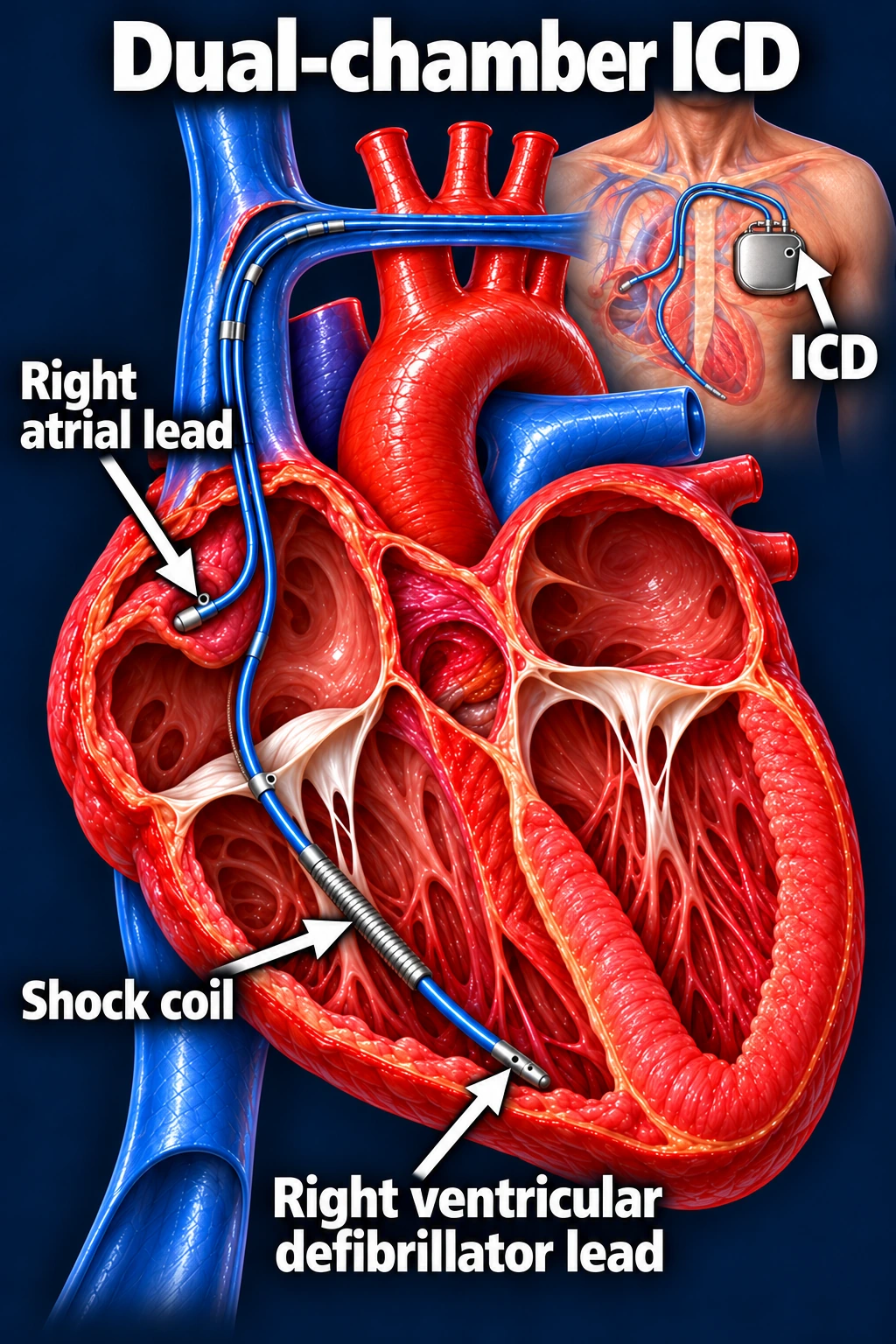
An implantable defibrillator (ICD)
Some patients with reduced heart function have an increased risk of dangerous ventricular rhythms. An ICD can detect and treat VT or VF to help prevent sudden cardiac death. An ICD provides rhythm protection; it does not directly strengthen the heart’s pumping.
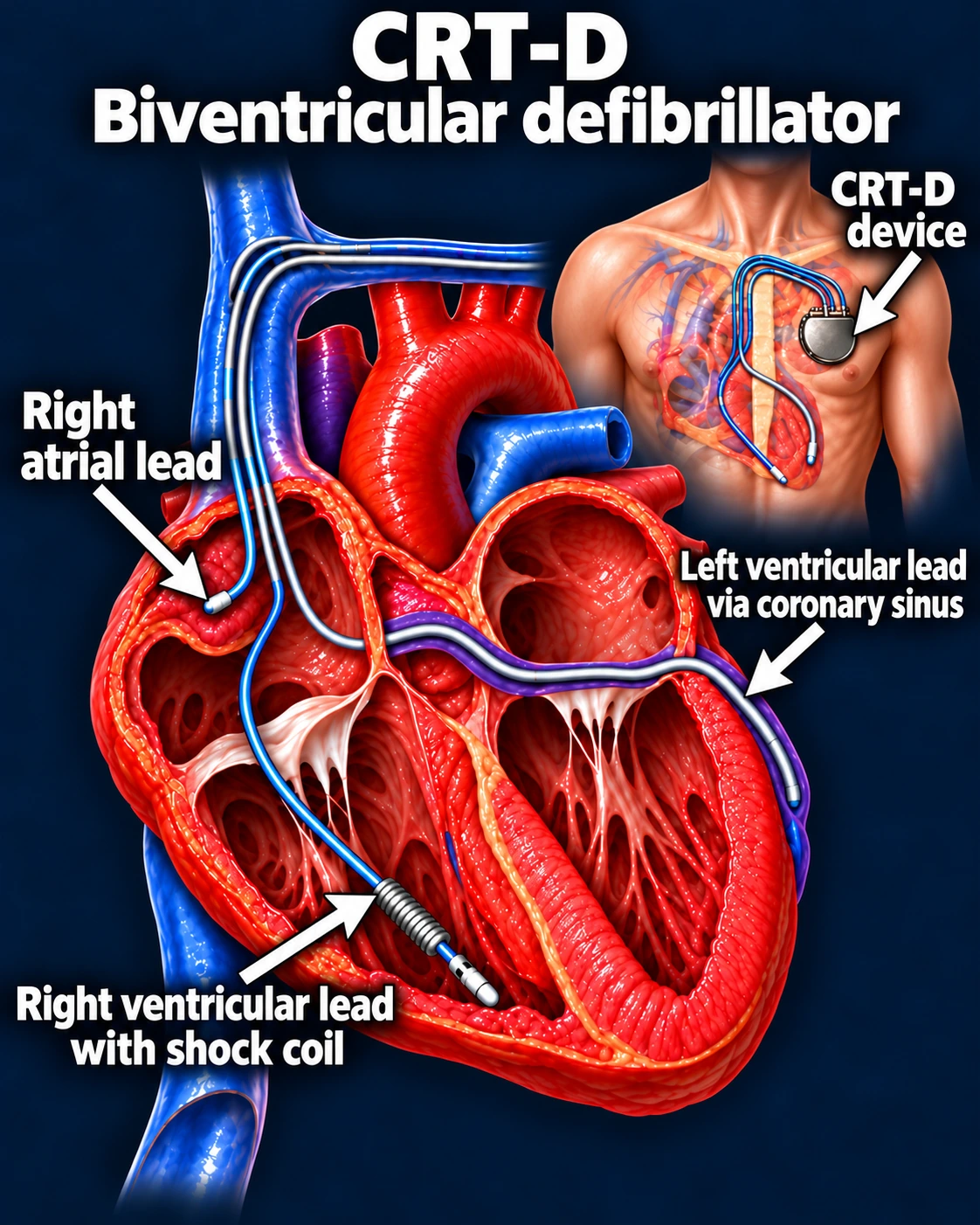
Cardiac resynchronization therapy (CRT)
In some patients, delayed electrical signals cause the ventricles to squeeze out of coordination. CRT uses pacing to help them work together, which can improve symptoms and heart function.
CRT may be provided by a CRT-P pacemaker or a CRT-D, which also includes defibrillator protection. Your physician determines whether you would benefit and which device fits your needs.
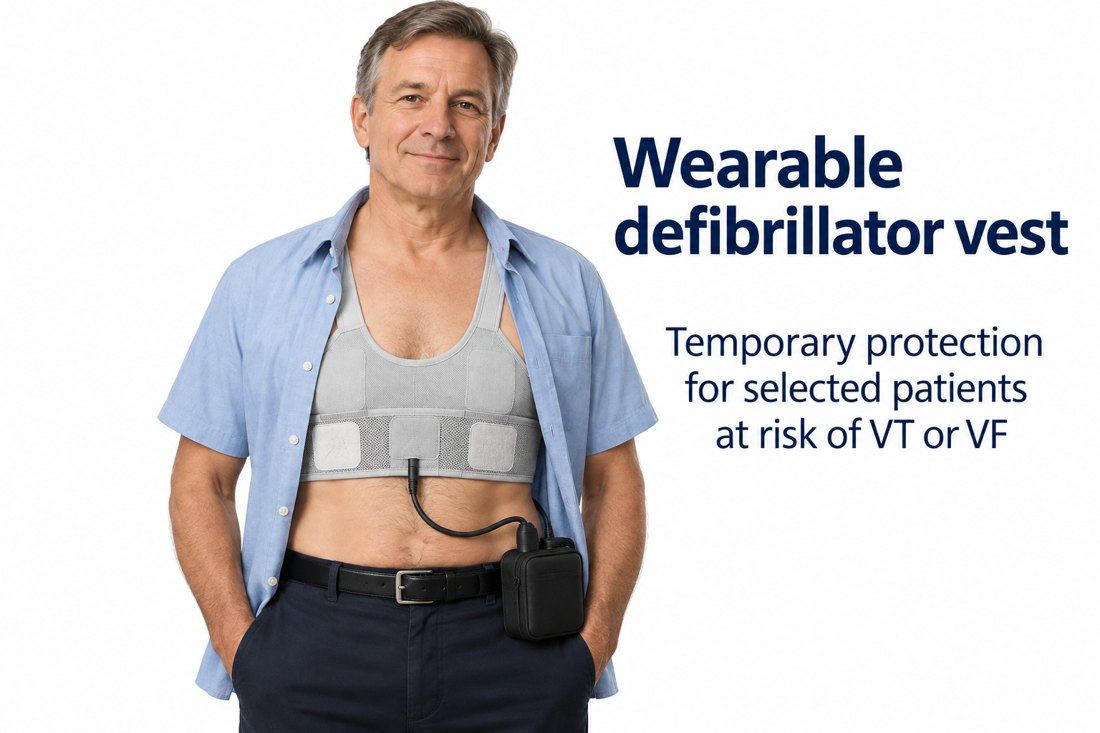
A wearable defibrillator vest
Selected patients may receive temporary protection with a wearable defibrillator while their heart function is reassessed or a long-term treatment decision is made. It protects against certain dangerous rhythms when worn as directed; it does not treat the underlying heart failure.
6. When more advanced treatment is needed
Patients with persistent severe symptoms despite treatment may benefit from an advanced heart failure specialist. Options can include additional therapies, a mechanical heart pump called an LVAD, or evaluation for a heart transplant.
These treatments are reserved for selected patients. Your care team helps you understand the options and choose care that fits your health and goals.
Treatment continues even when you feel better
Feeling better or having an improved EF does not mean you should stop your medications. Continuing treatment helps maintain improvement. Your cardiologist will guide medication changes and follow-up testing.
Updated October 2026. Educational information; your own care plan may differ. Medical illustrations are simplified examples for teaching.