What should I do now?
Call 911
Call 911 for new or unexplained chest pressure that lasts more than a few minutes or returns, especially with sweating, nausea, breathlessness, or faintness. Do not drive yourself.
Contact your care team
Contact your care team promptly for a change in your usual symptom pattern, reduced exercise tolerance, or medication problems. New or persistent chest symptoms need acute assessment.
Keep your care plan
Keep your treatment and follow-up plan. Bring questions, readings, and your medication list.
SECTION 4
How is coronary artery disease treated?
Treatment has three main goals:
- Reduce the risk of a heart attack.
- Improve symptoms and daily activity.
- Restore blood flow when a procedure is needed.
Your plan depends on your symptoms, the location and severity of narrowing, your heart’s pumping function, and your overall health. Not every narrowing requires a stent or surgery.
1. Protecting your arteries
Healthy habits and risk-factor treatment are the foundation of CAD care—even after a stent or bypass surgery.
This includes stopping tobacco use, eating a heart-healthy diet, staying active at a level approved by your care team, and managing weight, blood pressure, cholesterol, and diabetes.
Cholesterol-lowering medications
Statins are usually the first medication used to lower LDL cholesterol in patients with CAD. Examples include atorvastatin and rosuvastatin.
Some patients also need another medication, such as ezetimibe or a PCSK9 inhibitor, to reach their cholesterol goal. These treatments remain important even when you feel well.
Medications that reduce clot formation
Your doctor may prescribe an antiplatelet medication, such as aspirin, to help prevent blood clots.
After a heart attack or stent, patients often need aspirin plus another antiplatelet medication, such as clopidogrel, ticagrelor, or prasugrel. This is called dual antiplatelet therapy.
Your doctor determines the combination and duration by balancing protection from clots against bleeding risk. Do not stop these medications without speaking with your prescribing team.
2. Relieving angina
Medications can help reduce chest discomfort and improve your ability to be active.
Depending on your situation, your doctor may prescribe:
- Beta blockers: Reduce heart rate and the heart’s workload.
- Calcium channel blockers: Help relieve angina.
- Nitrates, including nitroglycerin: Help relieve chest discomfort.
- Other antianginal medicines: May be added if symptoms continue.
Your doctor chooses medications based on your symptoms, blood pressure, heart rate, and other conditions.
3. Opening an artery with a stent
A stent is a small metal mesh tube placed inside a coronary artery to hold a narrowed area open.
During the procedure, a catheter carries a balloon and stent to the narrowing. The balloon expands the stent against the artery wall. The balloon is removed, and the stent stays in place to support blood flow.
Many stents release medication that helps reduce tissue growth and repeat narrowing.
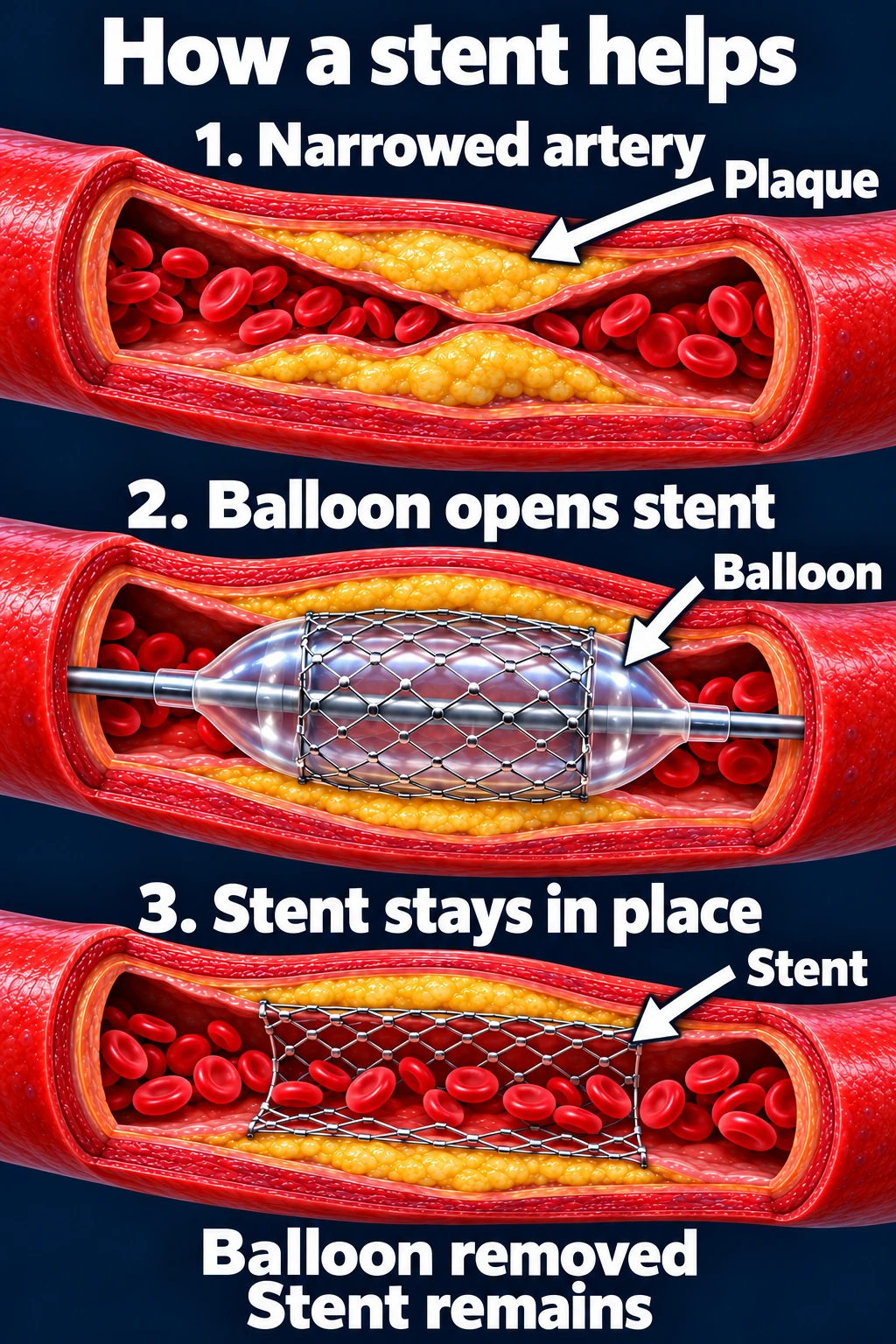
A stent may be needed urgently during a heart attack. For stable CAD, it may help when an important narrowing causes symptoms despite medication. The decision considers your whole clinical picture, rather than a percentage alone.
4. Bypass surgery
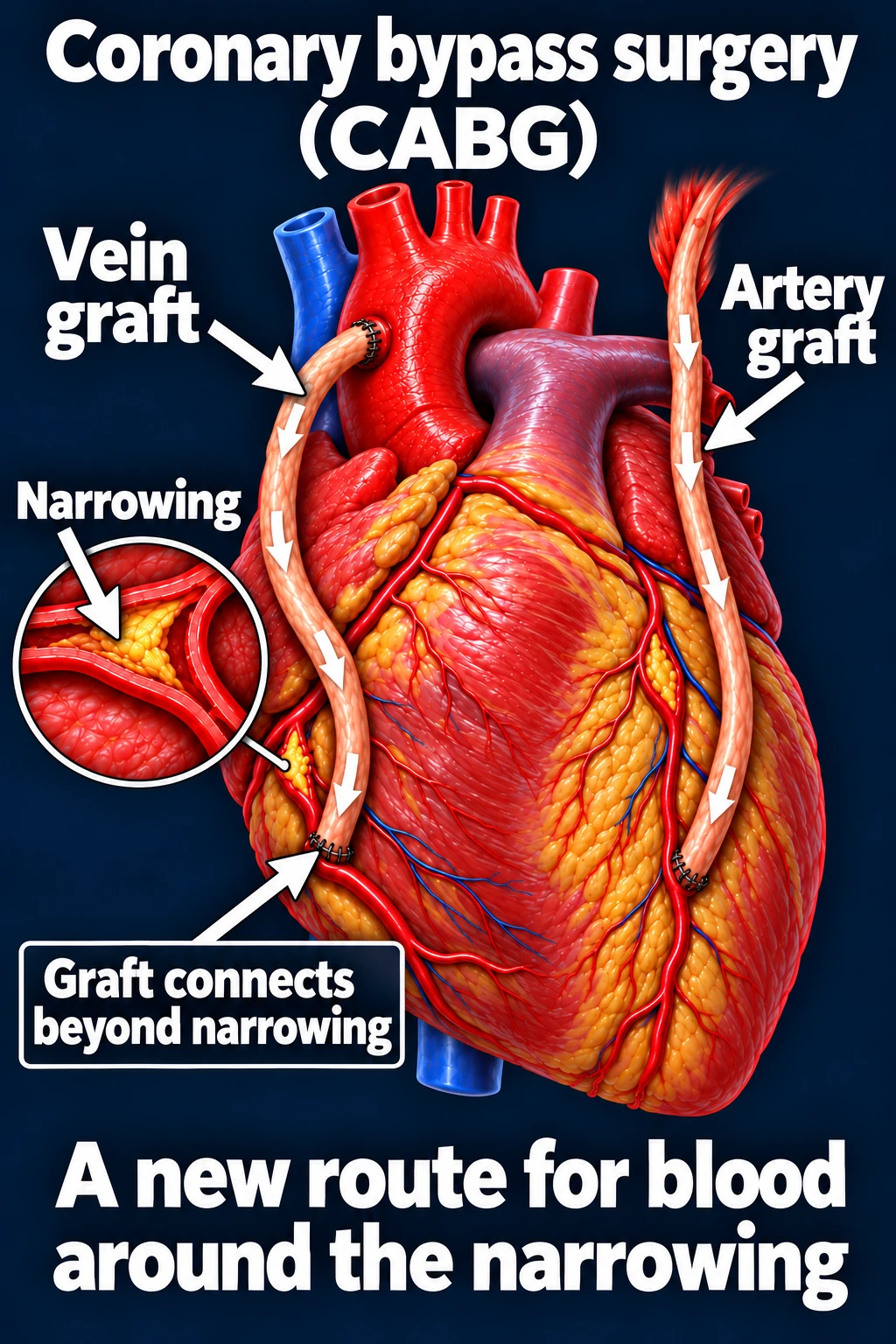
Coronary artery bypass grafting, or CABG, creates a new route for blood to reach the heart muscle around a narrowed or blocked artery.
The surgeon uses an artery or vein from elsewhere in the body to build this route.
Bypass surgery may be recommended when the pattern of disease is better treated with surgery—for example, certain complex blockages involving multiple arteries. Your cardiology and surgical teams help determine the best approach.
5. Cardiac rehabilitation
After a heart attack, stent, or bypass surgery, eligible patients benefit from cardiac rehabilitation.
This program combines supervised exercise, education, nutrition guidance, and support to help you recover and protect your heart.
Treatment continues after a procedure
A stent or bypass improves blood flow in a specific area. Ongoing medication, healthy habits, and follow-up remain part of your CAD treatment plan.
Updated October 2026. Educational information; your own care plan may differ. Medical illustrations are simplified examples for teaching.