What should I do now?
Call 911
Call 911 for new or unexplained chest pressure that lasts more than a few minutes or returns, especially with sweating, nausea, breathlessness, or faintness. Do not drive yourself.
Contact your care team
Contact your care team promptly for a change in your usual symptom pattern, reduced exercise tolerance, or medication problems. New or persistent chest symptoms need acute assessment.
Keep your care plan
Keep your treatment and follow-up plan. Bring questions, readings, and your medication list.
SECTION 1
What is coronary artery disease?
Your heart pumps blood to your body, but the heart muscle also needs its own blood supply. The vessels that provide this blood are called the coronary arteries. They run along the surface of the heart and deliver the oxygen and nutrients the muscle needs to work.
Coronary artery disease, or CAD, usually develops when plaque builds up within the walls of these arteries. Plaque contains cholesterol, fats, calcium, and other substances. This process is called atherosclerosis.
How does plaque affect blood flow?
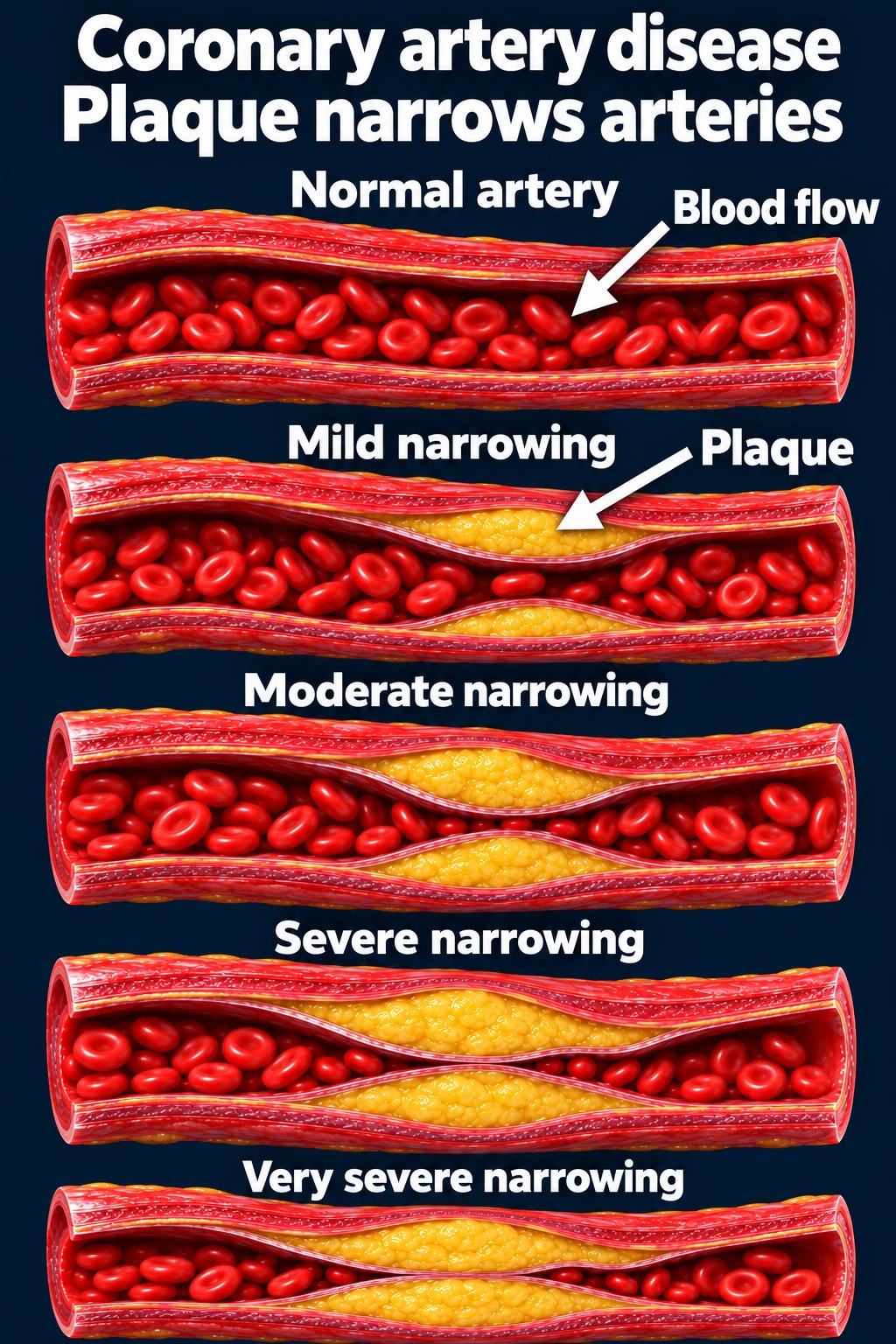
A healthy coronary artery has an open channel that allows blood to reach the heart muscle. As plaque accumulates, it can narrow that channel and limit blood flow.
When you exercise or experience stress, your heart needs more oxygen. A narrowed artery may not deliver enough blood to meet that increased demand. This can cause angina—discomfort from an inadequate blood supply to the heart muscle.
CAD can also be present without noticeable symptoms, especially before a narrowing significantly affects blood flow.
How can CAD cause a heart attack?
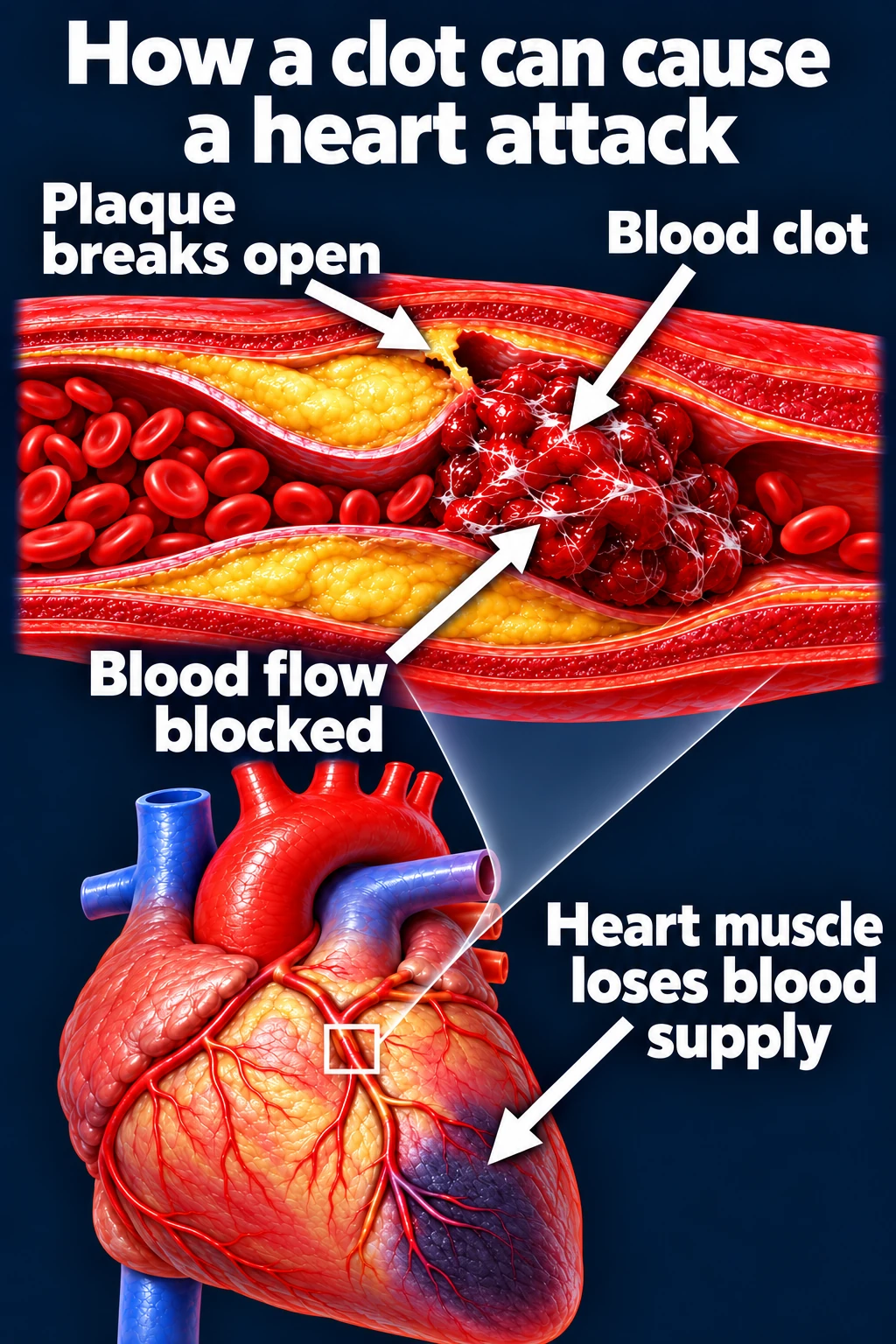
Sometimes the surface of a plaque breaks open. A blood clot can form at that location, suddenly reducing or blocking blood flow.
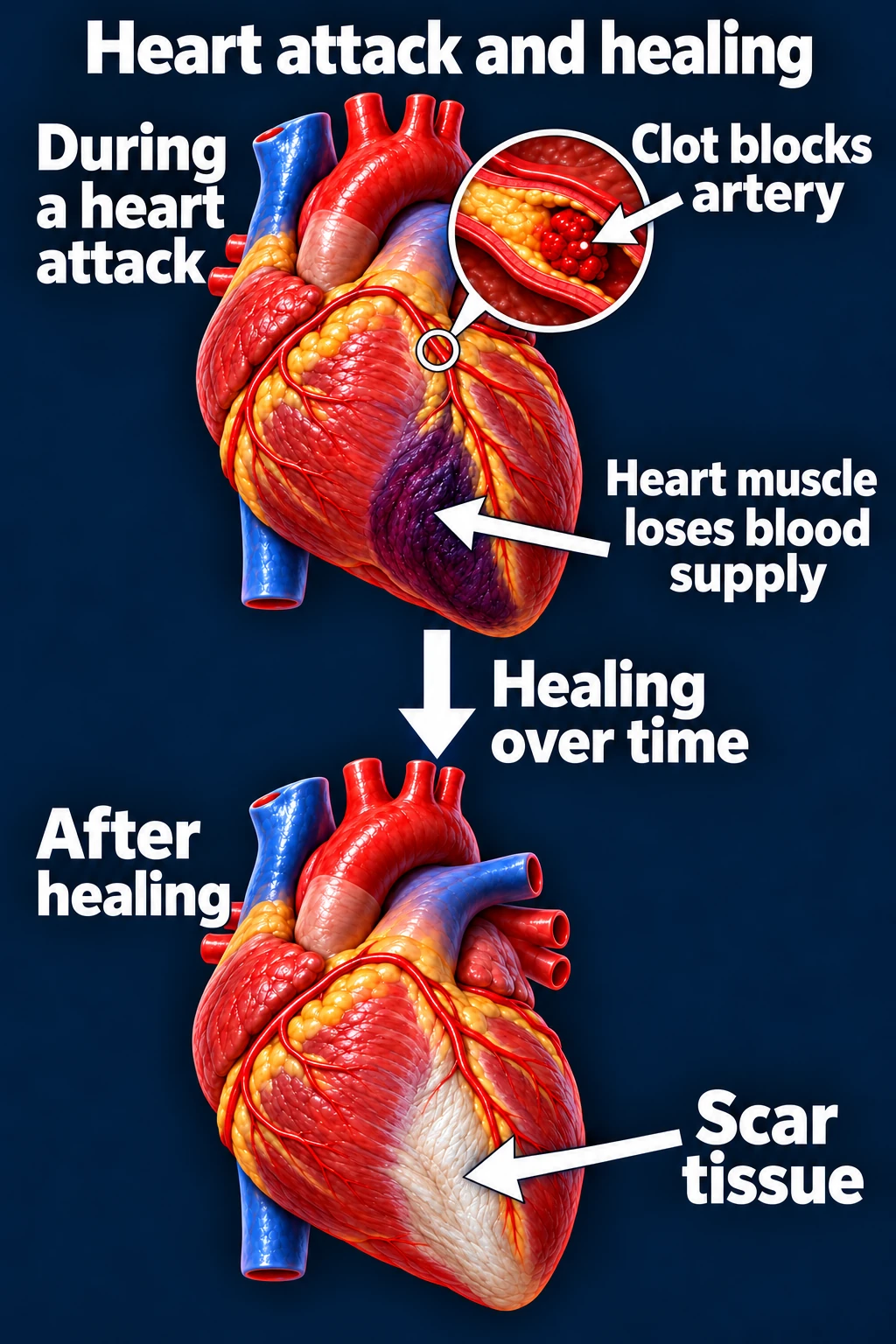
If blood flow is not restored quickly, the heart muscle supplied by that artery can become damaged or die. This is a heart attack, also called a myocardial infarction, or MI.
A plaque does not have to cause a severe narrowing before it breaks open. This is why treatment focuses on the health of your arteries and reducing future risk, as well as treating important blockages.
What happens to the heart after a heart attack?
An injured area of heart muscle may heal with scar tissue. Scar does not squeeze as well as healthy muscle, so a larger heart attack can weaken the heart’s pumping function.
The amount of damage depends on the area affected and how quickly blood flow is restored. Early treatment can help limit heart damage.
What increases the risk of CAD?
Common risk factors include:
- High LDL cholesterol
- High blood pressure
- Tobacco use
- Diabetes
- Physical inactivity and excess weight
- Increasing age
- A family history of early CAD
Some risk factors are inherited. Others can improve with treatment and healthy habits.
Can CAD be treated?
Yes. Treatment can reduce symptoms and lower the risk of future heart attacks. It may include medications, lifestyle changes, and—for selected patients—a stent or bypass surgery.
CAD generally requires ongoing care. Even after a procedure improves blood flow, medications and risk-factor management remain important for protecting your heart.
Updated October 2026. Educational information; your own care plan may differ. Medical illustrations are simplified examples for teaching.