What should I do now?
Call 911
Call 911 for new or unexplained chest pressure that lasts more than a few minutes or returns, especially with sweating, nausea, breathlessness, or faintness. Do not drive yourself.
Contact your care team
Contact your care team promptly for a change in your usual symptom pattern, reduced exercise tolerance, or medication problems. New or persistent chest symptoms need acute assessment.
Keep your care plan
Keep your treatment and follow-up plan. Bring questions, readings, and your medication list.
SECTION 3
How is CAD diagnosed?
Your doctor starts by reviewing your symptoms, medical history, family history, and risk factors. A physical examination and blood tests—including cholesterol and blood sugar—help guide the evaluation.
Different tests answer different questions. Some look for plaque or narrowing, while others assess blood flow or heart muscle injury. You may not need every test.
EKG and blood tests
An electrocardiogram, also called an EKG or ECG, records the heart’s electrical activity.
When a heart attack is suspected, the medical team also checks blood tests such as troponin, a marker of heart muscle injury. These results help determine whether urgent treatment is needed.
Stress testing
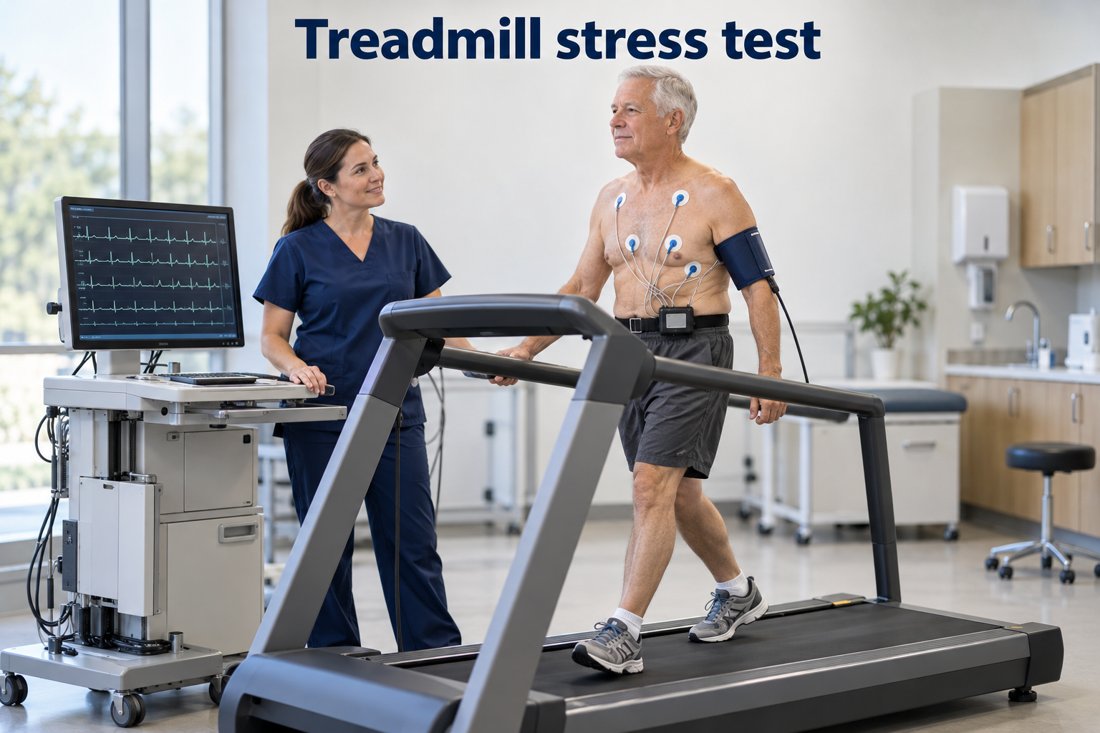
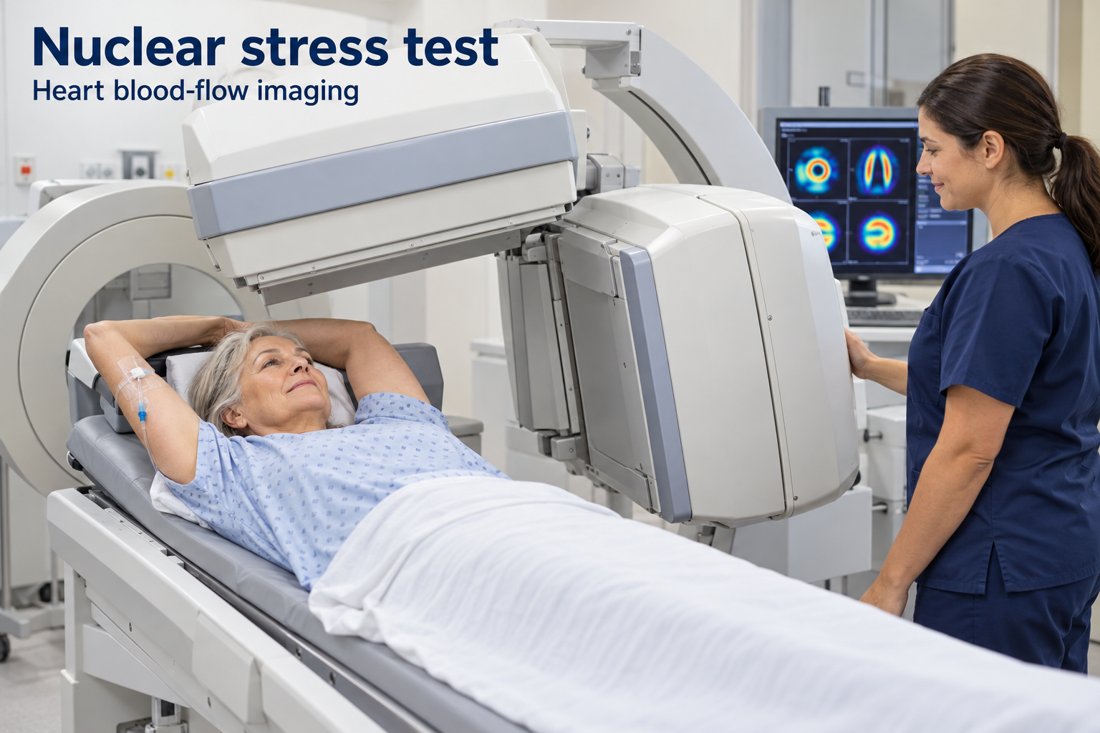
A stress test evaluates your heart during exercise or with medication that changes its workload or blood flow.
Depending on the test, your doctor may use an EKG, ultrasound, or nuclear imaging—such as SPECT or PET—to look for areas receiving an inadequate blood supply.
Coronary CT angiography
Coronary CT angiography, or CCTA, uses a CT scanner and contrast dye to create detailed pictures of the coronary arteries. It helps your doctor look for plaque and narrowing.
Coronary calcium scan
A calcium scan measures calcium within plaque in the coronary artery walls. It can help assess cardiovascular risk and guide prevention decisions.
A calcium score is not a percentage blockage. This scan measures calcified plaque rather than directly showing how much blood reaches the heart muscle.
Cardiac catheterization and coronary angiography
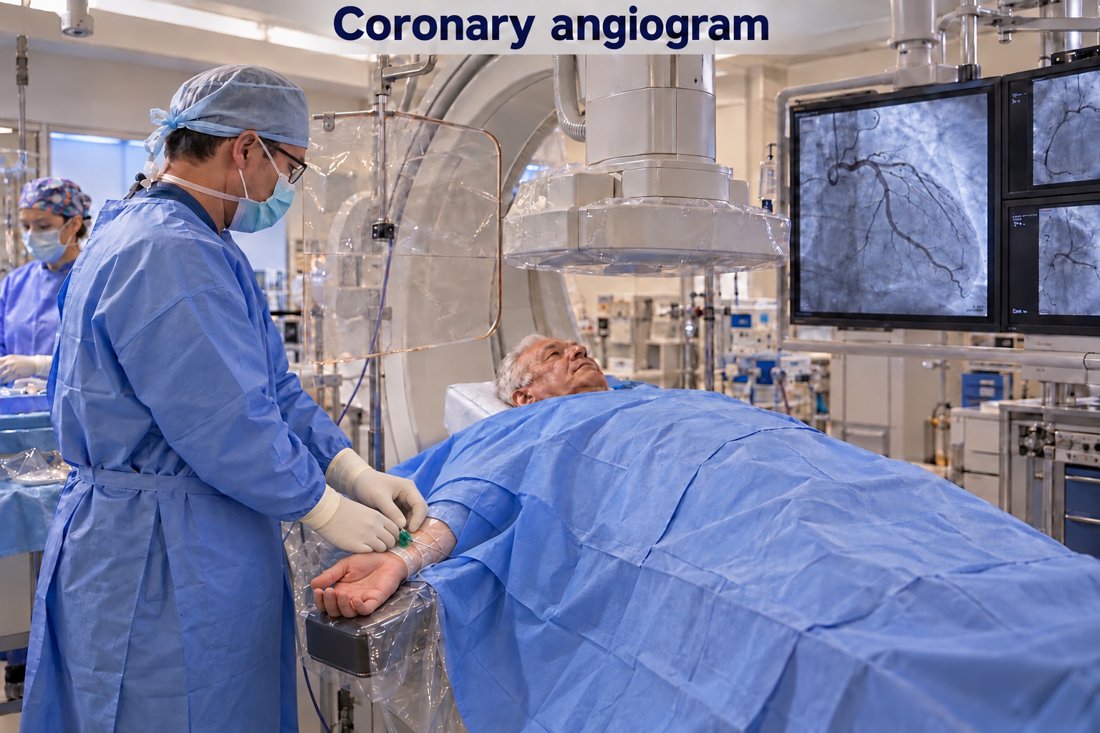
For selected patients, your doctor may recommend a coronary angiogram. A thin catheter is guided through a blood vessel to the heart, and contrast dye with X-ray imaging outlines the coronary arteries.
This helps identify important narrowings and guide decisions about medications, a stent, or bypass surgery.
Looking for heart muscle damage
An echocardiogram or cardiac MRI may also be used to evaluate the heart muscle. Cardiac MRI can show areas of scarring after a heart attack.
Updated October 2026. Educational information; your own care plan may differ. Medical illustrations are simplified examples for teaching.