Assess the event, identify higher-risk features, and determine referral urgency.
Determine urgency first
Ongoing instability, chest pain, severe dyspnea, serious injury, significant bleeding, persistent altered mental status, or a dangerous rhythm requires emergency assessment. Activate EMS for an unstable patient.
Recovered patients with concerning cardiac features still need prompt risk-based evaluation. A high-risk presentation should not be managed by ordering an ambulatory monitor and waiting.[4]
Build the event timeline
Document position, activity, triggers, prodrome, palpitations, duration, witnessed behavior, injury, and recovery. Ask about previous events, cardiac disease, family sudden death, medications, recent fluid loss, and bleeding symptoms.
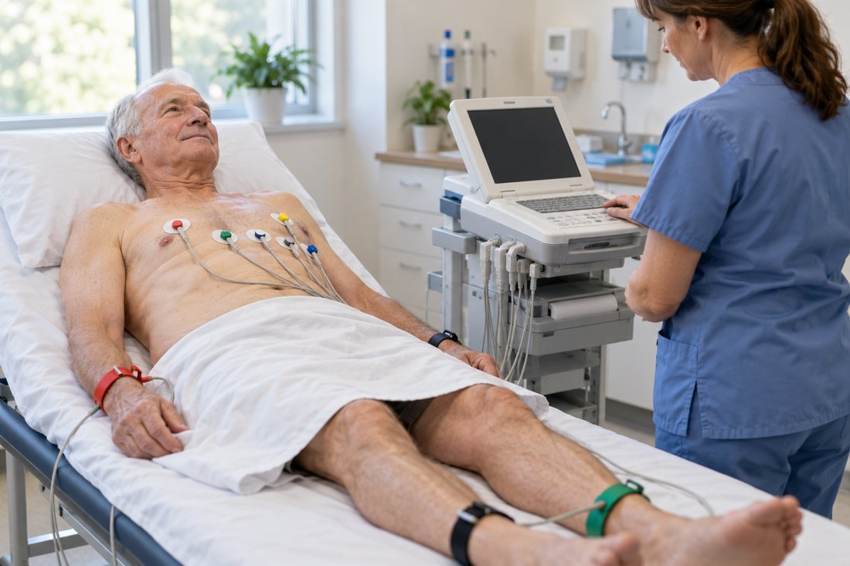
Check vital signs, orthostatic BP/heart rate when safe, cardiovascular examination, and a 12-lead EKG.[2]
A resting 12-lead EKG is part of the initial syncope evaluation; a normal tracing does not exclude an intermittent arrhythmia.Open full-size image →
Use targeted testing
Choose tests from the history, examination, and EKG. Examples include glucose when hypoglycemia is possible, CBC for suspected bleeding/anemia, and electrolytes/renal function when relevant.
Cardiology can coordinate imaging if structural disease is suspected, exercise evaluation for selected exertional events, or tilt/autonomic testing for selected unresolved cases. Routine broad labs, brain/carotid imaging, or EEG are not indicated for uncomplicated syncope without a specific clinical reason.[2]
Address likely reflex or orthostatic contributors
For a reassuring assessment, explain the suspected mechanism, review BP-lowering medications and volume status, and teach patients to sit or lie down promptly with warning symptoms. Hydration, salt advice, and medication changes must fit the patient’s HF, kidney disease, hypertension, and other conditions.[3]
Refer and plan safety
Refer unexplained recurrent events, suspected arrhythmic syncope, abnormal conduction, or structural concerns to cardiology/EP. Selected autonomic or neurologic presentations require other specialist assessment.
Send the event narrative, witness details, EKG, medication list, and prior results. Discuss driving and hazardous activity restrictions according to cause, recurrence risk, and local requirements; do not give one universal restriction for every patient.[2], [4]