Prevent events, relieve angina, and assess when revascularization may help.
Two goals: prevent events and relieve angina
Prevention and symptom control are complementary. A patient without chest pain still needs risk reduction, and a patient with persistent angina may need treatment adjustment or revascularization assessment.
Reduce long-term cardiovascular risk
Lipids: use high-intensity or maximally tolerated statin therapy for established CAD; add evidence-based nonstatin treatment when needed.
2026 LDL goals: for very-high-risk ASCVD, the LDL-C goal is <55 mg/dL. Individualize other targets by risk and reassess adherence and response.
Broader care: address smoking, BP, diabetes/metabolic risk, exercise, diet, and medication access. Offer cardiac rehabilitation when eligible.
Low-dose aspirin is commonly recommended for established chronic coronary disease without an indication for oral anticoagulation, when appropriate and not contraindicated. Following ACS, aspirin plus a P2Y12 inhibitor is the default for at least 12 months in patients without high bleeding risk; other strategies are used when bleeding risk or anticoagulation changes the balance.
Elective PCI and concurrent anticoagulation require different plans. Confirm the indication, duration, and responsible cardiology team. Coordinate any interruption for bleeding or procedures, especially after recent stenting.[3], [5]
Control angina
Beta blocker or calcium channel blocker
Common first-line symptom treatment, selected according to BP, heart rate, ventricular function, and mechanism.
Long-acting nitrate or another class
Additional symptom control when needed.
Ranolazine
An option for persistent symptoms despite other antianginal treatment.
Sublingual nitroglycerin
Short-term relief within an individualized action plan.
Do not combine nitrates with PDE5 inhibitors such as sildenafil or tadalafil. Verify recent use and the appropriate drug-specific interval before prescribing or administering a nitrate.[3]
Teach patients to seek emergency care for new, prolonged, or worsening symptoms rather than repeatedly treating them as usual angina.
When should revascularization be considered?
Refer lifestyle-limiting angina despite appropriate therapy when a treatable stenosis is present. Some high-risk anatomy or severe LV dysfunction can confer a survival benefit from revascularization. Anatomy, ischemic significance, comorbidities, procedural risk, and patient preferences guide PCI versus CABG, with Heart Team review for complex decisions.[3]
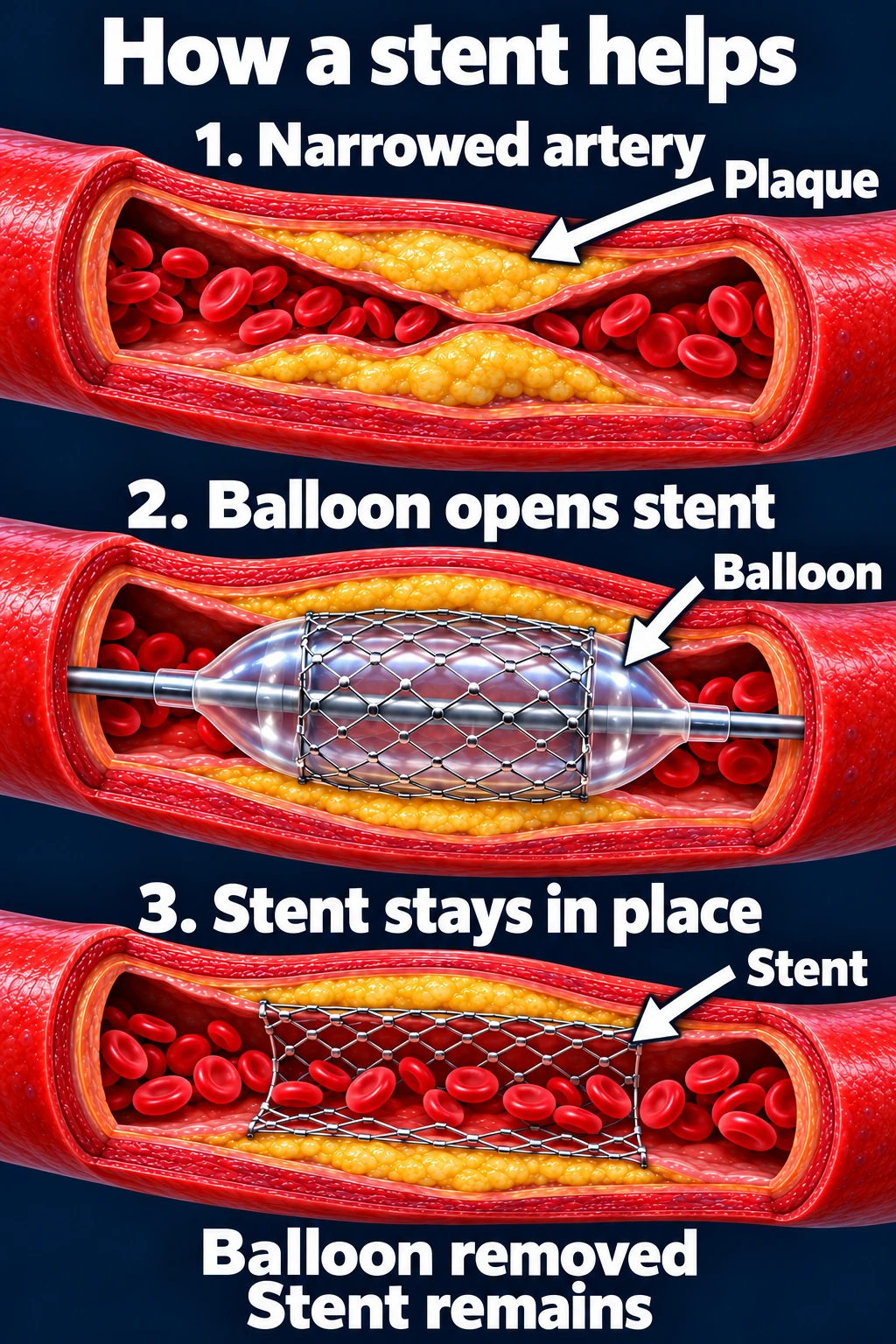
PCI · Open the narrowed segment
The stent supports the treated segment. Plaque remains in the artery wall, and preventive treatment continues.Open full-size image →
Percutaneous coronary intervention uses a catheter to treat a coronary narrowing, often with a stent.[6]
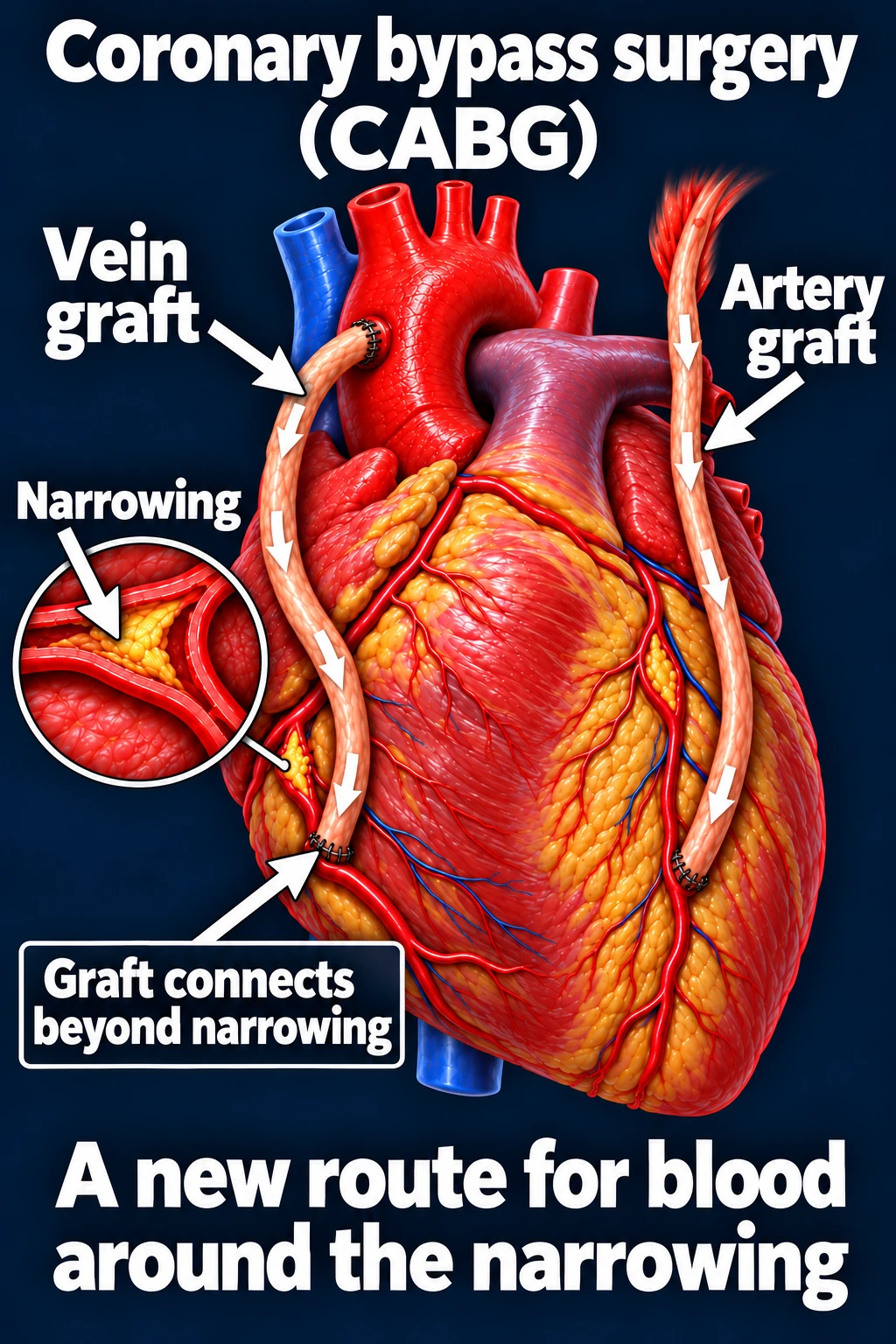
CABG · Route blood around the narrowing
Illustrative bypass configuration. The number and choice of grafts depend on the coronary anatomy and surgical plan.Open full-size image →
Bypass grafts create new routes for blood to reach myocardium beyond obstructed segments. Both PCI and CABG are followed by ongoing medical therapy and risk reduction.[6]
Follow-up and referral
Reassess symptom burden, functional capacity, lipids, BP, adherence, bleeding, and treatment tolerance. In otherwise stable chronic coronary disease, routine repeat ischemia testing without a clinical change is generally not recommended.
Refer persistent symptoms, uncertain symptom mechanism, or difficulty optimizing treatment to cardiology. New or worsening symptoms may require acute reassessment.[3]
Clinical takeaway: Maintain prevention, individualize symptom therapy, and assess revascularization when the clinical problem warrants it.