What should I do now?
Call 911
Call 911 for new or unexplained chest pressure that persists or returns, severe trouble breathing, collapse without normal recovery, or sudden face/arm weakness or trouble speaking. Do not drive yourself.
Contact your care team
Contact your care team promptly for increasing swelling, rapid weight change, or worsening breathlessness.
Keep your care plan
Track weight and swelling as instructed. Do not change a water pill without a specific plan.
SECTION 4
How is swelling evaluated?
Your clinician checks whether one or both legs are affected, examines the skin and circulation, and reviews medicines and symptoms.
Tests depend on the suspected cause
- Blood and urine tests: May assess kidney function, liver function, or protein loss.
- Leg ultrasound: May look for a clot or vein problems.
- Heart testing: An EKG, blood tests, or echo may be appropriate when heart failure is suspected.
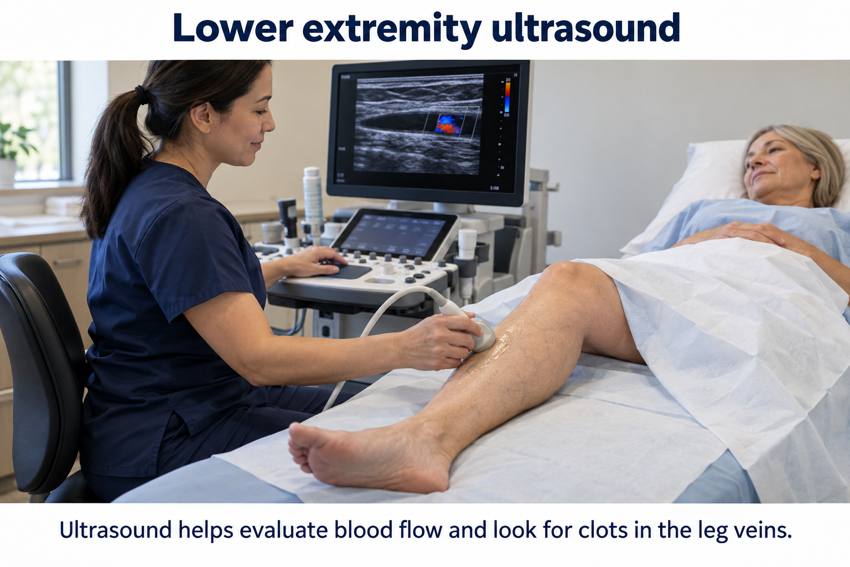
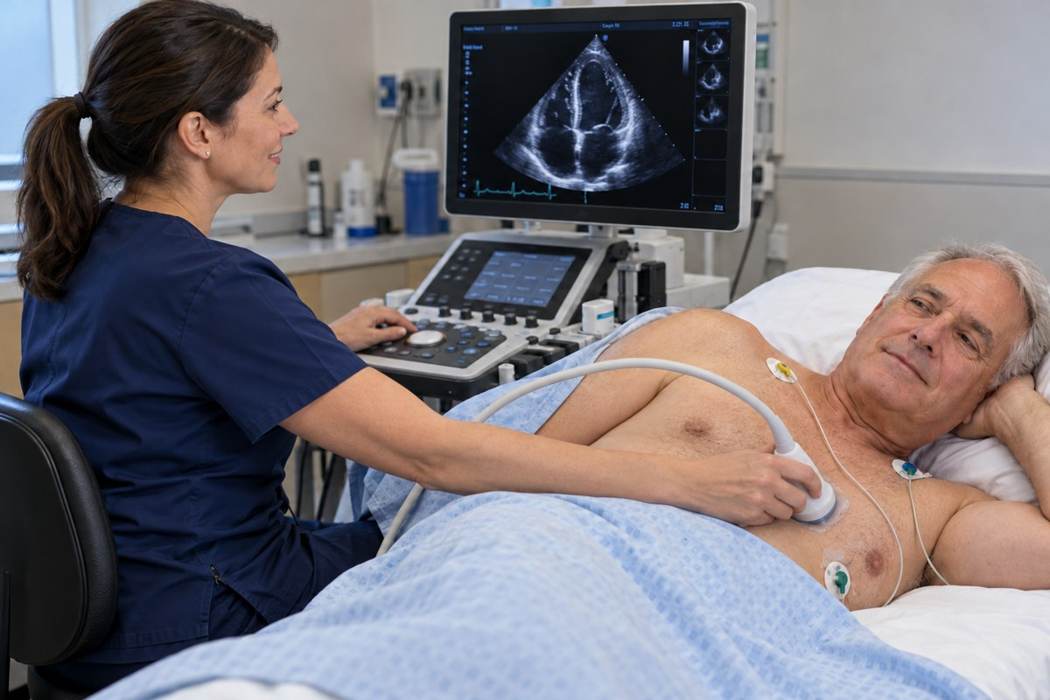
Not everyone with ankle swelling needs all of these tests.
Sources & further readingMedlinePlus: Leg and ankle swellingCleveland Clinic: Venous insufficiencyNHLBI: Deep vein thrombosis and blood clots
Updated October 2026. Educational information; your own care plan may differ. Medical illustrations are simplified examples for teaching.