What should I do now?
Call 911
Call 911 for new or unexplained chest pressure that persists or returns, severe trouble breathing, collapse without normal recovery, or sudden face/arm weakness or trouble speaking. Do not drive yourself.
Contact your care team
Contact your care team promptly for increasing swelling, rapid weight change, or worsening breathlessness.
Keep your care plan
Track weight and swelling as instructed. Do not change a water pill without a specific plan.
SECTION 2
What can cause leg swelling?
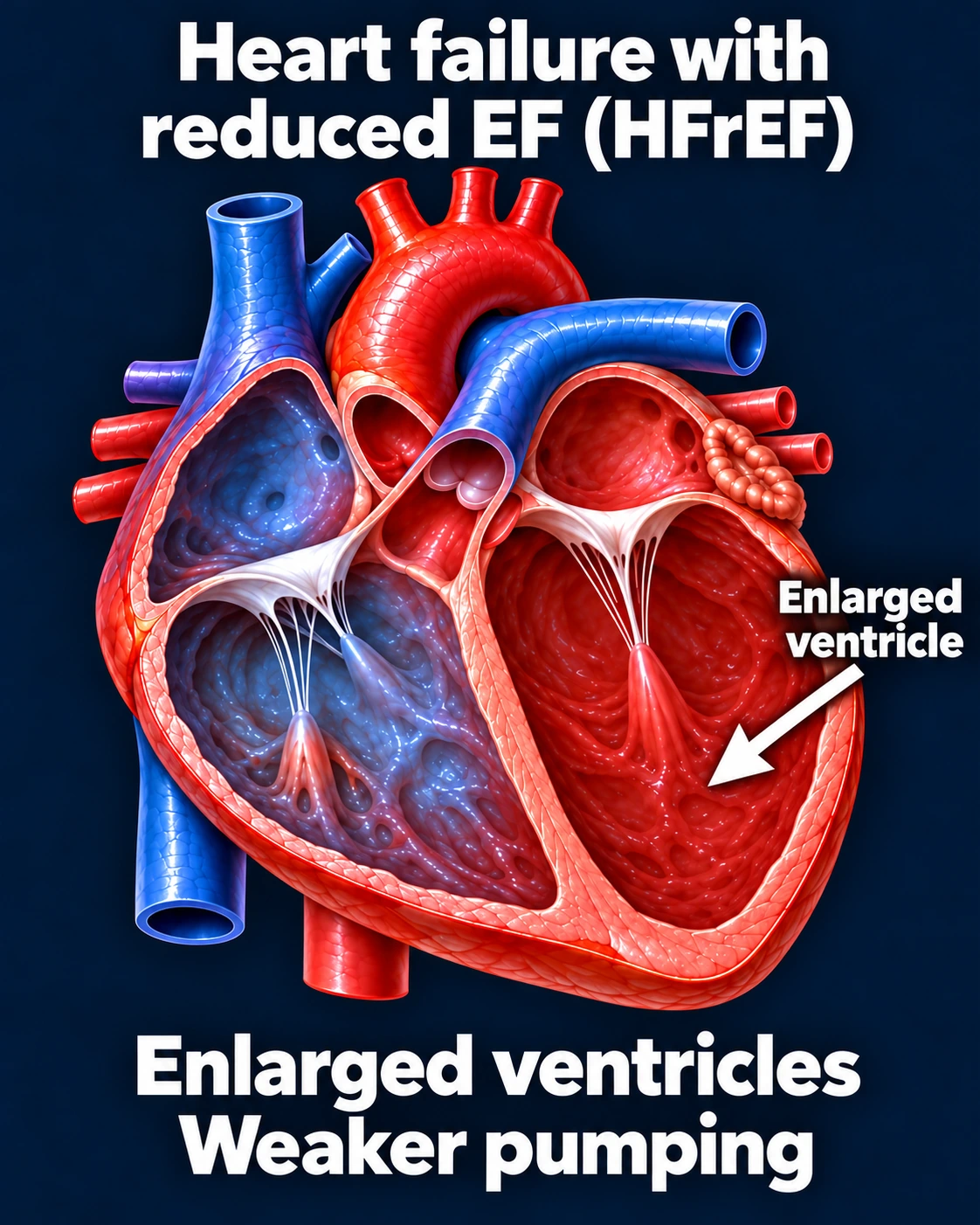
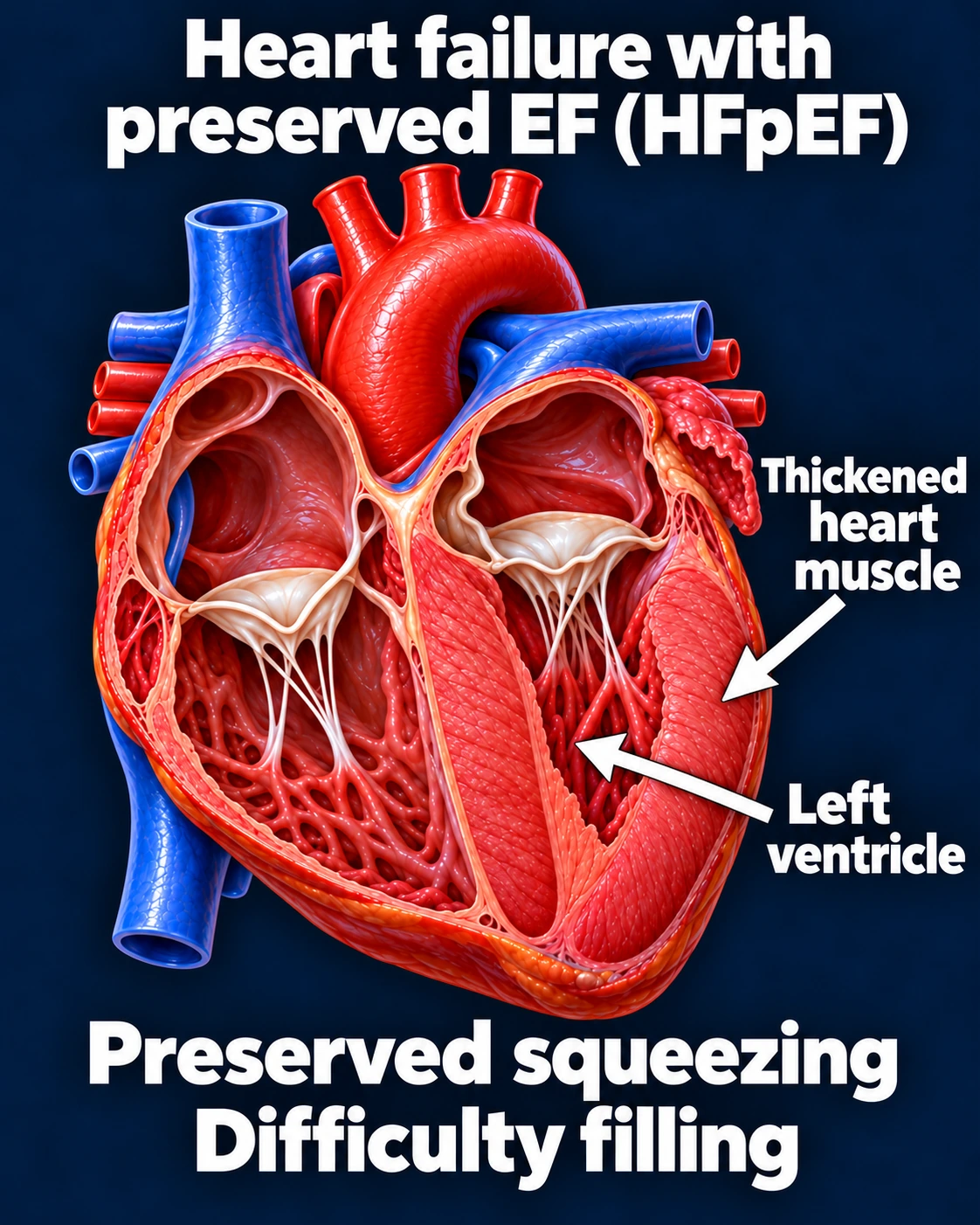
Heart failure
Raised pressures and retained salt and water can cause swelling. Breathlessness, abdominal swelling, or weight gain may occur too.
Venous insufficiency and lymphatic problems
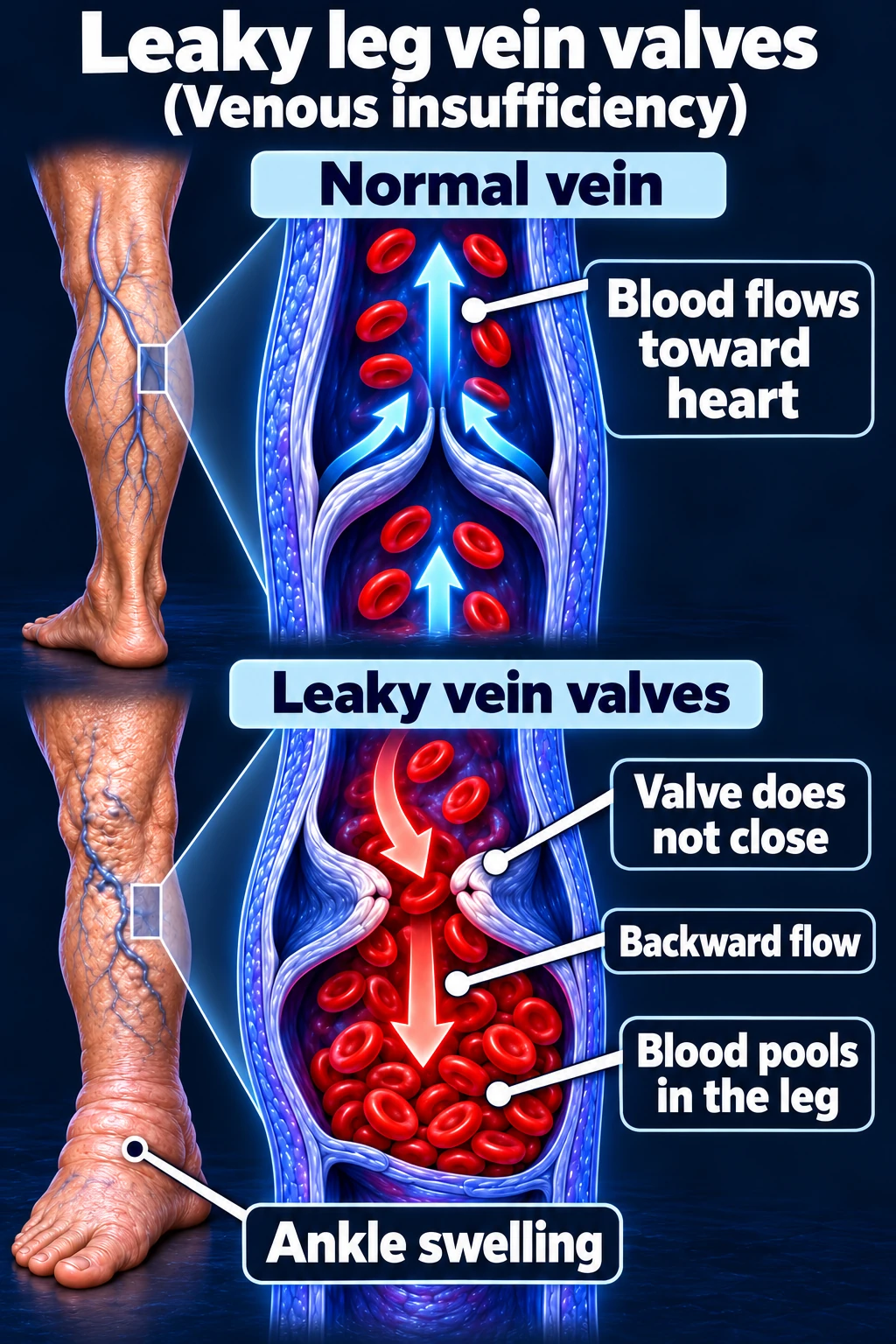
Leg veins contain one-way valves that help blood return to the heart. When these valves do not close properly, blood can flow backward and pool in the legs. This is called venous insufficiency. Lymphatic drainage problems can also cause swelling.
Deep vein thrombosis (DVT)
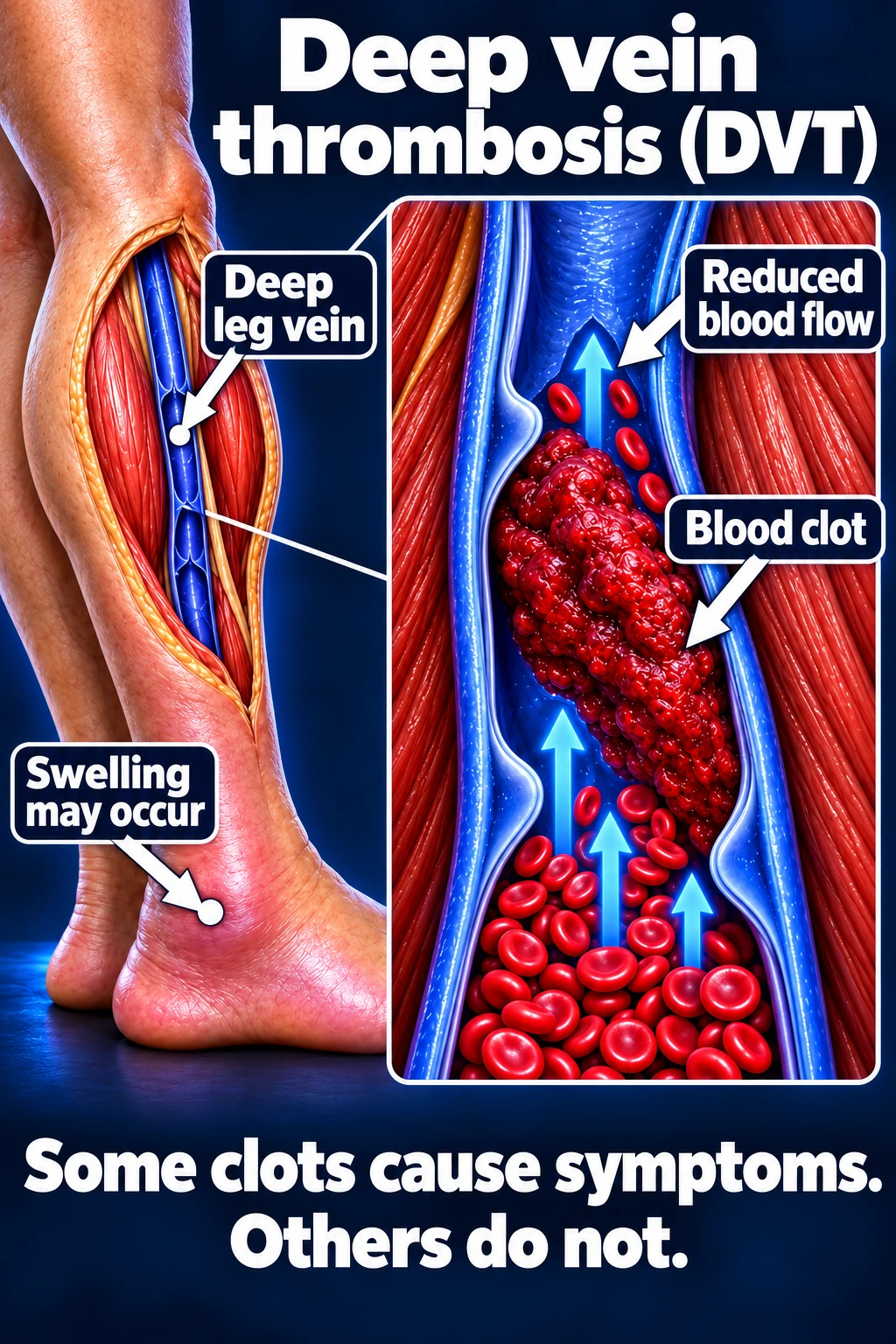
A blood clot in a deep leg vein can block blood flow and cause swelling, often in one leg. Pain, warmth, or redness may occur. New one-sided swelling needs urgent assessment for a clot or another cause.
Other causes
Kidney or liver disease, certain medicines such as amlodipine, injury, infection, or a blood clot may be responsible. Prolonged sitting or standing can contribute.
The pattern and accompanying symptoms guide assessment. A new one-sided change deserves particular attention.
Updated October 2026. Educational information; your own care plan may differ. Medical illustrations are simplified examples for teaching.