What should I do now?
Call 911
Call 911 for new or unexplained chest pressure that persists or returns, severe trouble breathing, collapse without normal recovery, or sudden face/arm weakness or trouble speaking. Do not drive yourself.
Contact your care team
Contact your care team promptly for increasing swelling, rapid weight change, or worsening breathlessness.
Keep your care plan
Track weight and swelling as instructed. Do not change a water pill without a specific plan.
SECTION 1
What is swelling in the legs, ankles, or feet?
Swelling occurs when extra fluid collects in the tissues. This is called edema. Shoes may feel tighter, sock marks may deepen, or the skin may look stretched.
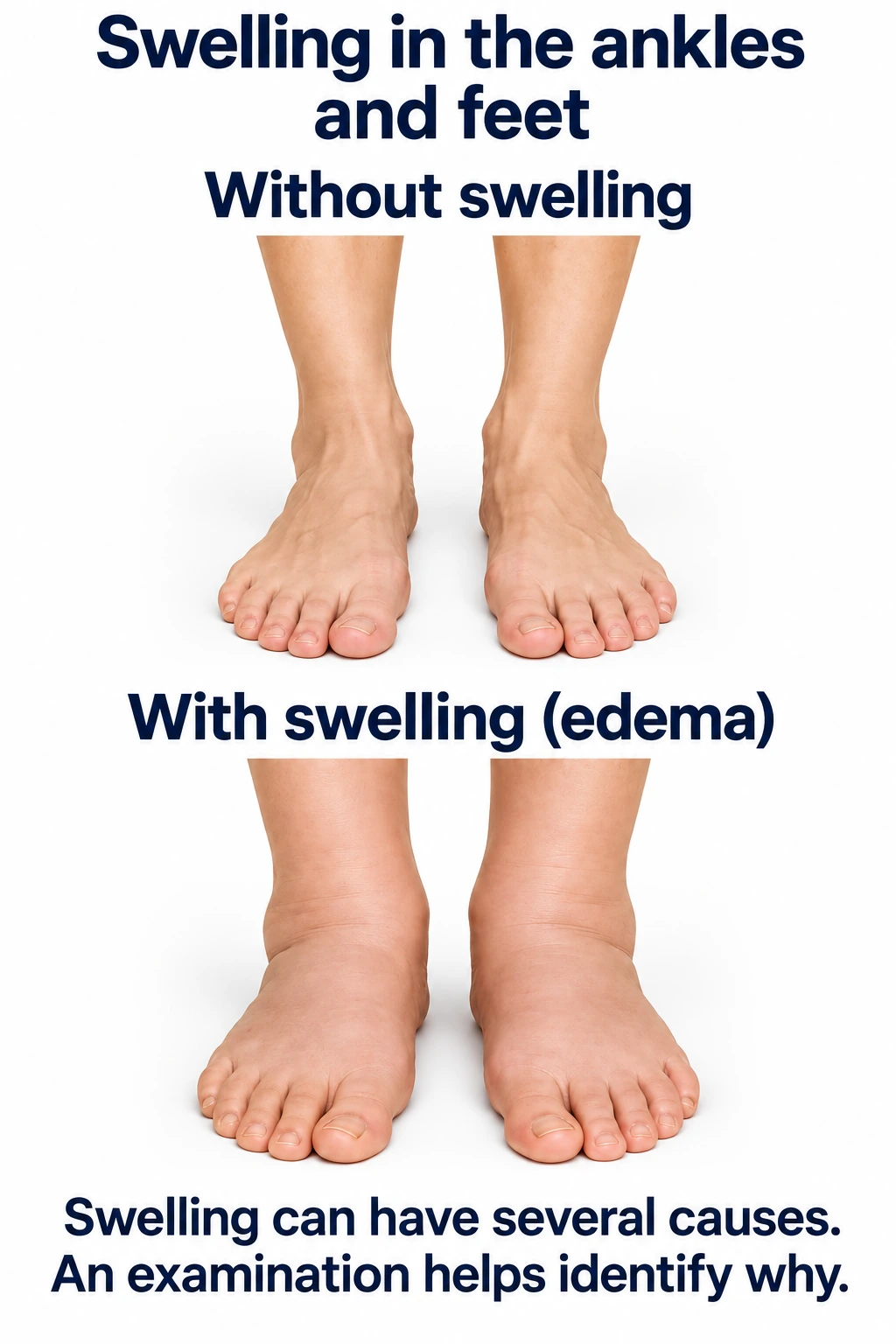
Swelling can affect one leg or both. It may vary with standing, sitting, or time of day. Leg swelling does not automatically mean heart failure.
Updated October 2026. Educational information; your own care plan may differ. Medical illustrations are simplified examples for teaching.