What should I do now?
Call 911
Call 911 for new or unexplained chest pressure that persists or returns, severe trouble breathing, collapse without normal recovery, or sudden face/arm weakness or trouble speaking. Do not drive yourself.
Contact your care team
Contact your care team for new, longer, or more frequent episodes, or reduced activity.
Keep your care plan
Record timing, duration, and symptoms when safe; save any available EKG recording.
SECTION 4
How are palpitations evaluated?
The goal is to find out what your heart is doing when you feel symptoms. Your doctor will review your symptoms, medical history, medications, and possible triggers, then examine you and select appropriate tests.
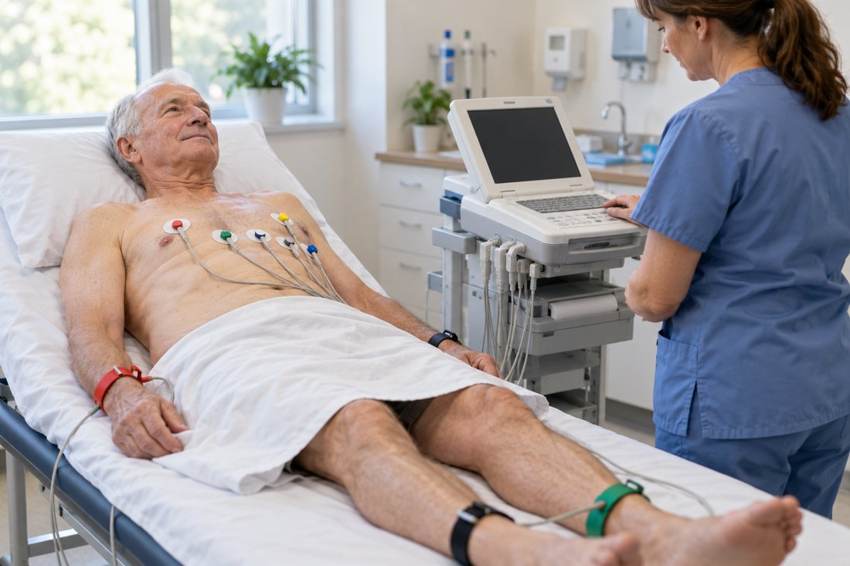
1. An EKG: a snapshot of your rhythm
An electrocardiogram, called an EKG or ECG, records your heart’s electrical activity through sticky patches placed on your skin. It is quick and painless.
An EKG may identify an abnormal rhythm if it is happening during the recording. A normal office EKG does not rule out a rhythm problem that comes and goes.
2. A heart monitor: a longer recording
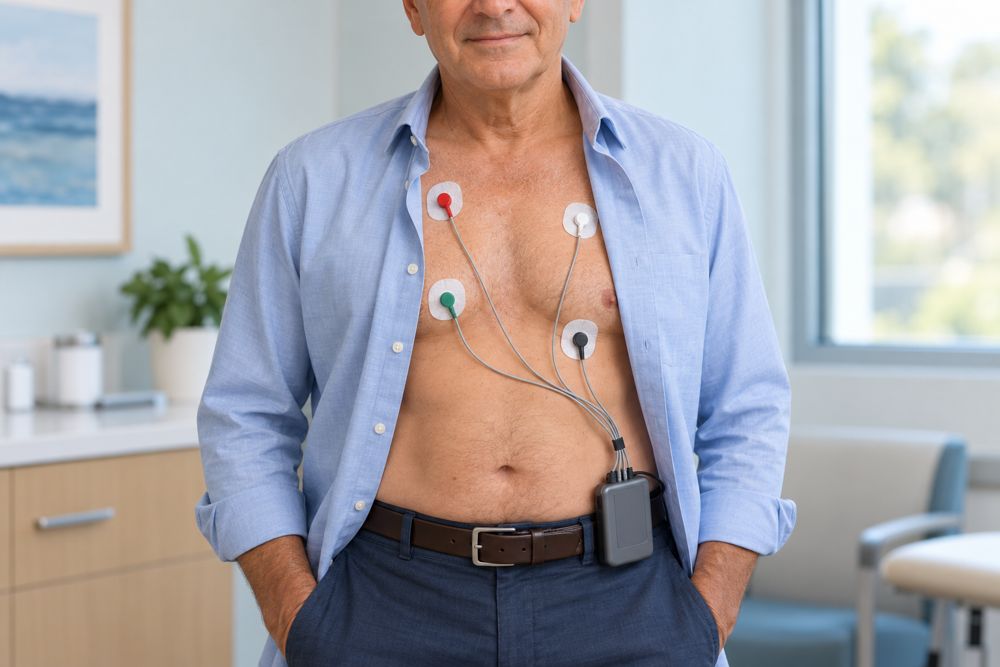
If symptoms happen outside the office, your doctor may recommend:
- A Holter or patch monitor: Records your rhythm during everyday activities over one or more days.
- An event monitor: Used for longer monitoring when episodes happen less frequently.
- An implantable loop recorder: A small monitor placed under the skin for selected patients who need long-term monitoring, especially when unexplained episodes are infrequent.
The best monitor depends on how often your symptoms occur. Follow instructions for marking symptoms and keeping a diary so we can compare what you felt with the recorded rhythm.
3. Blood tests
Your doctor may check for conditions that can contribute to palpitations, such as thyroid problems or abnormal levels of potassium and other electrolytes.
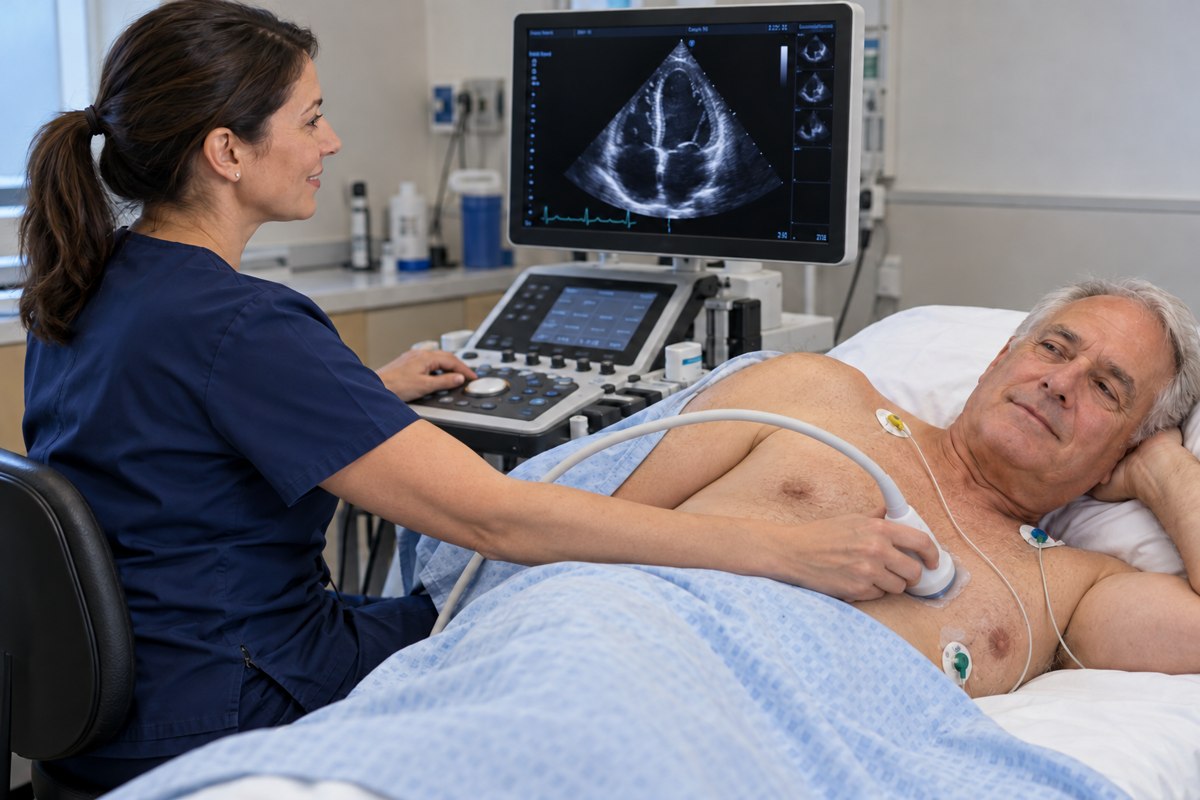
4. An echocardiogram
An echocardiogram, or echo, uses ultrasound to examine your heart’s structure, pumping function, and valves. It helps look for underlying heart problems; it does not replace an EKG or rhythm monitor.
5. Additional testing when needed
Some patients may need a stress test to assess their heart during exercise. Selected patients may need an electrophysiology study, which examines the heart’s electrical system from inside the heart. These tests are chosen based on your symptoms and initial findings.
Not everyone needs every test. Your evaluation should match your symptoms and medical history.
Updated October 2026. Educational information; your own care plan may differ. Medical illustrations are simplified examples for teaching.