What should I do now?
Call 911
Call 911 for new or unexplained chest pressure that persists or returns, severe trouble breathing, collapse without normal recovery, or sudden face/arm weakness or trouble speaking. Do not drive yourself.
Contact your care team
Contact your care team for new, longer, or more frequent episodes, or reduced activity.
Keep your care plan
Record timing, duration, and symptoms when safe; save any available EKG recording.
SECTION 2
What can cause palpitations?
Palpitations have many possible causes. They may come from extra beats, an abnormal rhythm, or a normal heartbeat responding to something happening in your body.
1. Extra beats or abnormal heart rhythms
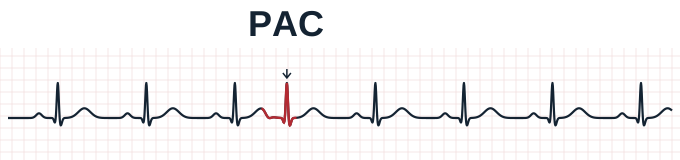
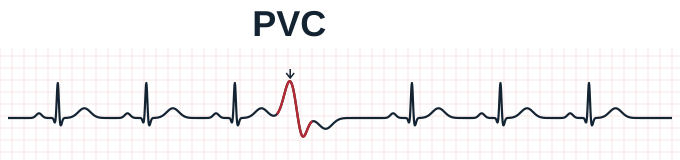
Palpitations may come from early beats or an abnormal heart rhythm. These examples show how different rhythms can look on an EKG.
PAC — premature atrial contraction
PVC — premature ventricular contraction
SVT — supraventricular tachycardia

Atrial fibrillation — AFib

Atrial flutter

Ventricular tachycardia — VT

How the heartbeat feels does not reliably identify the rhythm. Recording it during symptoms helps determine the cause.
Illustrative examples, not patient recordings. Each strip represents approximately six seconds; display size is not calibrated. Actual EKGs vary and require clinical interpretation.
2. Everyday triggers
Some people notice palpitations with:
- Stress or anxiety
- Exercise
- Caffeine or energy drinks
- Alcohol
- Nicotine
- Dehydration
Triggers vary from person to person. Keeping a record of when symptoms happen can help identify a pattern.
3. Other medical conditions
Examples include:
- Anemia: Too few healthy red blood cells.
- Thyroid problems: Especially an overactive thyroid.
- Fever or illness.
- Low blood sugar.
- Electrolyte abnormalities: Changes in minerals such as potassium.
- Hormonal changes during pregnancy or menopause.
4. Medications and supplements
Some cold medicines, inhalers, stimulant medications, and supplements can cause palpitations.
Bring a complete list of prescription medicines, over-the-counter products, and supplements to your appointment. Discuss any changes with your clinician before stopping a prescribed medication.
Could it just be anxiety?
Anxiety can cause palpitations, and palpitations can make you feel anxious. Both may occur together.
New or recurring symptoms should be evaluated rather than automatically attributed to anxiety. Identifying the cause helps us choose the right treatment.
Updated October 2026. Educational information; your own care plan may differ. Medical illustrations are simplified examples for teaching.