What should I do now?
Call 911
Call 911 for new or unexplained chest pressure that persists or returns, severe trouble breathing, collapse without normal recovery, or sudden face/arm weakness or trouble speaking. Do not drive yourself.
Contact your care team
Contact your care team promptly for increasing breathlessness, reduced activity, or needing more pillows at night.
Keep your care plan
Track changes and follow your medication and activity plan.
SECTION 4
How is shortness of breath evaluated?
Your clinician asks about your symptoms, examines your heart and lungs, and checks vital signs, including oxygen level. Testing depends on the suspected cause; you do not need every test listed here.
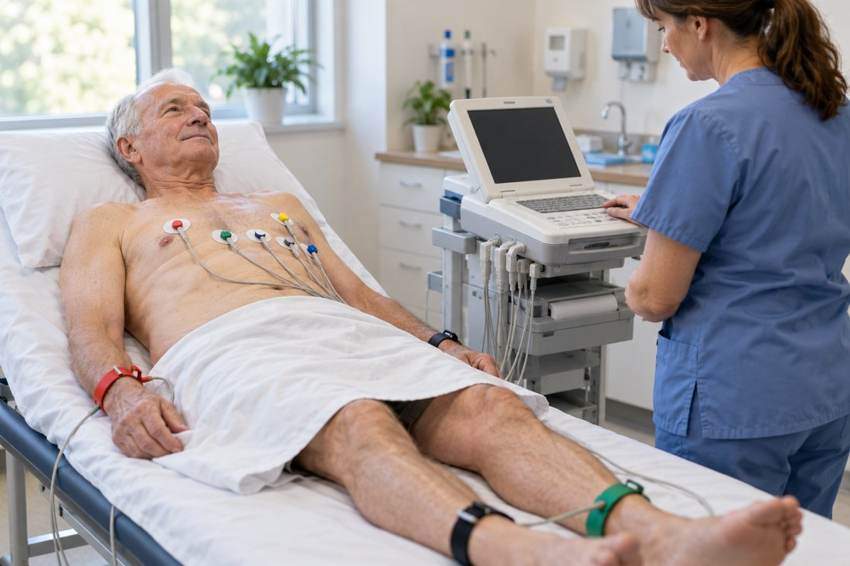
1. An EKG
An EKG records the heart’s electrical activity and can identify rhythm problems or clues to heart injury.
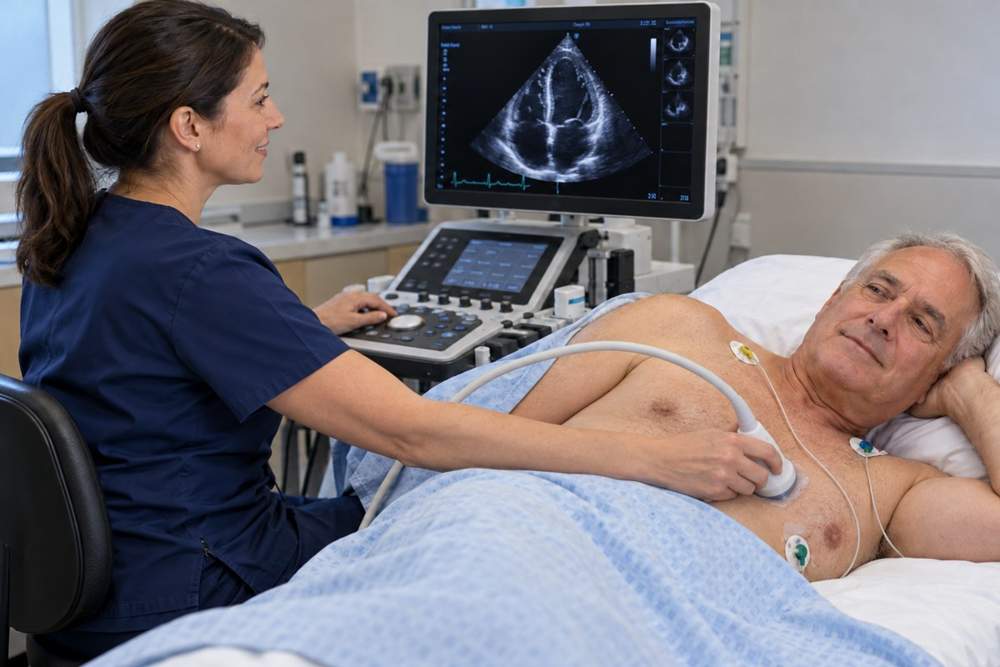
2. An echocardiogram
An echo uses ultrasound to assess pumping strength, valves, and clues to abnormal filling pressures. Your doctor considers more than the EF alone.
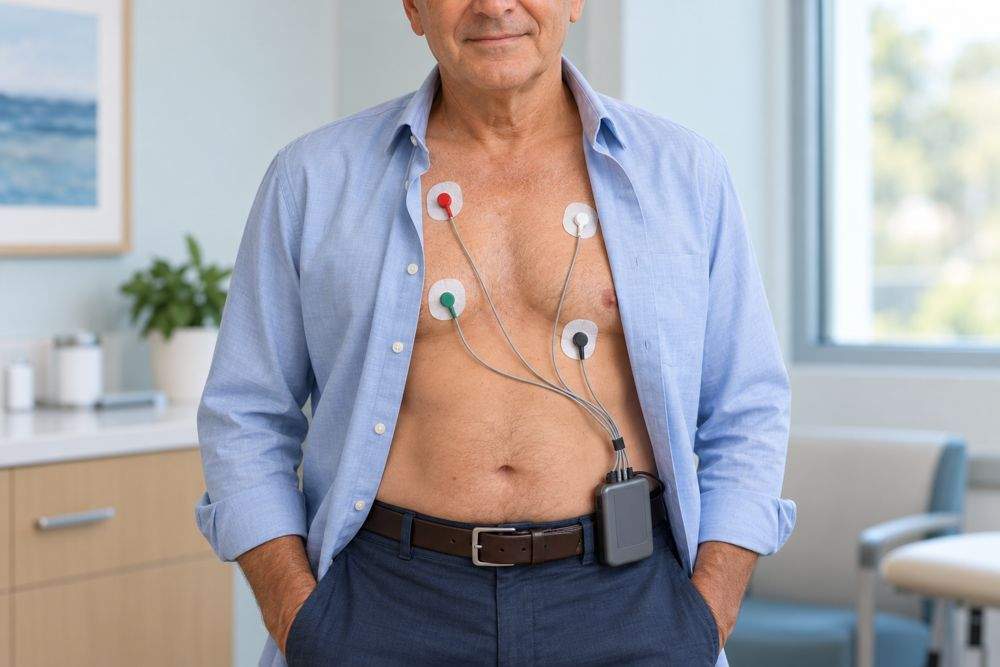
3. A heart rhythm monitor
If symptoms come and go or suggest an abnormal rhythm, a Holter or other wearable monitor may record your heartbeat during daily activities.
4. Blood tests and lung testing
Blood tests may check for anemia, kidney problems, or heart strain. BNP or NT-proBNP can help assess possible heart failure, but must be interpreted with other findings. A chest X-ray, breathing tests, or selected CT scans may assess lung problems.
5. Additional testing when needed
A stress test or coronary evaluation may be appropriate if reduced heart blood flow is suspected. Persistent unexplained symptoms sometimes require more specialized testing.
Sources: NHLBI: Heart testing · Cleveland Clinic: Evaluation
Updated October 2026. Educational information; your own care plan may differ. Medical illustrations are simplified examples for teaching.