What should I do now?
Call 911
Call 911 for new or unexplained chest pressure that persists or returns, severe trouble breathing, collapse without normal recovery, or sudden face/arm weakness or trouble speaking. Do not drive yourself.
Contact your care team
Contact your care team promptly for increasing breathlessness, reduced activity, or needing more pillows at night.
Keep your care plan
Track changes and follow your medication and activity plan.
SECTION 1
What is shortness of breath?
Shortness of breath means that breathing feels harder than usual. You may feel unable to get enough air, need to take deeper breaths, or have to stop an activity to catch your breath. Doctors call this dyspnea.
Breathing harder during vigorous exercise can be normal. Becoming breathless with your usual activities, while resting, or without a clear explanation deserves medical attention.
Your heart and lungs work together
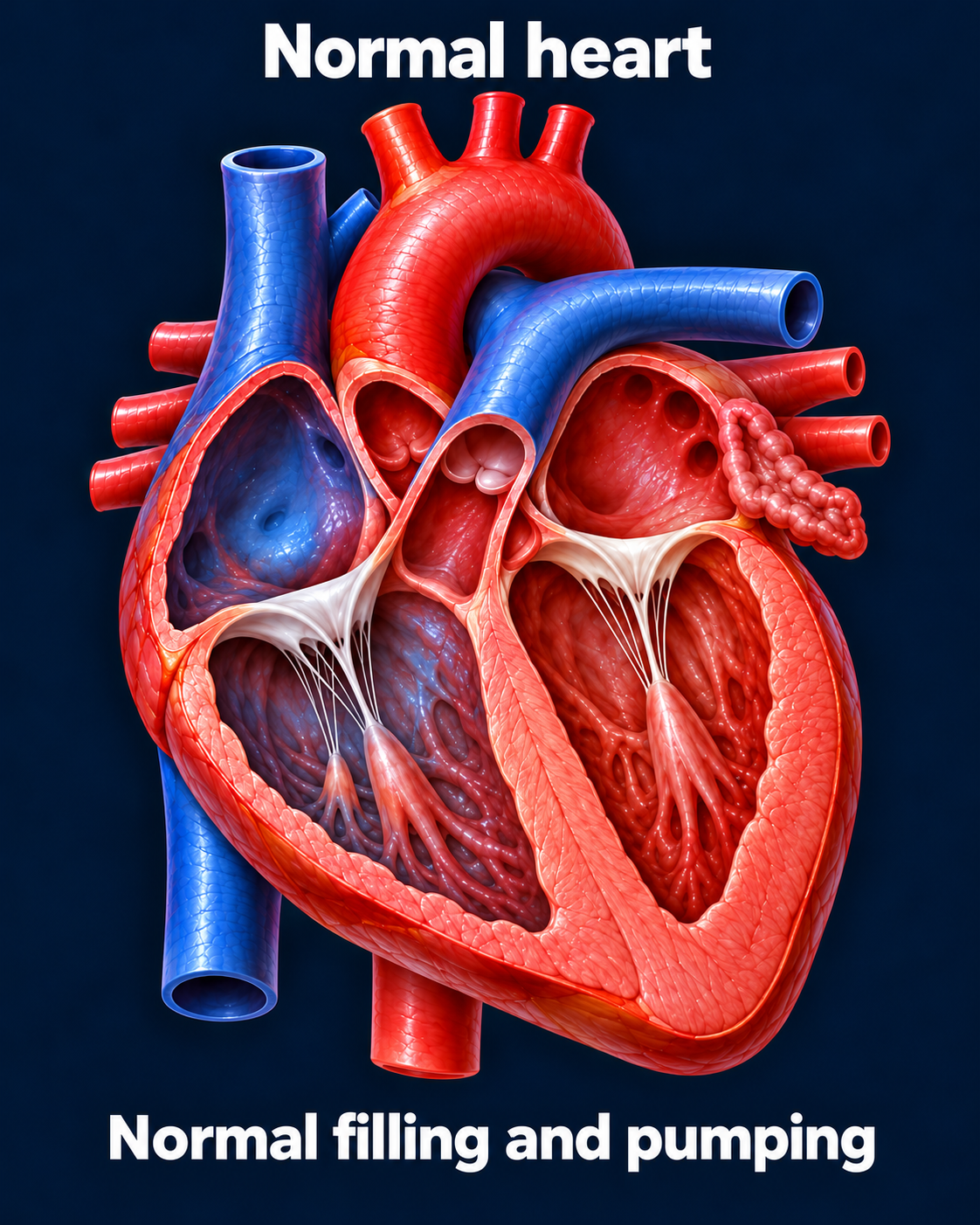
Your lungs bring oxygen into your blood. Your heart pumps that blood to the rest of your body. A problem with either organ—or with the blood carrying oxygen—can make you feel short of breath.
The pattern matters
Symptoms may start suddenly or develop gradually. Tell your clinician if breathing is harder during walking, when lying flat, or at night. Shortness of breath is a symptom, not a diagnosis.
Sources: Cleveland Clinic: Dyspnea · NHLBI: Heart failure symptoms
Updated October 2026. Educational information; your own care plan may differ. Medical illustrations are simplified examples for teaching.