What should I do now?
Call 911
Call 911 for new or unexplained chest pressure that persists or returns, severe trouble breathing, collapse without normal recovery, or sudden face/arm weakness or trouble speaking. Do not drive yourself.
Contact your care team
Contact your care team promptly for increasing breathlessness, reduced activity, or needing more pillows at night.
Keep your care plan
Track changes and follow your medication and activity plan.
SECTION 2
What can cause shortness of breath?
Heart failure: difficulty pumping or filling
Heart failure can raise pressure in the blood vessels of the lungs and cause fluid buildup, making breathing harder. It can occur with a weak squeeze or with a heart that has trouble relaxing and filling.
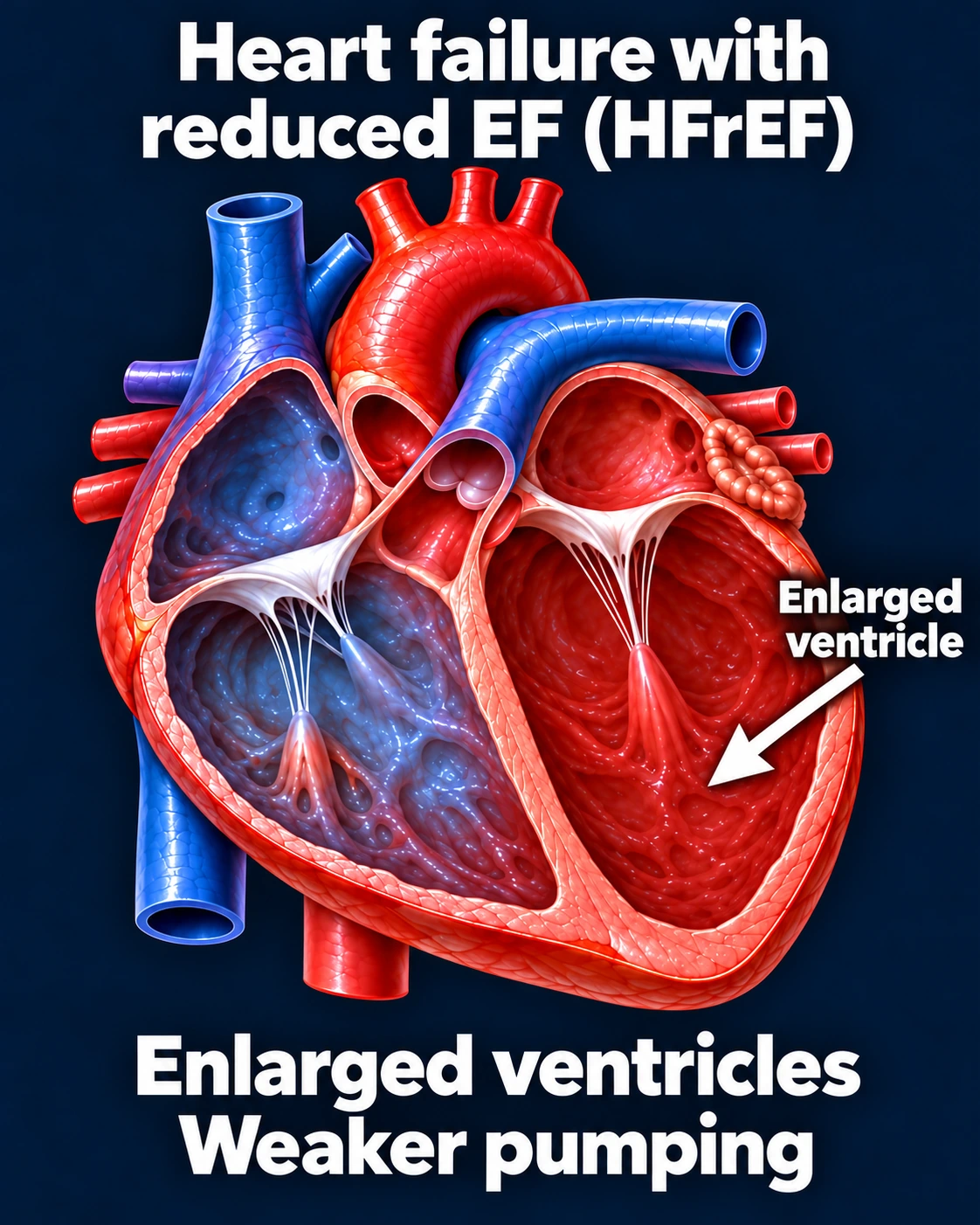
Heart failure with reduced ejection fraction
The heart pumps out a smaller proportion of blood with each beat. The ventricle may become enlarged.
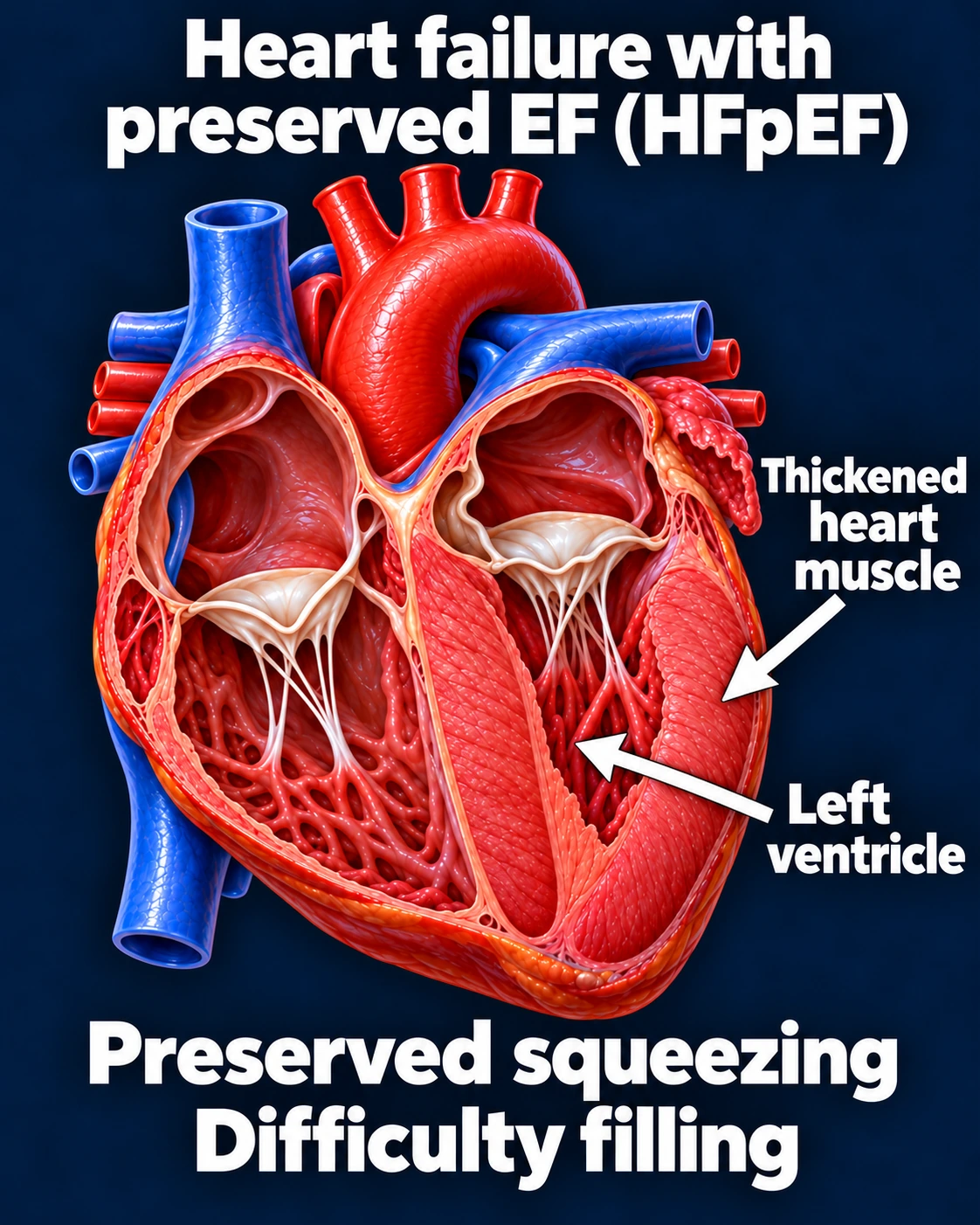
Heart failure with preserved ejection fraction (HFpEF)
The squeeze may appear preserved, but filling pressures can still be too high. A normal EF does not rule out heart failure.
Other heart causes
- Coronary artery disease: Reduced blood supply may cause breathlessness, sometimes without chest pain.
- Valve disease: A severely narrowed or leaking valve can affect forward blood flow and pressure in the lungs.
- Abnormal rhythms: A fast, irregular, or very slow heartbeat can cause breathlessness.
Lung and other causes
Asthma, COPD, pneumonia, lung scarring, a blood clot in the lungs, or a collapsed lung can cause breathing trouble. Anemia, excess weight, reduced fitness, and anxiety can also contribute.
More than one cause may be present. New symptoms should not automatically be attributed to age, anxiety, or being out of shape.
Sources: NHLBI: Heart failure · NHLBI: Coronary disease symptoms · Mayo Clinic: Causes
Updated October 2026. Educational information; your own care plan may differ. Medical illustrations are simplified examples for teaching.