PATIENT EDUCATION · THE SIMPLE EXPLANATION
Ventricular tachycardia & ventricular fibrillation, made clear.
A few pictures. Short explanations. Start here, then explore the full guide when you’re ready.
01 · VENTRICULAR TACHYCARDIA & VENTRICULAR FIBRILLATION
What is ventricular tachycardia?
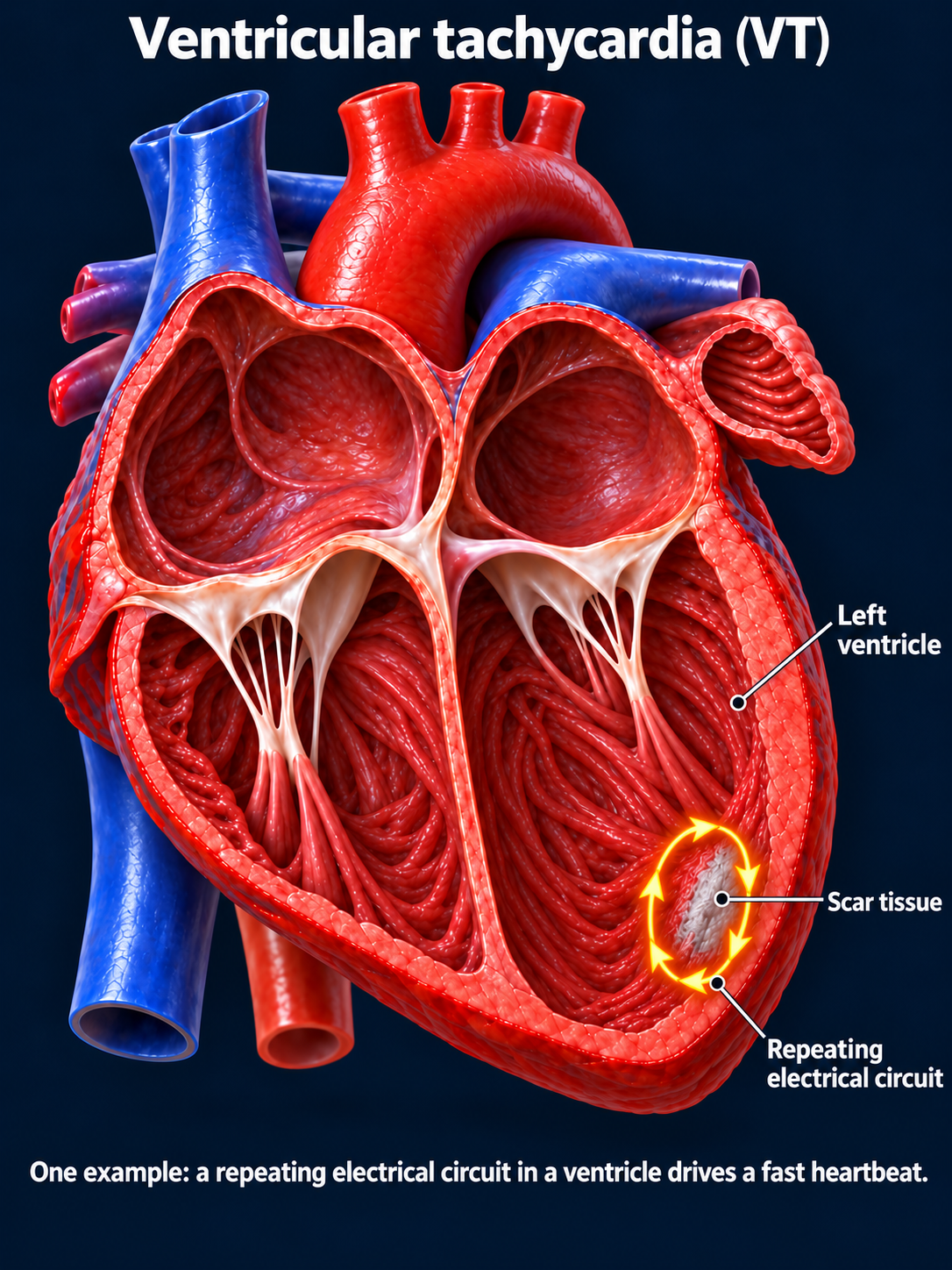
VT is a fast rhythm starting in the lower chambers. It may come from a small electrical source or a circuit around scar tissue. It can reduce blood flow and may be dangerous.
A racing heartbeat with fainting, chest pain, or severe breathlessness needs emergency help.
02 · VENTRICULAR TACHYCARDIA & VENTRICULAR FIBRILLATION
What is ventricular fibrillation?
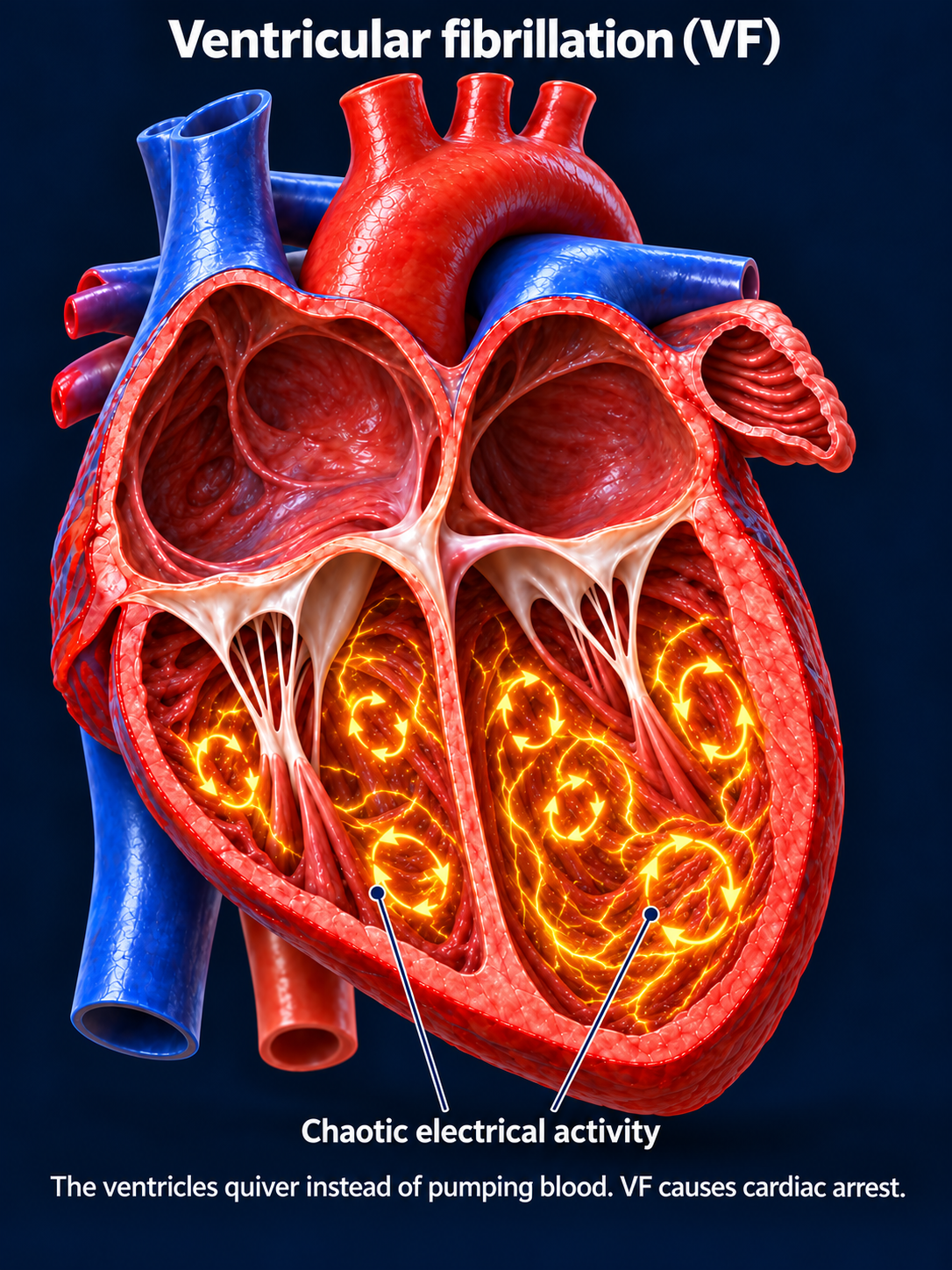
In VF, chaotic signals make the lower chambers quiver instead of pumping blood effectively. This causes cardiac arrest.
If someone is unresponsive and not breathing normally, call 911, start CPR, and use an AED if available.
03 · VENTRICULAR TACHYCARDIA & VENTRICULAR FIBRILLATION
How are dangerous rhythms treated?
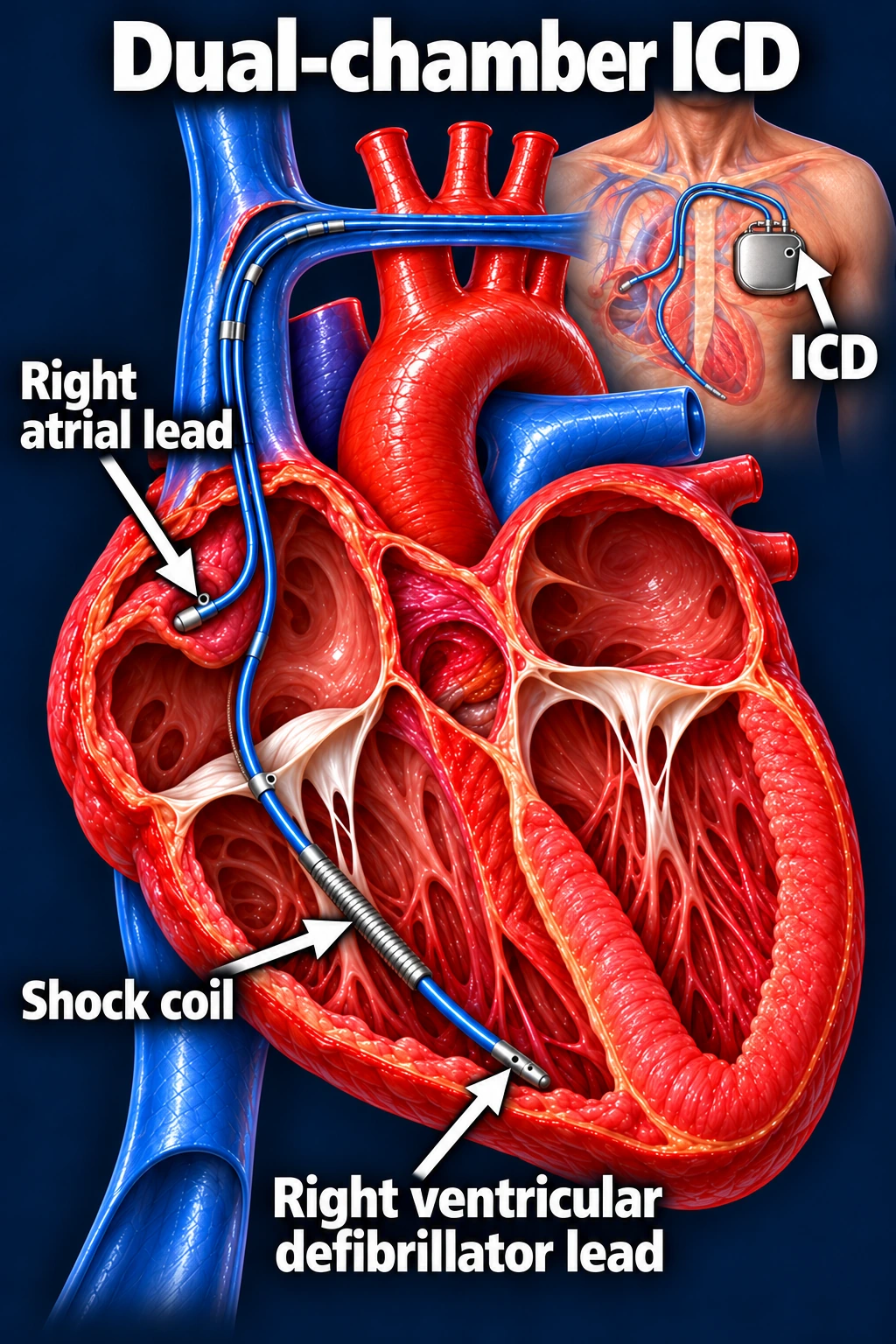
Treatment may include urgent electrical therapy, medicines, and sometimes ablation. An ICD monitors for dangerous rhythms and can deliver pacing or a shock to stop them.
Your care team also looks for and treats the underlying cause.
Updated October 2026. Educational information; your own care plan may differ. Heart illustrations and EKG examples are simplified for teaching.