ATRIAL FLUTTER · THE SIMPLE EXPLANATION
Atrial flutter, made clear.
Start with three things: the electrical loop, stroke prevention, and how ablation works.
01 · YOUR HEART RHYTHM
What is atrial flutter?
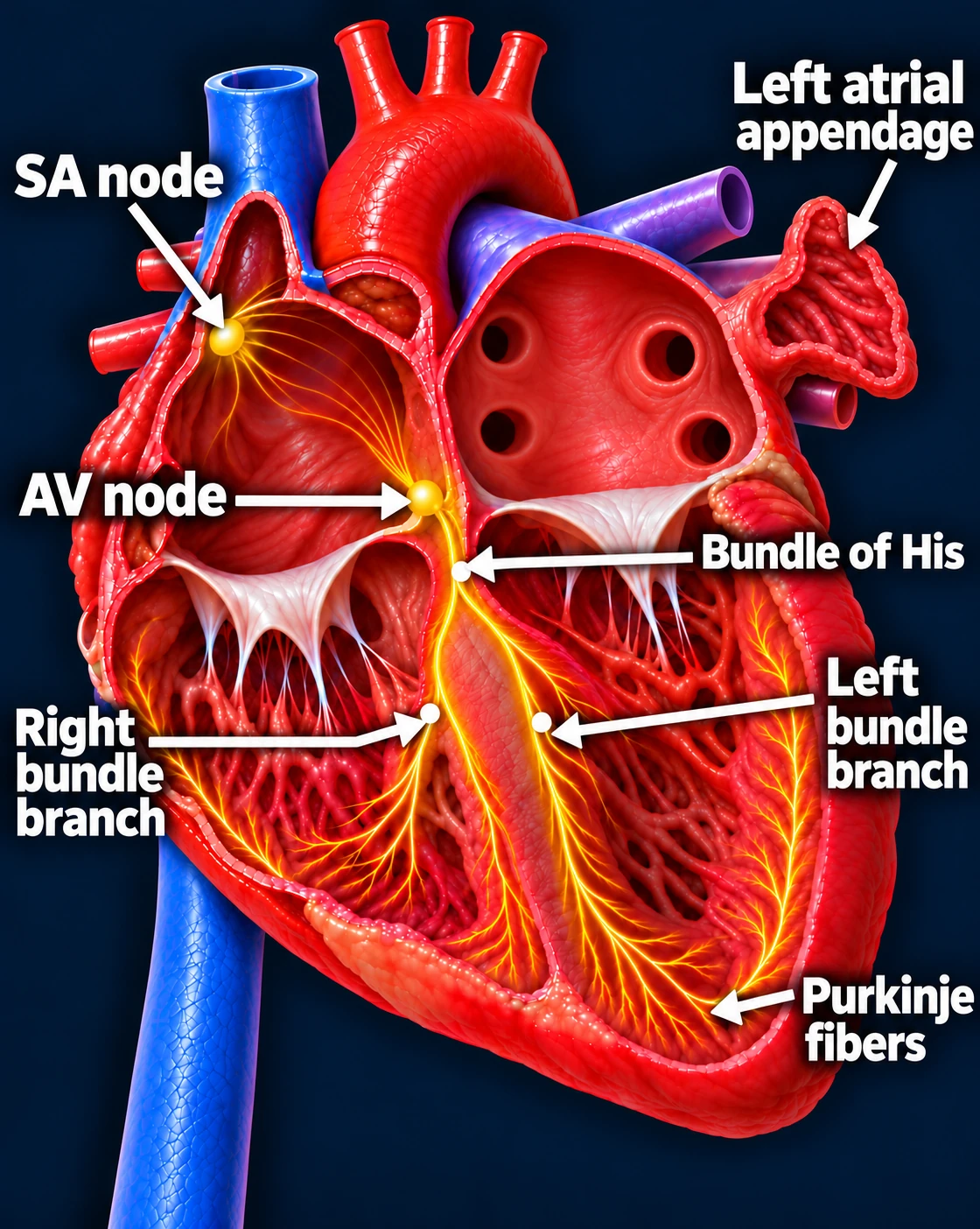
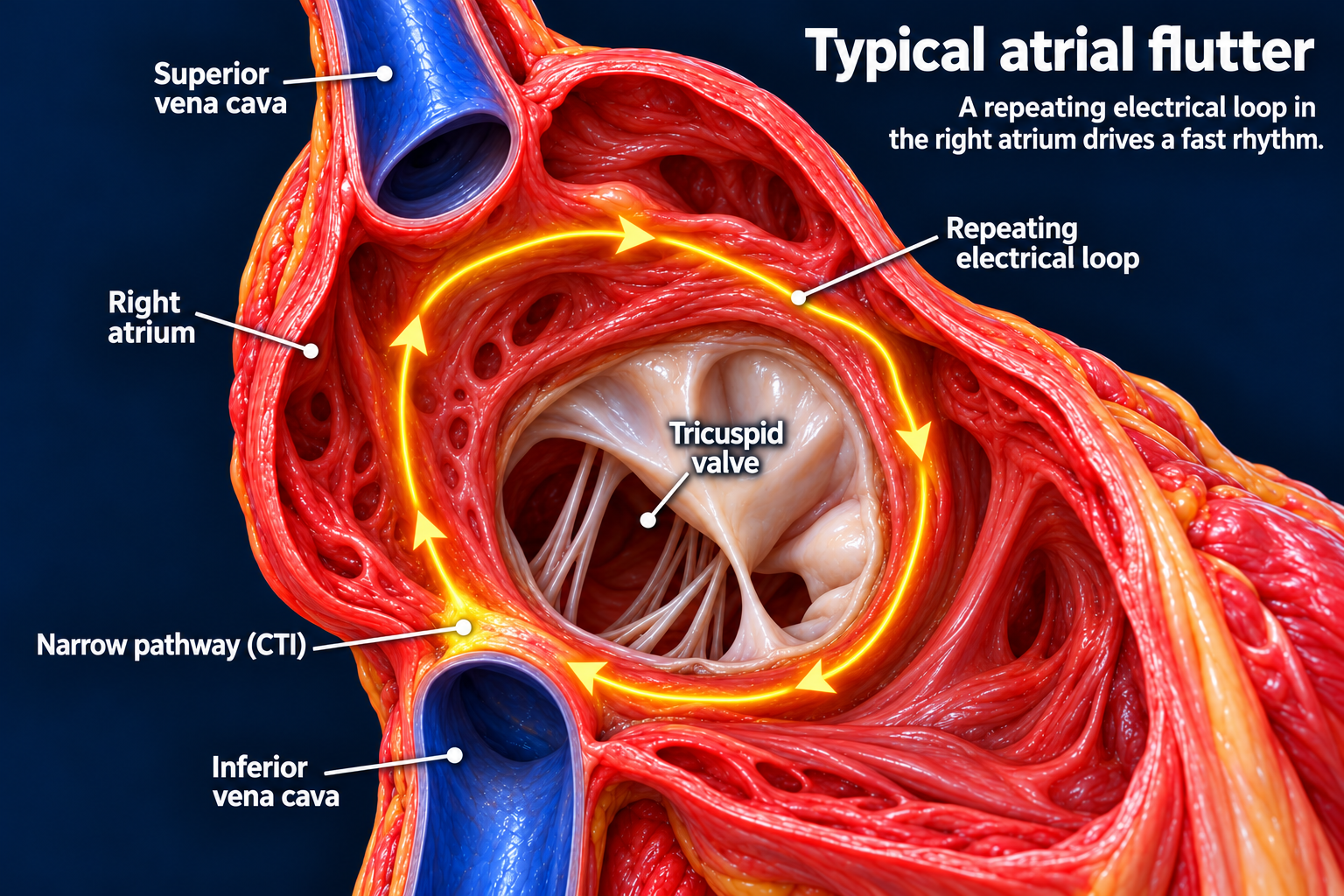
An electrical signal gets caught in a repeating loop.
 Open full-size flutter picture →
The AV node lets only some signals reach the lower chambers, so your pulse may be slower than the atrial rhythm.
You may feel a racing heart, tiredness, or shortness of breath—or have no symptoms.
Atypical flutter follows a different loop in either upper chamber.
02 · STROKE PREVENTION
Why can flutter increase stroke risk?
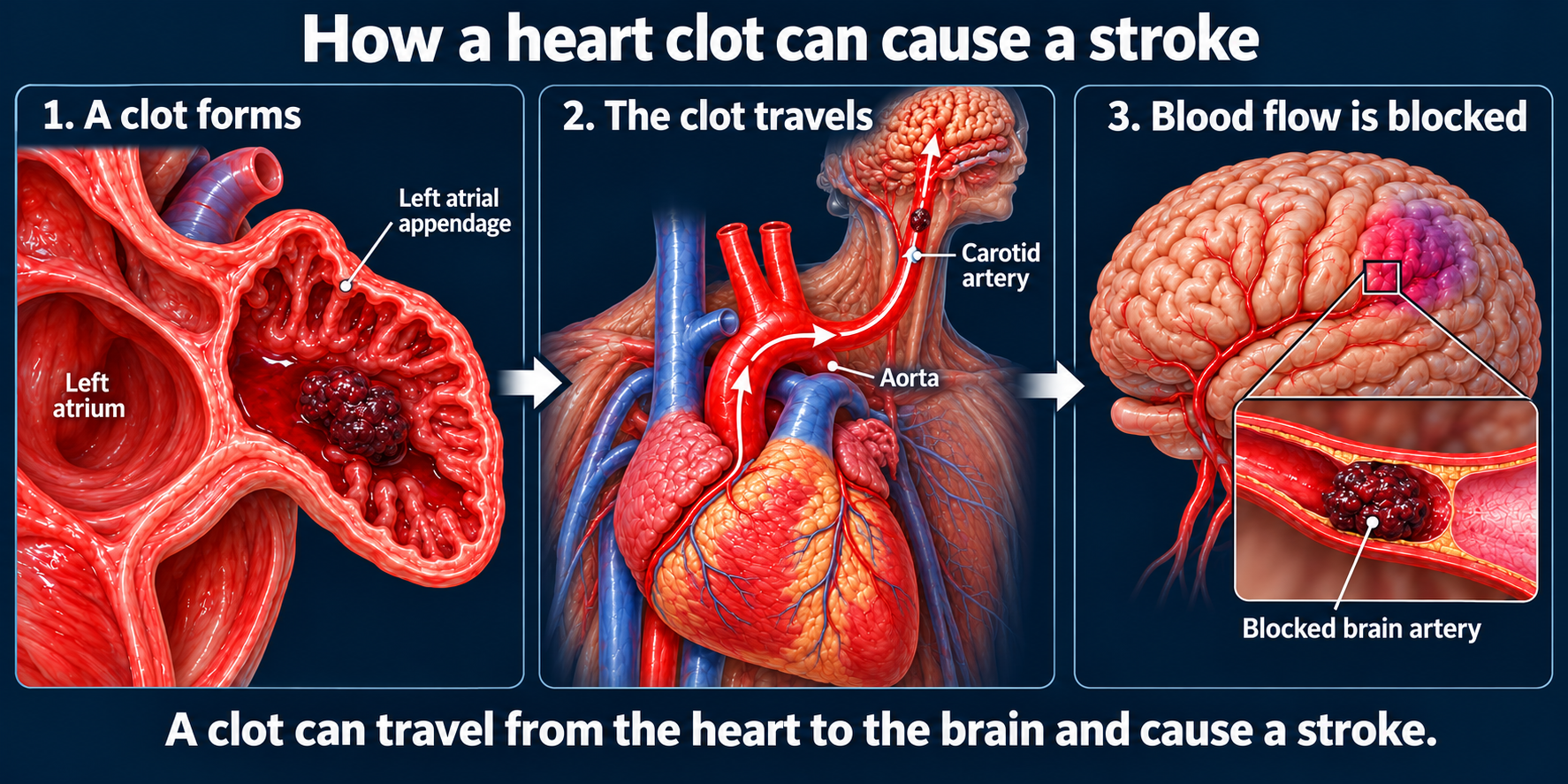
A regular-feeling pulse does not rule out stroke risk.
 Open full-size stroke illustration →
The upper chambers beat too quickly to empty well. Blood may pool in the left atrial appendage, allowing a clot to form and travel to the brain.
Your care team checks your stroke risk to decide whether you need a blood thinner.
Blood thinners reduce stroke risk. They do not stop the flutter circuit.
03 · TREATING THE RHYTHM
How does flutter ablation work?
Break the loop so the signal cannot keep circling.
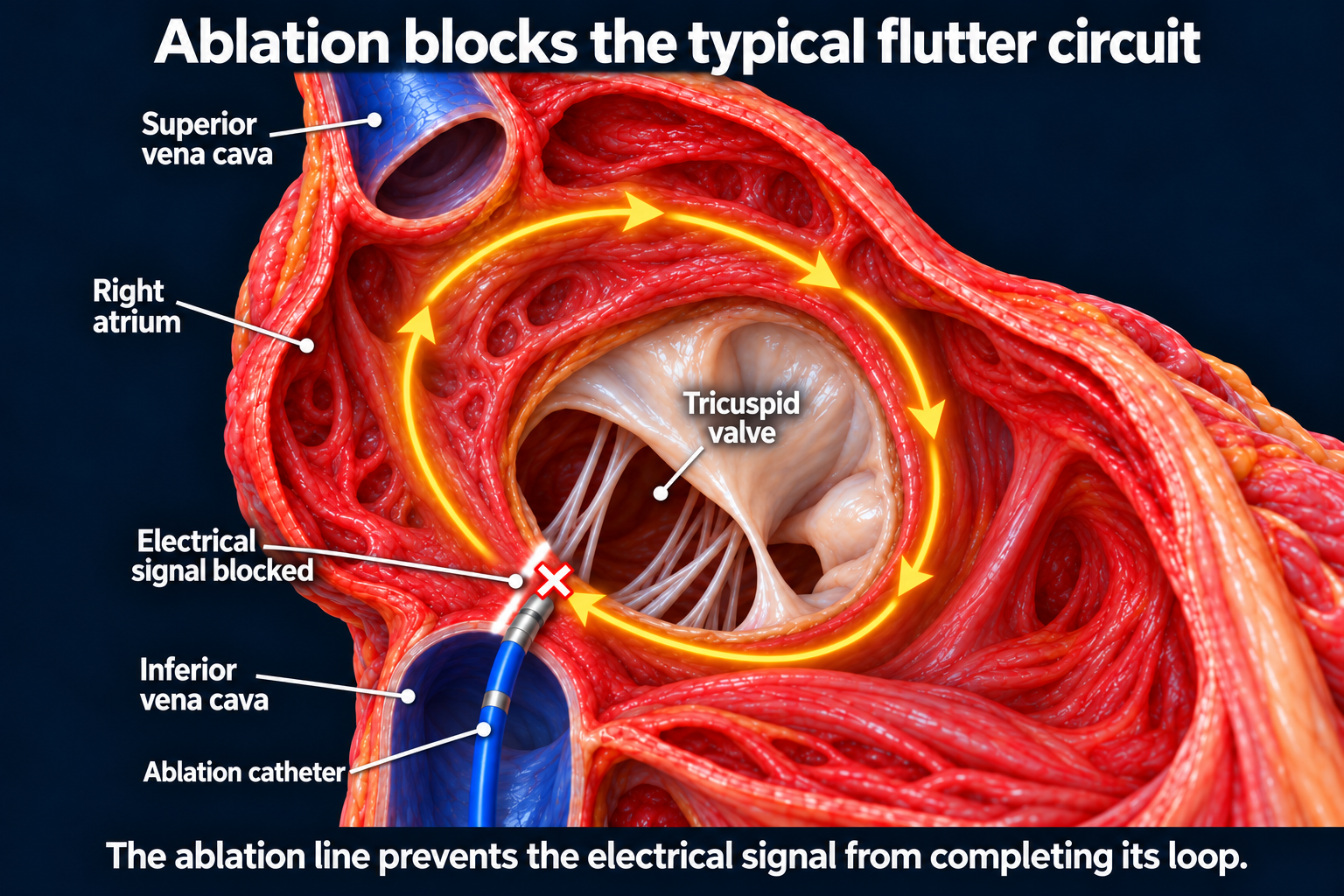
For typical flutter, the catheter creates a short line of electrical block between the tricuspid valve and the large vein entering the right atrium from below.
The signal can no longer complete its loop. Ablation is highly effective for this type of flutter.
AFib or a different flutter circuit can still occur. Keep follow-up visits and take prescribed blood thinners until your care team tells you otherwise.
American Heart Association: Atrial flutter · Mayo Clinic: Flutter ablation