What should I do now?
Call 911
Call 911 for possible heart attack or stroke symptoms: chest pressure, severe trouble breathing, face drooping, arm weakness, or trouble speaking. Do not drive yourself.
Contact your care team
Contact your care team for side effects, cost barriers, or difficulty taking medicine. Severe muscle weakness or dark urine needs prompt assessment.
Keep your care plan
Keep your treatment and follow-up plan. Bring questions, readings, and your medication list.
SECTION 4
How is high cholesterol treated?
Treatment aims to lower harmful cholesterol and reduce the risk of heart attack and stroke. Healthy habits and medications often work together.
1. Heart-healthy habits
- Replace foods high in saturated fat with healthier options, such as olive oil, nuts, and fish.
- Eat more vegetables, fruit, beans, and whole grains.
- Stay physically active within your health limits.
- Work toward a healthy weight.
- Avoid tobacco and limit alcohol.
2. Cholesterol medications
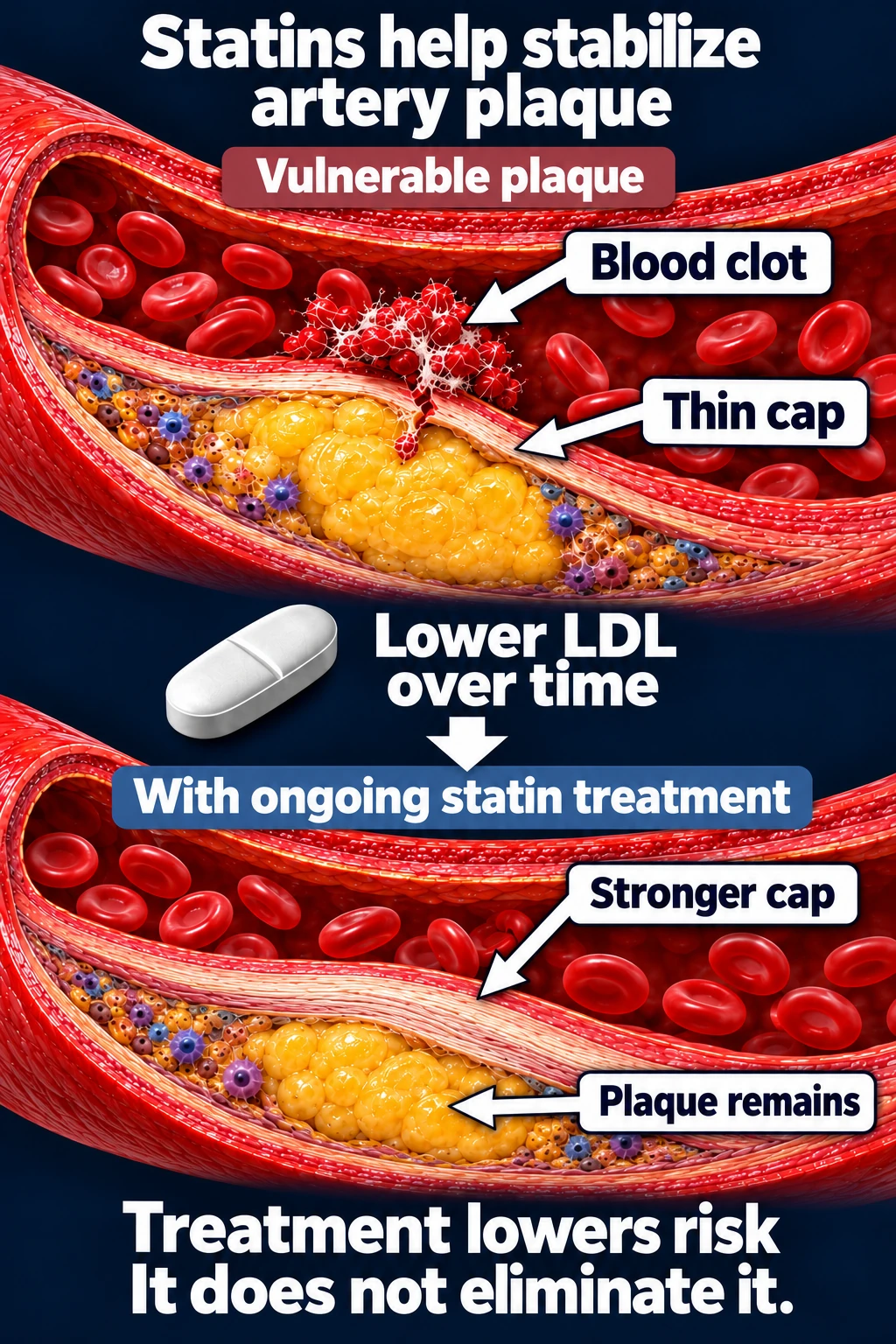
Statins, such as atorvastatin and rosuvastatin, are commonly the first medication used. They lower LDL and reduce heart attack and stroke risk.
Statins also help stabilize existing plaque. Over time, they can reduce inflammation and strengthen the protective fibrous cap over a plaque, making it less likely to rupture and trigger a blood clot. This helps reduce the risk of heart attack and ischemic stroke, but does not eliminate that risk.
Other options may be added or used when appropriate:
Ezetimibe
Reduces cholesterol absorption in the intestine.
Bempedoic acid
Reduces cholesterol production in the liver.
PCSK9 antibodies
Injections that help the liver remove more LDL from the blood.
Inclisiran
An injection that reduces production of PCSK9 and lowers LDL.
Medication choice depends on your risk, LDL goal, response, tolerance, and access to treatment.
What if I have side effects?
Tell your care team. Changing the dose, trying another statin, or using another medication may help.
A side effect with one medication does not mean every cholesterol treatment will cause the same problem.
What about high triglycerides?
Treatment may include changes in diet, alcohol intake, weight, and diabetes management. Very high triglycerides can cause pancreatitis, an inflammation of the pancreas, and may require additional medication.
Treatment protects your health over time; it does not instantly remove all existing plaque.
Updated October 2026. Educational information; your own care plan may differ. Medical illustrations are simplified examples for teaching.