What should I do now?
Call 911
Call 911 for possible heart attack or stroke symptoms: chest pressure, severe trouble breathing, face drooping, arm weakness, or trouble speaking. Do not drive yourself.
Contact your care team
Contact your care team for side effects, cost barriers, or difficulty taking medicine. Severe muscle weakness or dark urine needs prompt assessment.
Keep your care plan
Keep your treatment and follow-up plan. Bring questions, readings, and your medication list.
SECTION 1
What is cholesterol?
Cholesterol is a waxy substance your body needs to build cells and make certain hormones. Your liver makes cholesterol, and some also comes from food.
The problem is having too much cholesterol carried by particles that can build up in artery walls.
Understanding the main types
Total Cholesterol
An overall measurement that includes cholesterol carried by several types of particles.
LDL Cholesterol
Often called ‘bad’ cholesterol. Excess LDL contributes to plaque buildup in arteries.
HDL Cholesterol
Often called ‘good’ cholesterol. It helps transport cholesterol back to the liver.
Triglycerides
Another type of fat in your blood. High levels can contribute to cardiovascular risk.
A high HDL does not cancel out the risk from high LDL.
How does cholesterol affect arteries?
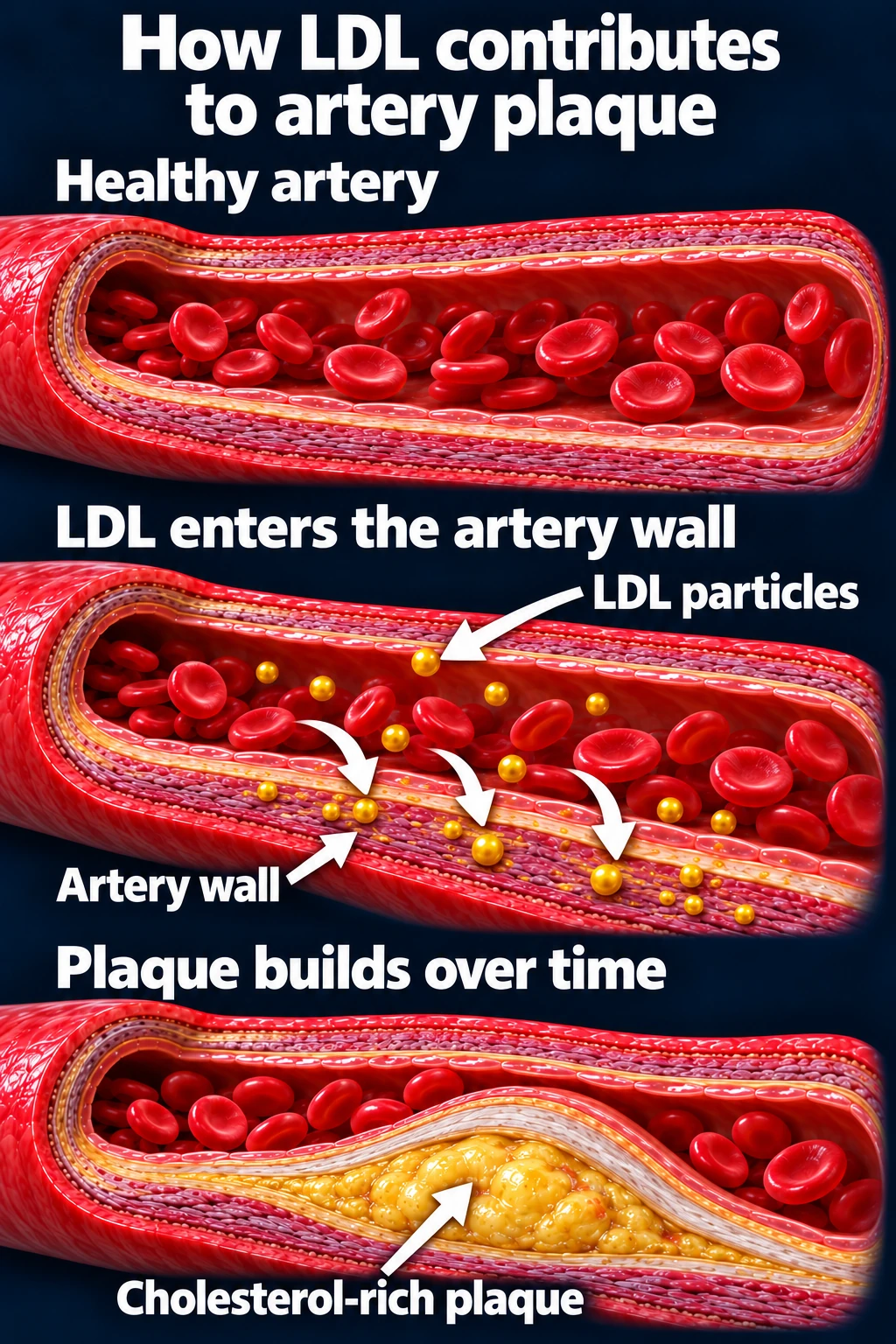
Cholesterol can collect within artery walls and contribute to plaque. This process is called atherosclerosis.
Plaque can narrow an artery. If plaque breaks open, a blood clot may form and block blood flow, causing a heart attack or certain types of stroke.
Why is my cholesterol high?
Your genes and daily habits both matter. Some people have high cholesterol despite eating well and exercising.
Familial hypercholesterolemia is an inherited condition that causes very high LDL and can lead to heart disease at a young age.
Lowering LDL reduces the risk of future artery-related problems.
Updated October 2026. Educational information; your own care plan may differ. Medical illustrations are simplified examples for teaching.