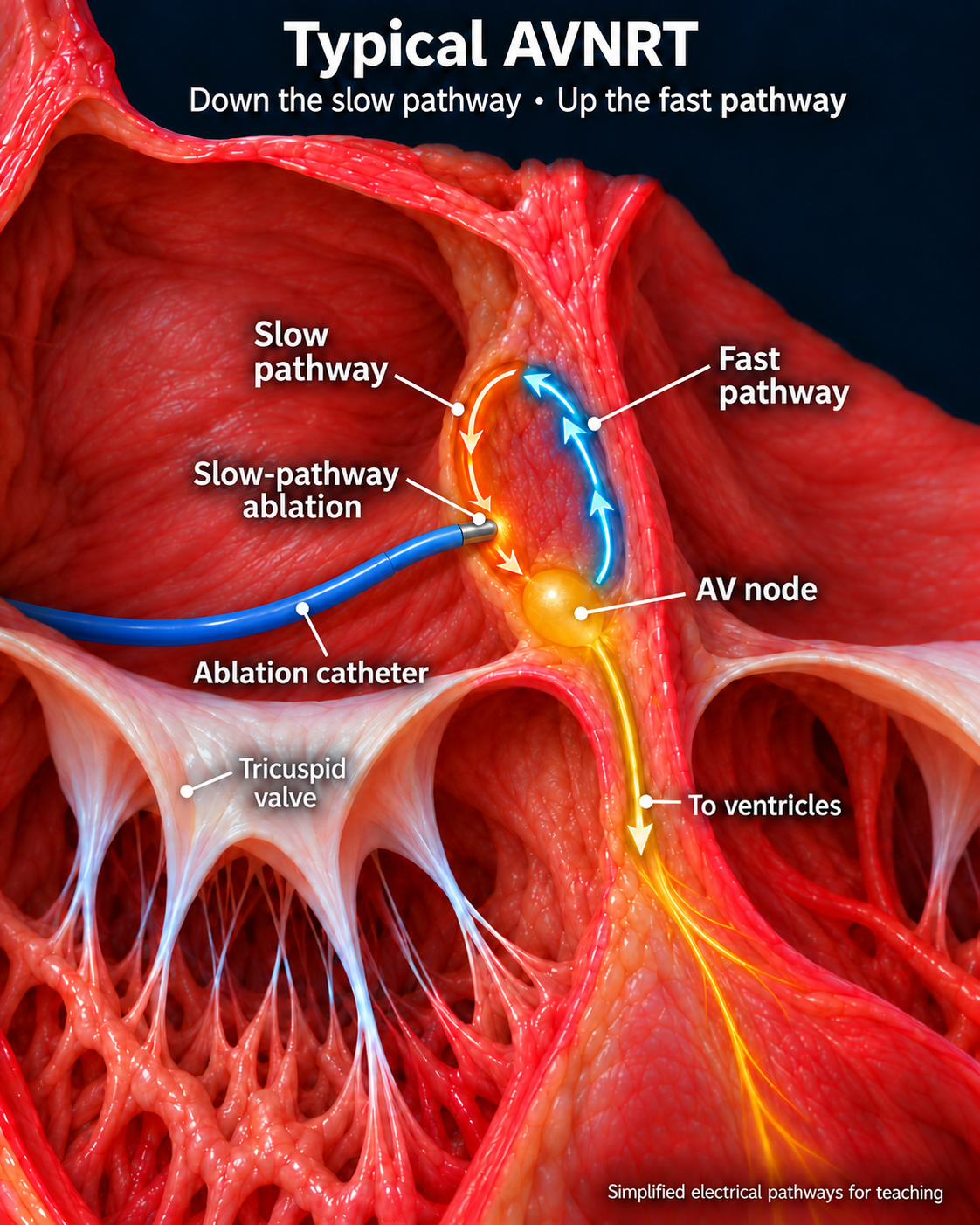
AVNRT · Modify the slow pathway
Ablation interrupts the loop while preserving normal AV conduction. It is highly effective; AV block requiring a pacemaker is an uncommon but important risk to discuss.[6]
CLINICIAN SVT GUIDE · SECTION 3 OF 3
Connect each SVT mechanism to its treatment target and discuss options with the patient.
An EP study identifies the mechanism and guides ablation. Treatment targets differ for each rhythm.
Ablation interrupts the loop while preserving normal AV conduction. It is highly effective; AV block requiring a pacemaker is an uncommon but important risk to discuss.[6]
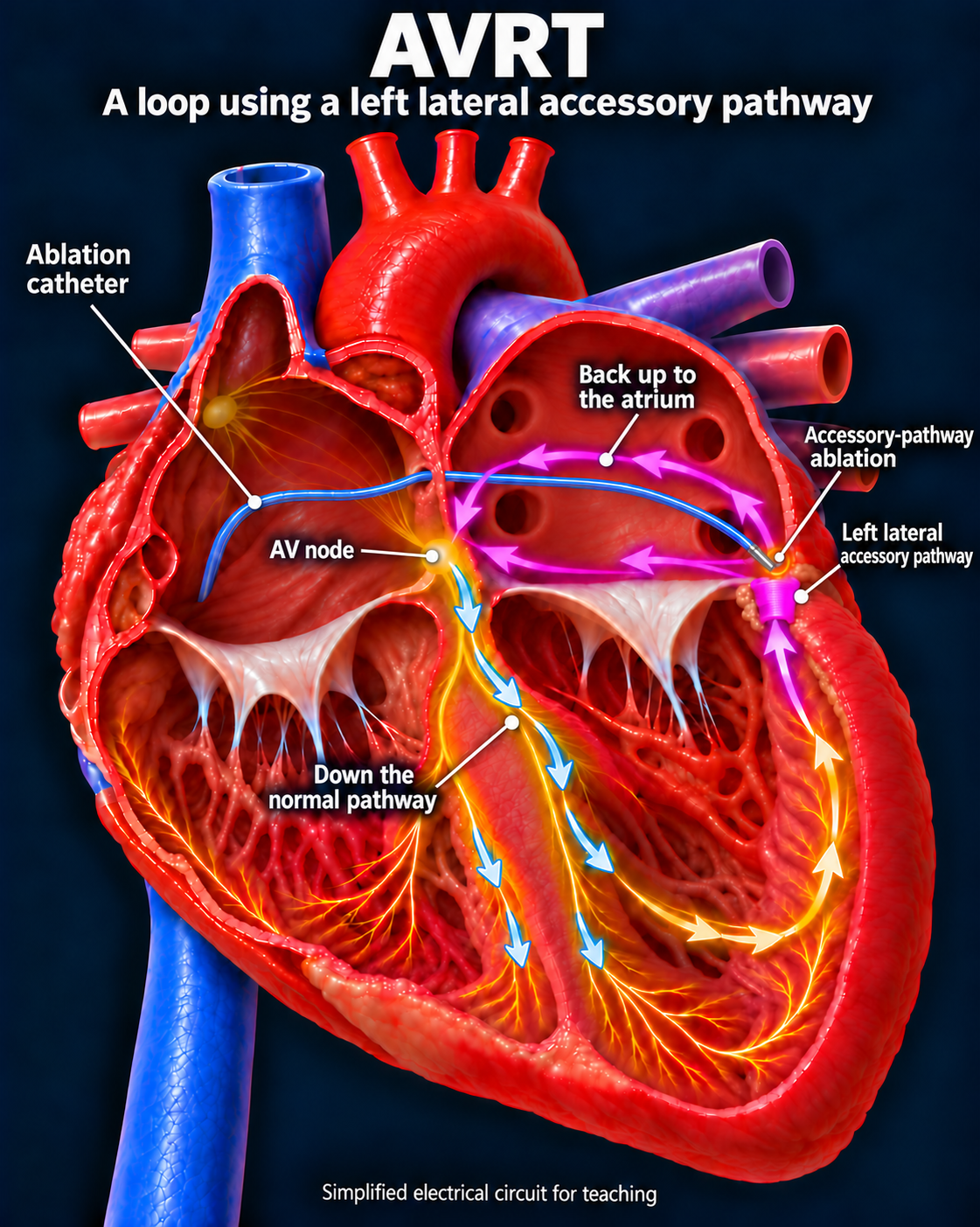
Ablation treats the extra connection. Pathway location determines access and risk; pathways near the normal conduction system require particular care.[2]
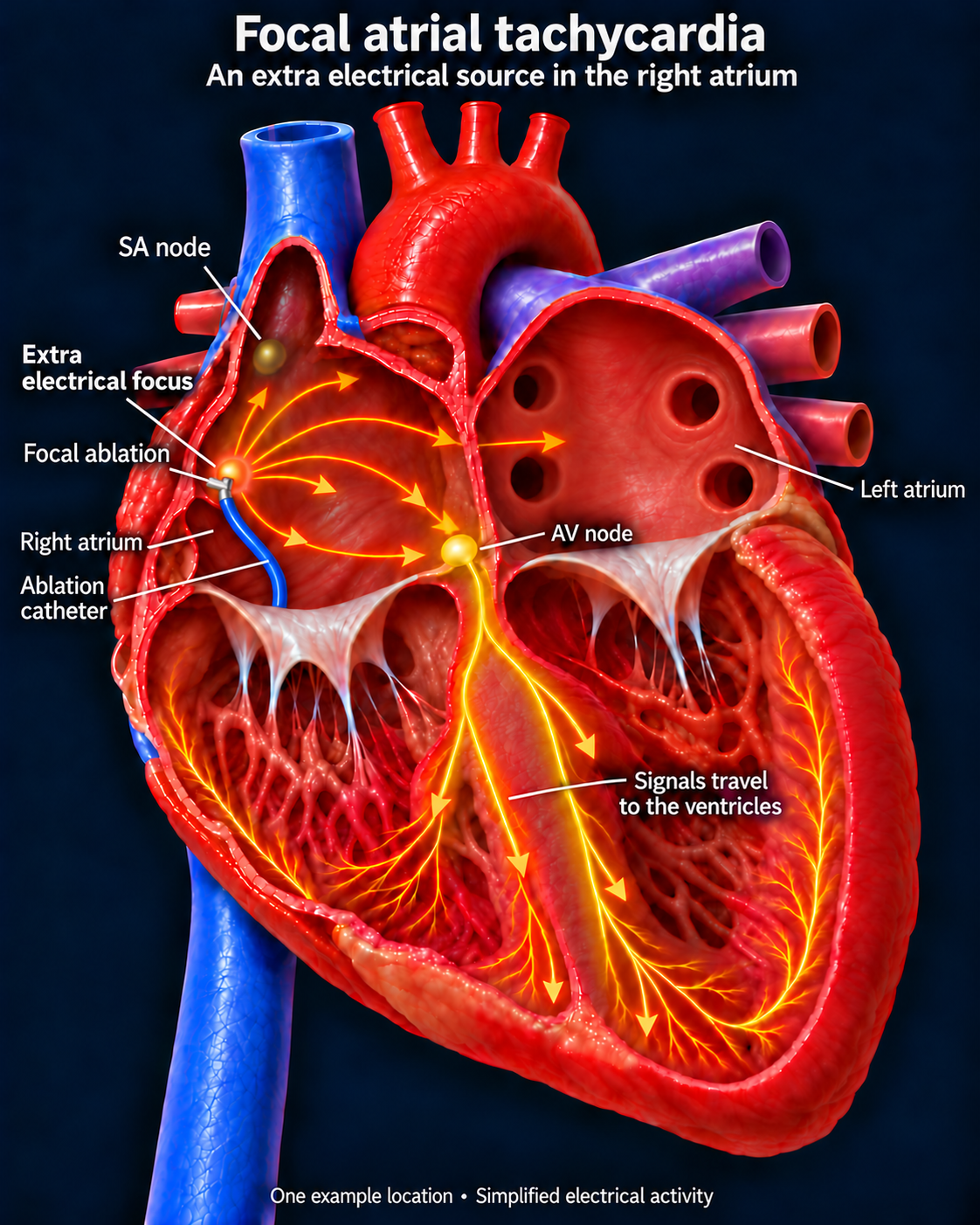
Ablation targets the source. It is an important option for recurrent symptomatic or incessant tachycardia, especially with suspected tachycardia-induced cardiomyopathy.[3]
Observation may suit infrequent, well-tolerated episodes. Beta blockers or diltiazem/verapamil may be options for selected patients without pre-excitation; consider blood pressure, ventricular function, and contraindications. Specialist antiarrhythmic choices depend on the rhythm and underlying heart disease.[1]
Ablation discussions should include vascular injury, bleeding, rare serious complications, and recurrence. Anticoagulation is not routinely indicated solely for AVNRT, AVRT, or focal atrial tachycardia; assess any separate indication, including coexisting AF/flutter.[3]
Reviewed October 11, 2026. Illustrations are simplified teaching diagrams.