PATIENT EDUCATION · THE SIMPLE EXPLANATION
Supraventricular tachycardia (SVT), made clear.
A few pictures. Short explanations. Start here, then explore the full guide when you’re ready.
01 · SUPRAVENTRICULAR TACHYCARDIA (SVT)
What is SVT?
First, how does a normal heartbeat work?
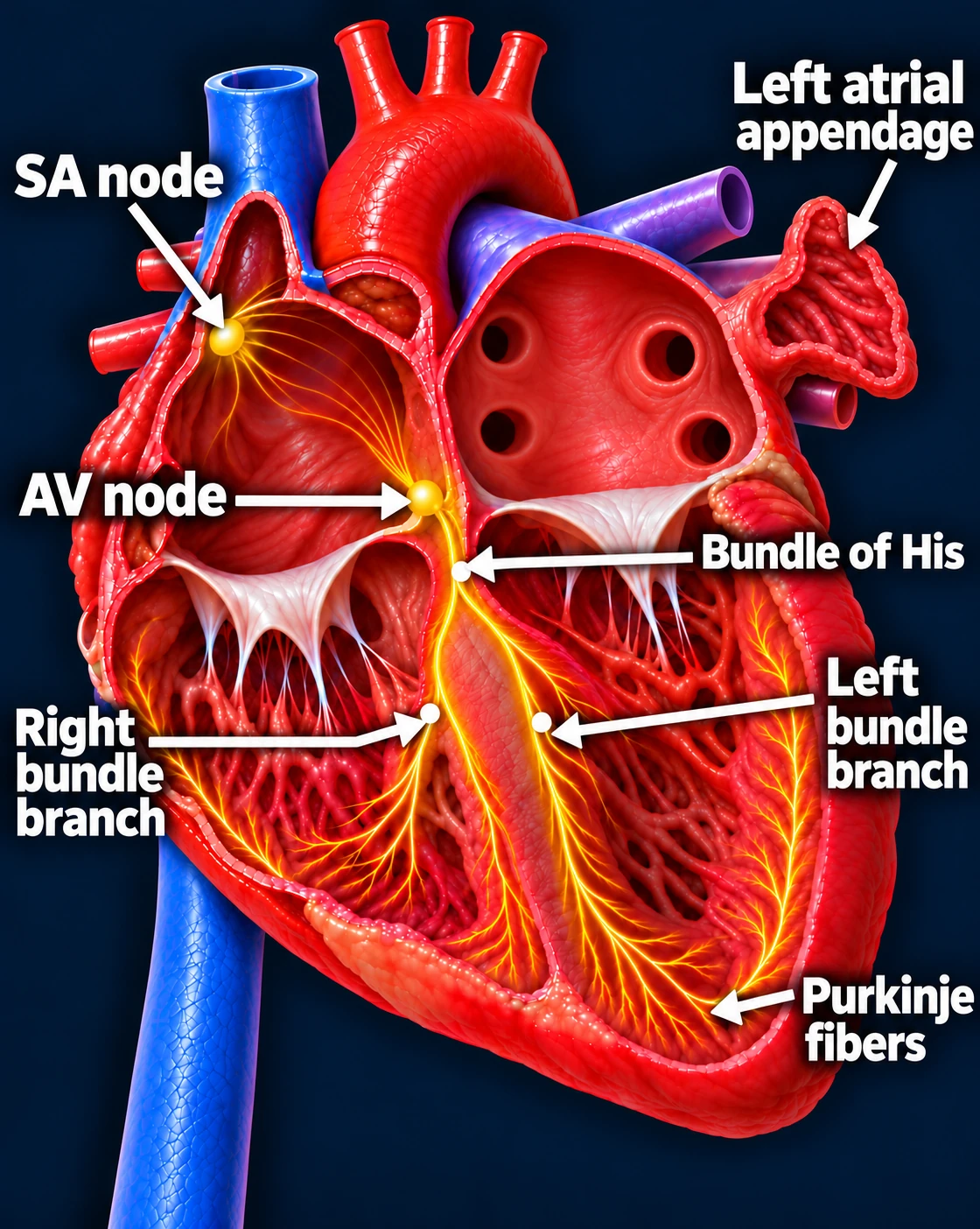
SVT is a fast rhythm involving the upper chambers or the electrical connections above the ventricles. Episodes often start and stop suddenly.
There are 3 main types of SVT: AVNRT, AVRT, and focal atrial tachycardia. The pictures below show how each type differs from a normal heartbeat.
1. AVNRT: a loop near the AV node
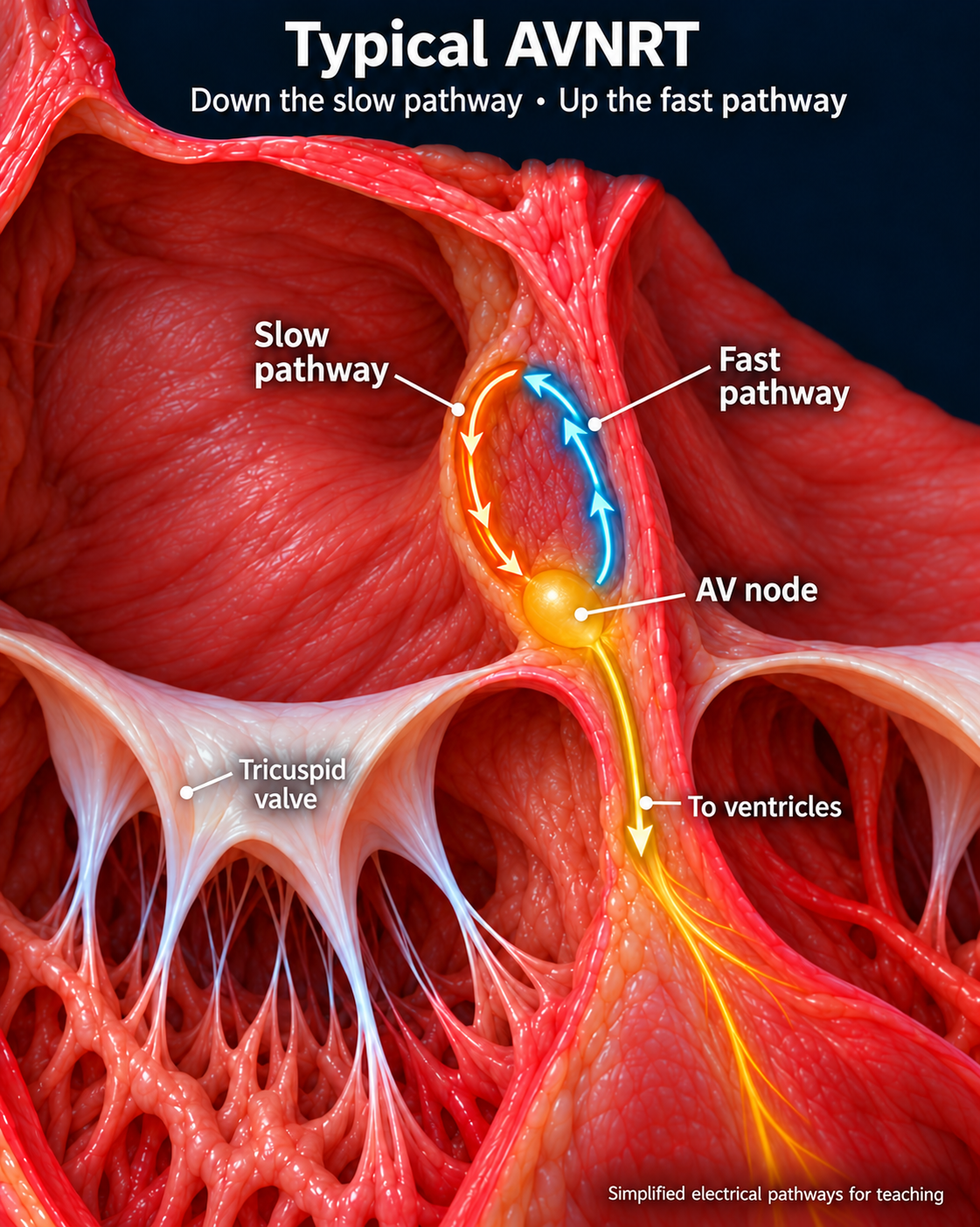
This picture shows AVNRT: a repeating loop using slow and fast pathways near the AV node.
2. AVRT: an extra electrical connection
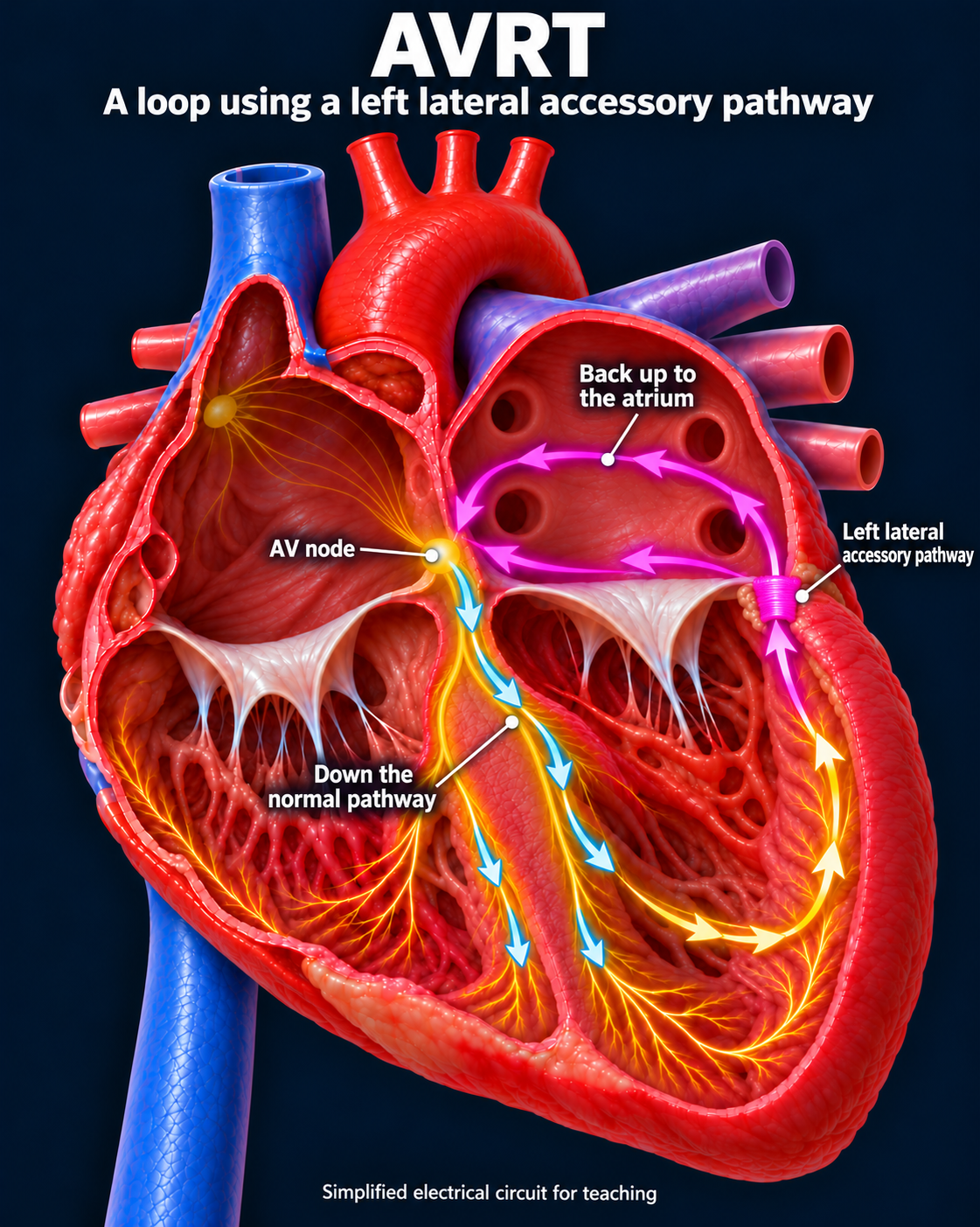
AVRT uses an extra connection between an upper and lower chamber, allowing the electrical signal to travel in a repeating loop.
3. Focal atrial tachycardia: a small area firing rapidly
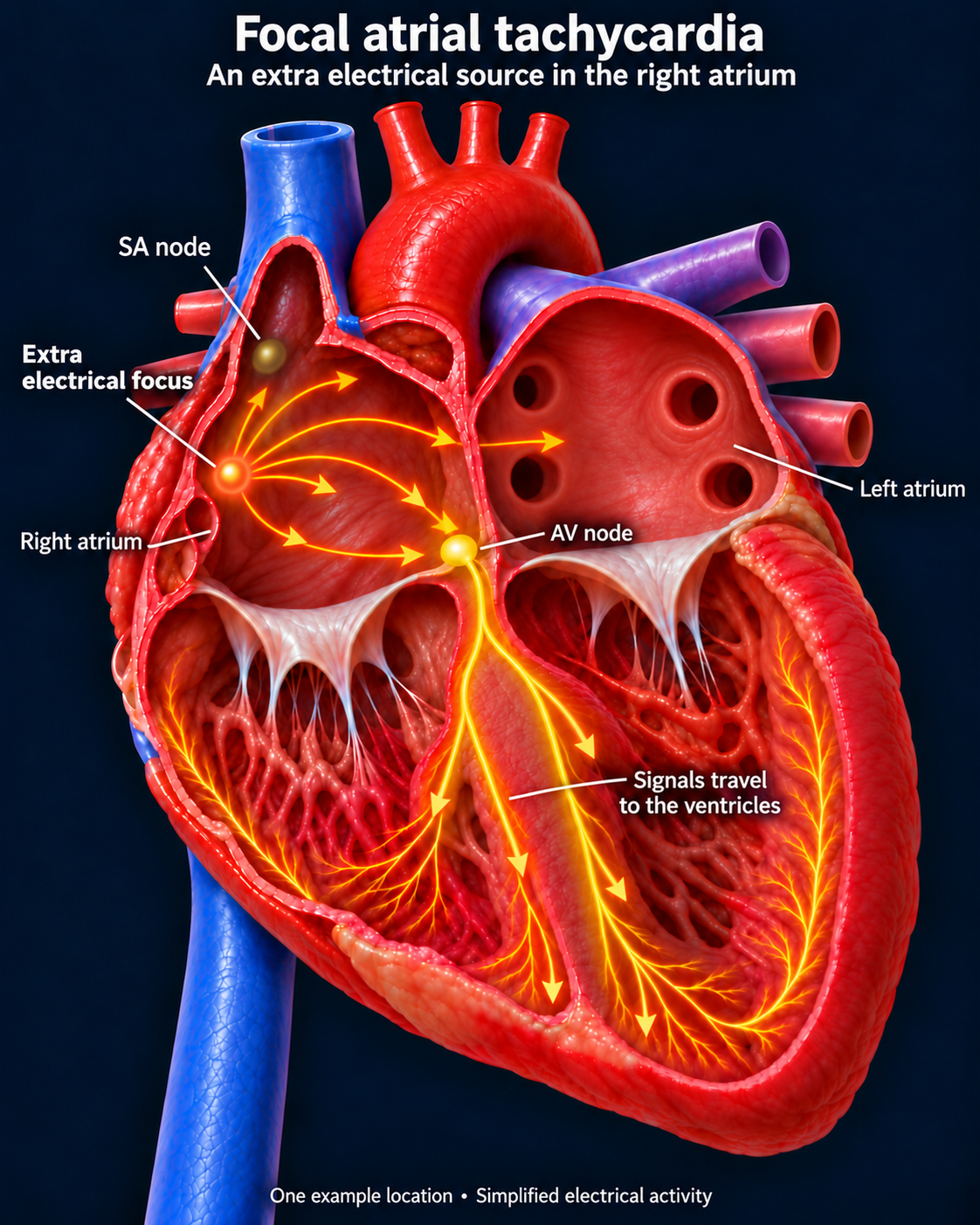
Focal atrial tachycardia comes from a small area sending rapid signals in an atrium. An EKG helps identify the rhythm.
These common SVTs do not usually carry the same stroke risk as AFib.
03 · SUPRAVENTRICULAR TACHYCARDIA (SVT)
How does ablation help?
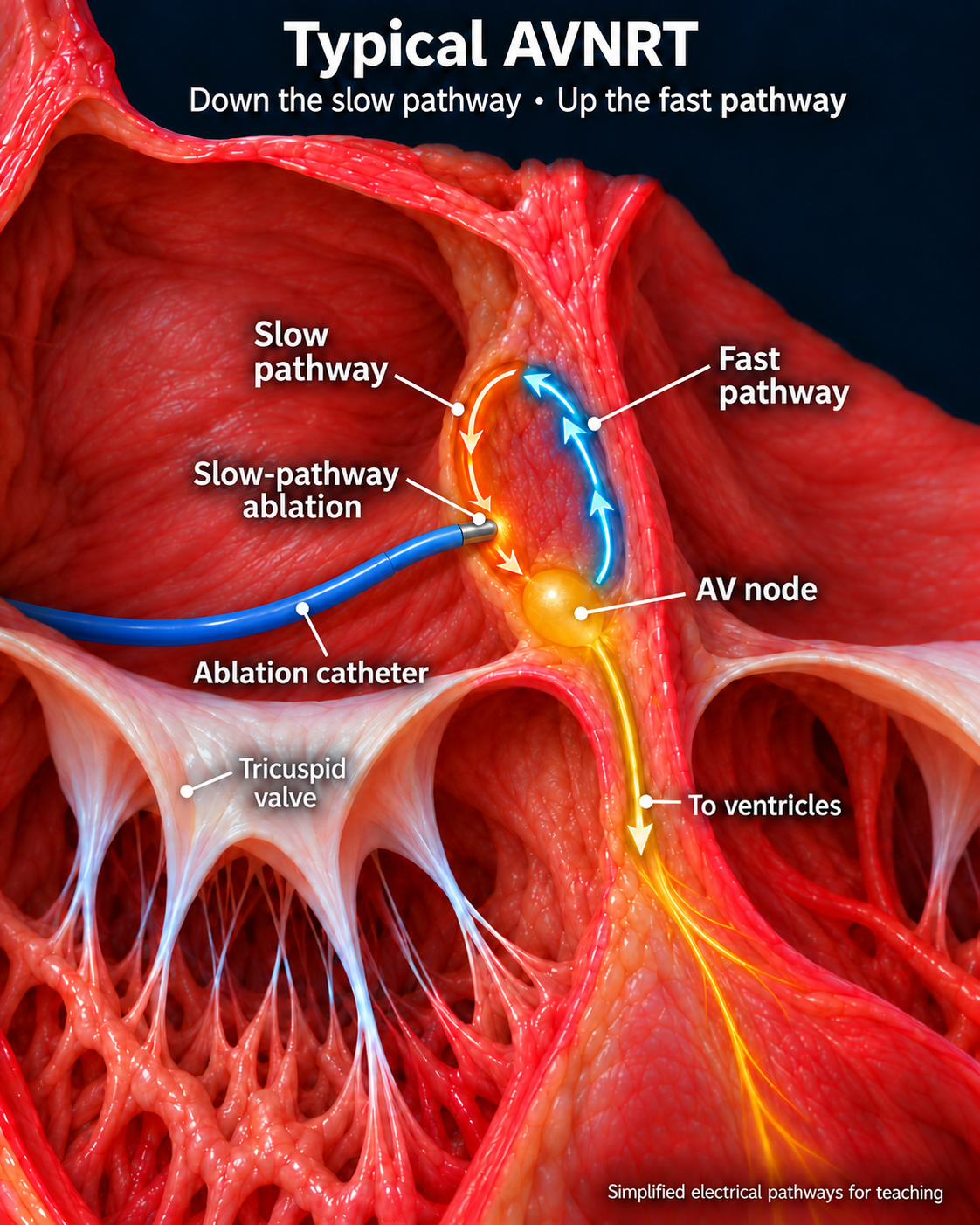
A catheter is guided through blood vessels to the heart. Treatment targets the extra pathway or small area keeping the rhythm going. For common SVTs, ablation can provide a lasting cure, although recurrence is possible.
This example treats the slow pathway in AVNRT. Your treatment target depends on the type of SVT.
Updated October 2026. Educational information; your own care plan may differ.