Document an actionable plan and ensure postoperative continuity.
Pacemakers and ICDs need a device plan
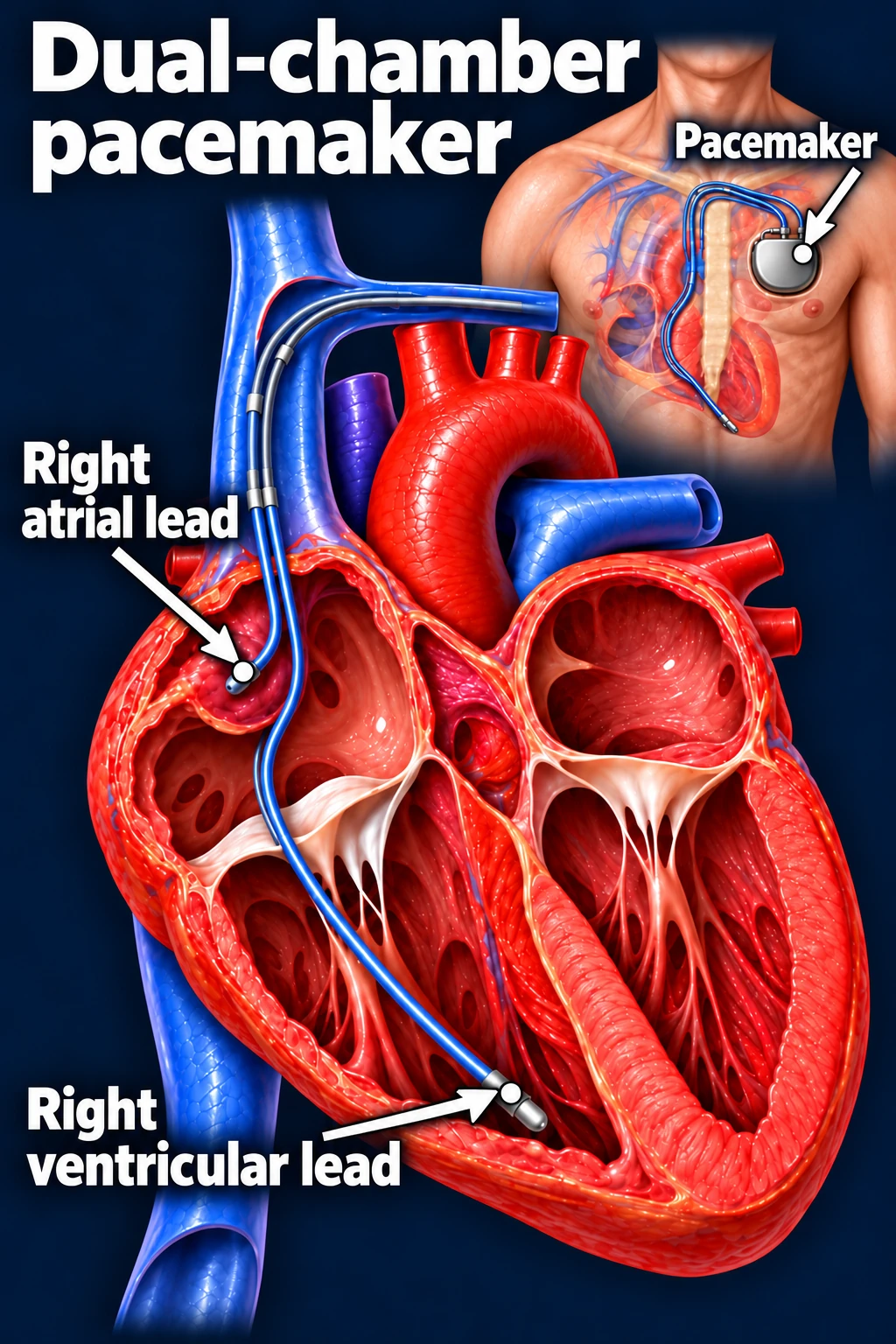
Identify the device, underlying rhythm, pacing dependence, battery status, procedure site, and expected electrocautery. Coordinate with the device clinic and anesthesia before the operation.
Device planning depends on the patient and procedure, not just the presence of a generator.Open full-size image →
A magnet has device-specific effects. An ICD magnet usually suspends tachyarrhythmia therapy without making pacing asynchronous. The team may require reprogramming and external pacing/defibrillation readiness. Restore settings and therapies after the procedure.
State the operation and estimated risk, including the calculator used.
Describe symptoms, functional capacity, significant diagnoses, and current stability.
List testing that is needed, or explain why additional cardiac testing is unlikely to help.
Record the coordinated medication and device plan, plus who manages restart and follow-up.
Use wording such as “currently optimized from a cardiac standpoint” when supported, alongside the risk assessment and limitations. Avoid implying that optimization removes all risk.
Select postoperative monitoring according to risk and procedure. New chest pain, HF, arrhythmia, or myocardial injury requires evaluation; postoperative troponin elevation should not be dismissed without assessment.
Resume indicated therapy when bleeding, renal status, intake, and other clinical factors allow. Ensure any suspended ICD therapy is re-enabled. Coordinate follow-up for new AF, myocardial injury, or worsening cardiac disease.