Measure accurately, confirm the pattern, and recognize a hypertensive emergency.
Check for an emergency first
Marked BP elevation with suspected acute organ injury requires hospital assessment. Concerning findings include chest/back pain, focal neurologic deficits, confusion, acute vision changes, or severe dyspnea/pulmonary edema. Activate EMS when an emergency is suspected.
BP >180 systolic and/or >120 diastolic is a severe range. The number alone does not define an emergency. Repeat correctly if safe, assess symptoms and findings, and arrange timely clinician-directed oral treatment when acute injury is absent. Do not attempt rapid normalization with extra office doses or IV medication.
Pregnancy and the postpartum period require a separate obstetric pathway; do not apply these thresholds to them.[6][1]
Measure correctly before escalating
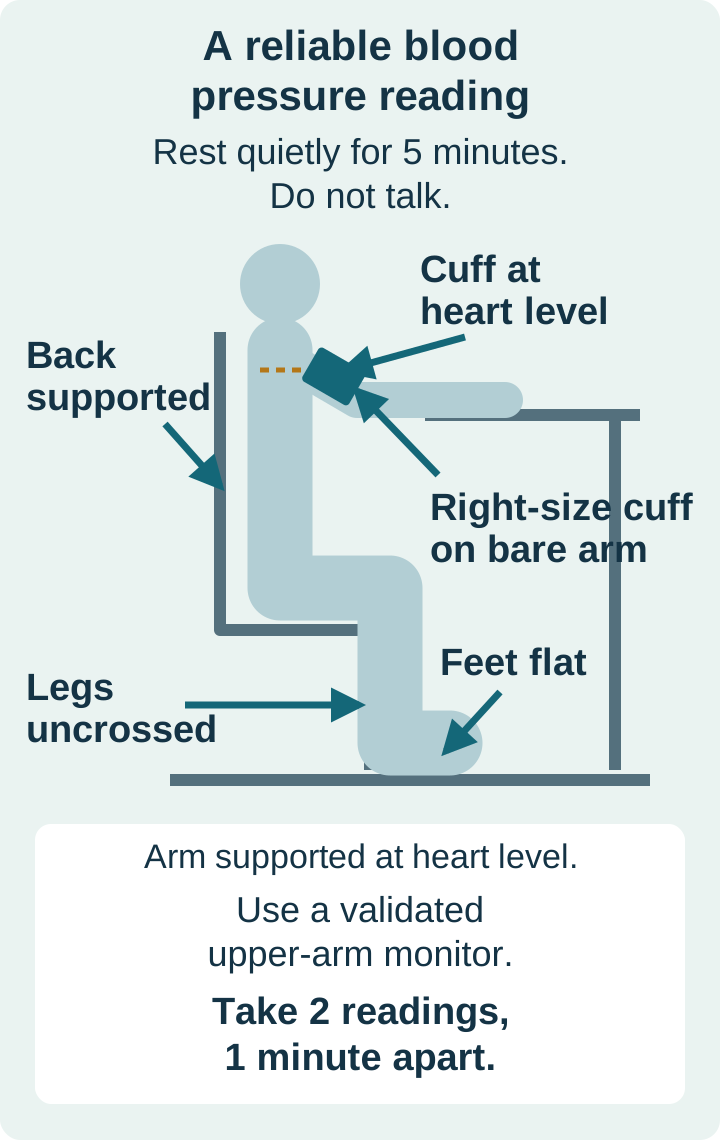
Measurement technique can change the clinical decision. Match the cuff to arm circumference and follow device instructions. Before measuring: empty your bladder. Avoid caffeine, smoking, and exercise for 30 minutes.Open full-size image →
At initial assessment, check both arms and use the higher-reading arm thereafter. Average repeat measurements. Check standing BP when postural symptoms or treatment intolerance make it relevant.[4]
Confirm the pattern at home
Use a validated upper-arm cuff and a structured log. A practical protocol is two readings one minute apart, morning and evening, for seven days; review the average using your clinic’s protocol. Compare the home device and technique with office measurement.
Ambulatory monitoring is useful when readings disagree or white-coat/masked hypertension is suspected. Avoid relying on cuffless smartwatch BP estimates to diagnose or titrate treatment.[4][7][1]
Assess the patient, not just the BP
Review actual medication use, affordability, adverse effects, and missed doses.
Ask about NSAIDs, decongestants, stimulants, corticosteroids, alcohol, and supplements.
Assess cardiovascular risk, kidney disease, sleep apnea symptoms, and signs of organ injury.
Obtain appropriate baseline testing: CBC, electrolytes/creatinine with eGFR, lipids, glucose or A1c, TSH, urinalysis, urine albumin-to-creatinine ratio, and a 12-lead EKG; add tests according to clinical clues.
Coordinate targeted secondary-cause evaluation for resistant, abrupt, or unusually early hypertension, unexplained hypokalemia, or other suggestive features.[5][8]