Relieve congestion, improve outcomes, and coordinate long-term care.
Treatment has several goals
Relieve symptoms and fluid overload, reduce hospitalization and death, improve functional capacity, and treat the underlying cause. The HF phenotype, kidney function, blood pressure, potassium, rhythm, and patient goals guide the plan.
Relieve congestion
Diuretics reduce retained salt and water and help breathing and edema.
Change the disease course
Guideline-directed therapy and selected procedures/devices address long-term risk.
Both goals matter; feeling less swollen does not complete treatment.[1]
HFrEF · Four foundational medication classes
ARNI ACE inhibitor/ARB when ARNI is not feasible
Examples: Sacubitril/valsartan; alternatives such as lisinopril or valsartan
Clinical focus: One renin–angiotensin pathway strategy; review BP, renal function, and potassium.
When eligible and clinically stable, establish all four classes early and titrate toward maximally tolerated doses. Do not wait to maximize one drug before considering the next class. Defer beta-blocker initiation/up-titration until HF is compensated.[2]
Important prescribing checks
ARNI must not overlap with an ACE inhibitor; allow at least 36 hours after the last ACE inhibitor dose. Avoid ARNI with a history of angioedema. For HFrEF, steroidal MRA initiation generally requires eGFR >30 mL/min/1.73 m² and potassium <5.0 mEq/L, with close follow-up.[1]
Diuretics · Match treatment to congestion
Loop diuretics such as furosemide, torsemide, or bumetanide relieve fluid overload. Adjust to the clinical response while monitoring weight, symptoms, BP, renal function, and electrolytes. Diuretics complement the foundational HFrEF therapies.[1]
Persistent congestion or treatment-limiting hypotension/renal dysfunction warrants reassessment and specialist coordination.[2]
HFpEF · Treat the phenotype and comorbidities
Manage congestion, hypertension, AF, ischemic disease, obesity, diabetes, and kidney disease. Use SGLT2 inhibitors in eligible patients. The 2026 ACC pathway also incorporates nonsteroidal MRAs and incretin-based therapies for selected patients, alongside other individualized options.
Choice depends on the HF phenotype, kidney function, potassium, obesity/metabolic profile, and treatment eligibility. Exercise and weight management are part of care. HFpEF treatment should be actively reviewed rather than limited to occasional diuretic use.[3]
When can devices or procedures help?
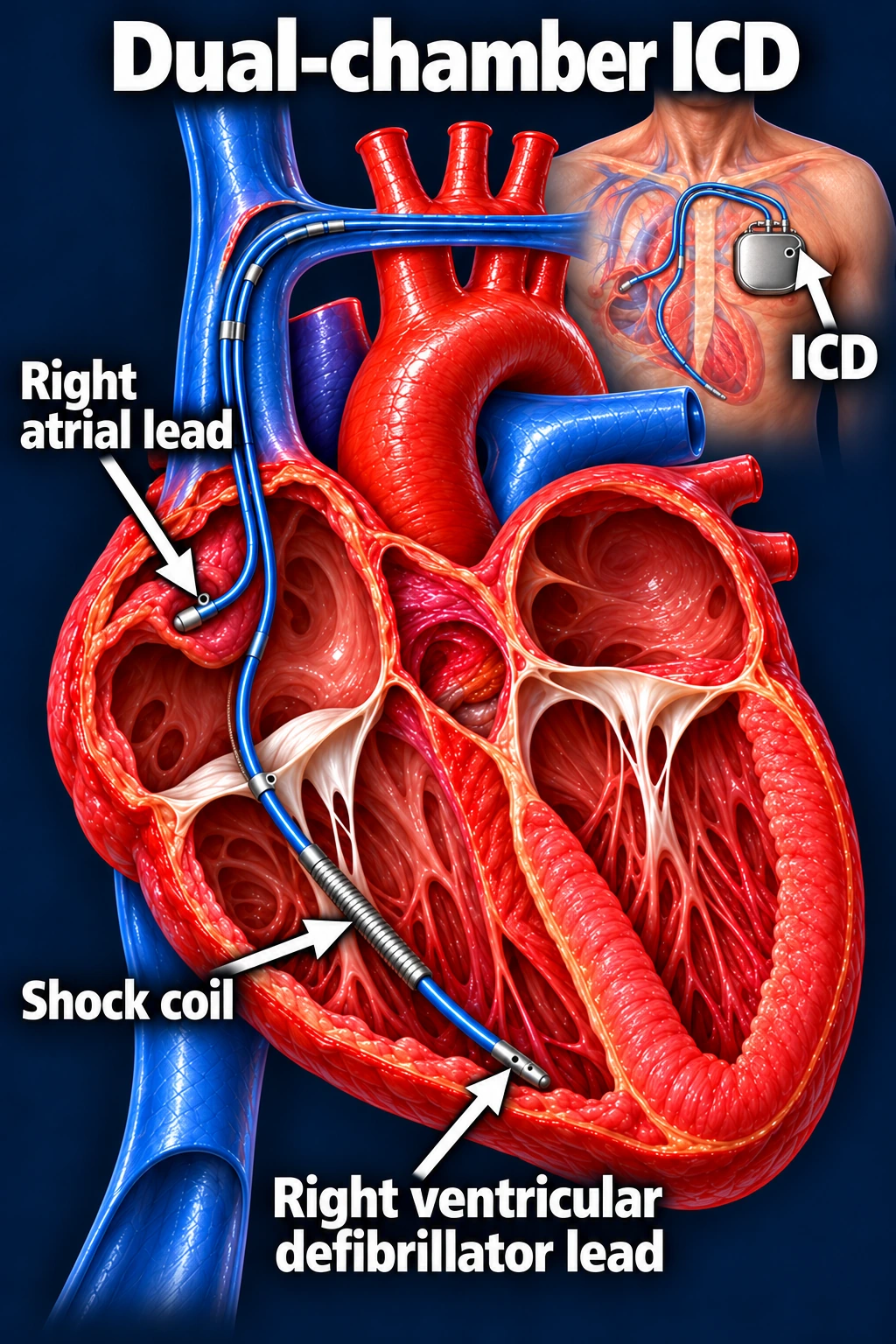
ICD · Protection from VT/VF
Selected patients qualify for an ICD based on ventricular arrhythmic risk, EF, treatment/recovery timeline, and expected benefit. Refer to EP to assess candidacy.[4]
An ICD treats dangerous ventricular arrhythmias. Device selection and the need for an atrial lead are individualized.Open full-size image →
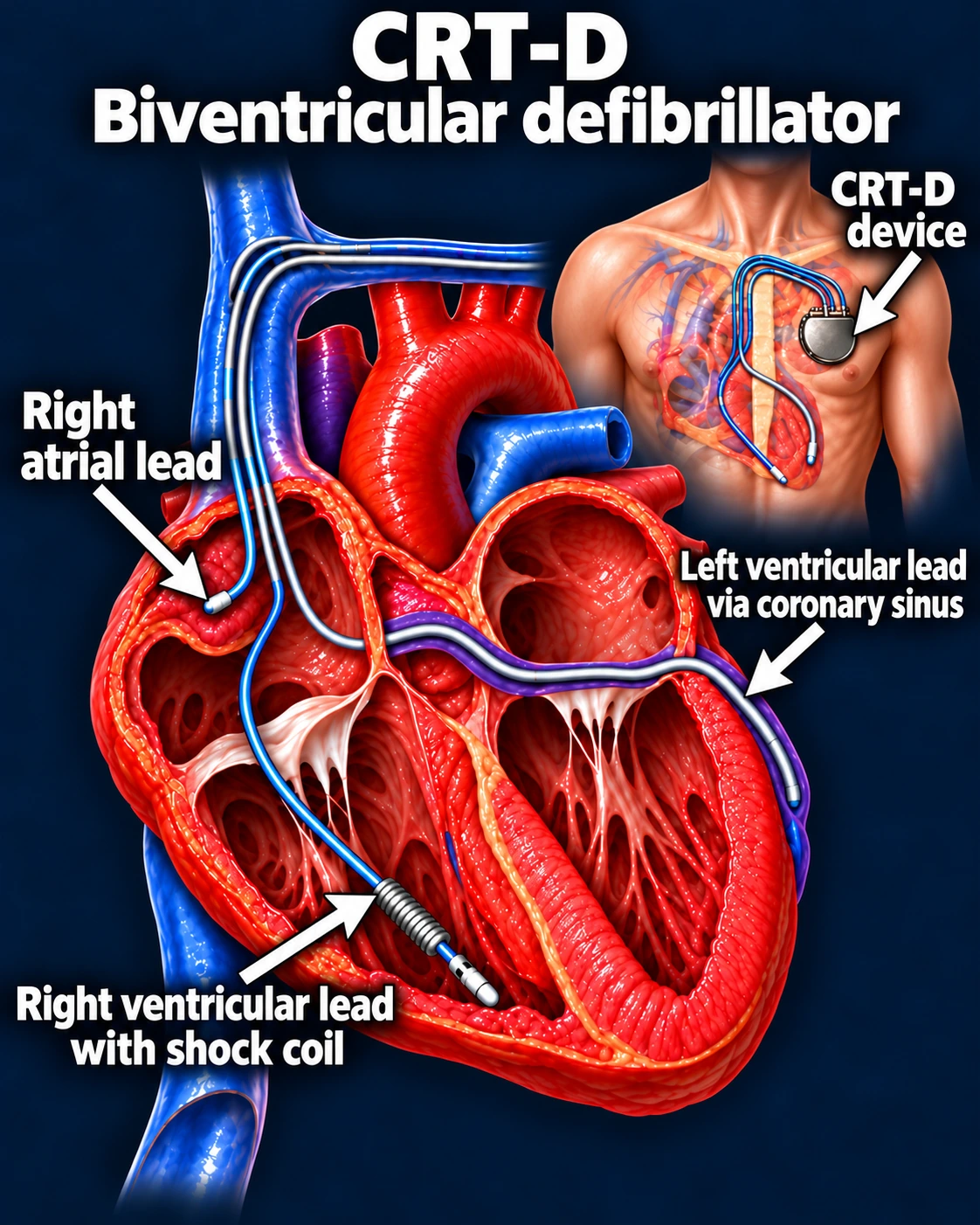
CRT or conduction system pacing · Improve activation
Electrical dyssynchrony or substantial ventricular pacing can contribute to dysfunction. CRT or conduction system pacing may help selected patients; EP reviews the QRS pattern, ventricular function, and pacing needs.[5]
CRT-D combines resynchronization with ICD protection. CRT-P provides resynchronization without defibrillation.Open full-size image →
Treatment of ischemia, valve disease, or a contributing arrhythmia may also be important. Coordinate those decisions with cardiology/EP.
Follow-up is part of treatment
Reassess symptoms, congestion, BP, heart rate, medication tolerance, and access.
Arrange renal function/electrolyte checks according to the medication changes.
Confirm a written action plan for worsening symptoms and weight change.
Coordinate EF reassessment when it will guide treatment or device decisions.
Continue HFrEF therapy when EF improves, unless an individualized clinical reason requires a change.[1]
Recurrent admissions, refractory symptoms, escalating diuretic needs, or worsening organ function should prompt advanced HF referral. Goals-of-care and supportive/palliative care discussions can accompany disease-directed treatment.[2]
Clinical takeaway: Relieve congestion, establish appropriate disease-modifying treatment, address the cause, and reassess early enough to identify patients needing specialist escalation.