Set LDL goals and understand statins, other therapies, and follow-up.
Set an explicit goal
Track both LDL-C reduction and the risk-based absolute goal. These are common adult targets; FH, diabetes, CAC burden, and other conditions may require a specific pathway.
Primary prevention, borderline/intermediate risk
LDL-C goal, mg/dL: <100
Primary prevention, high risk
LDL-C goal, mg/dL: <70
ASCVD, not at very high risk
LDL-C goal, mg/dL: <70
ASCVD, very high risk
LDL-C goal, mg/dL: <55
Very high risk includes multiple major ASCVD events, or a major event with additional high-risk conditions. Assess the guideline criteria rather than treating all ASCVD as one category.
Adults aged 40–75 with diabetes, CKD stage 3 or 4, or HIV generally warrant LDL-lowering therapy regardless of baseline LDL. Individualize treatment beyond age 75.[3][6]
Statins remain the foundation
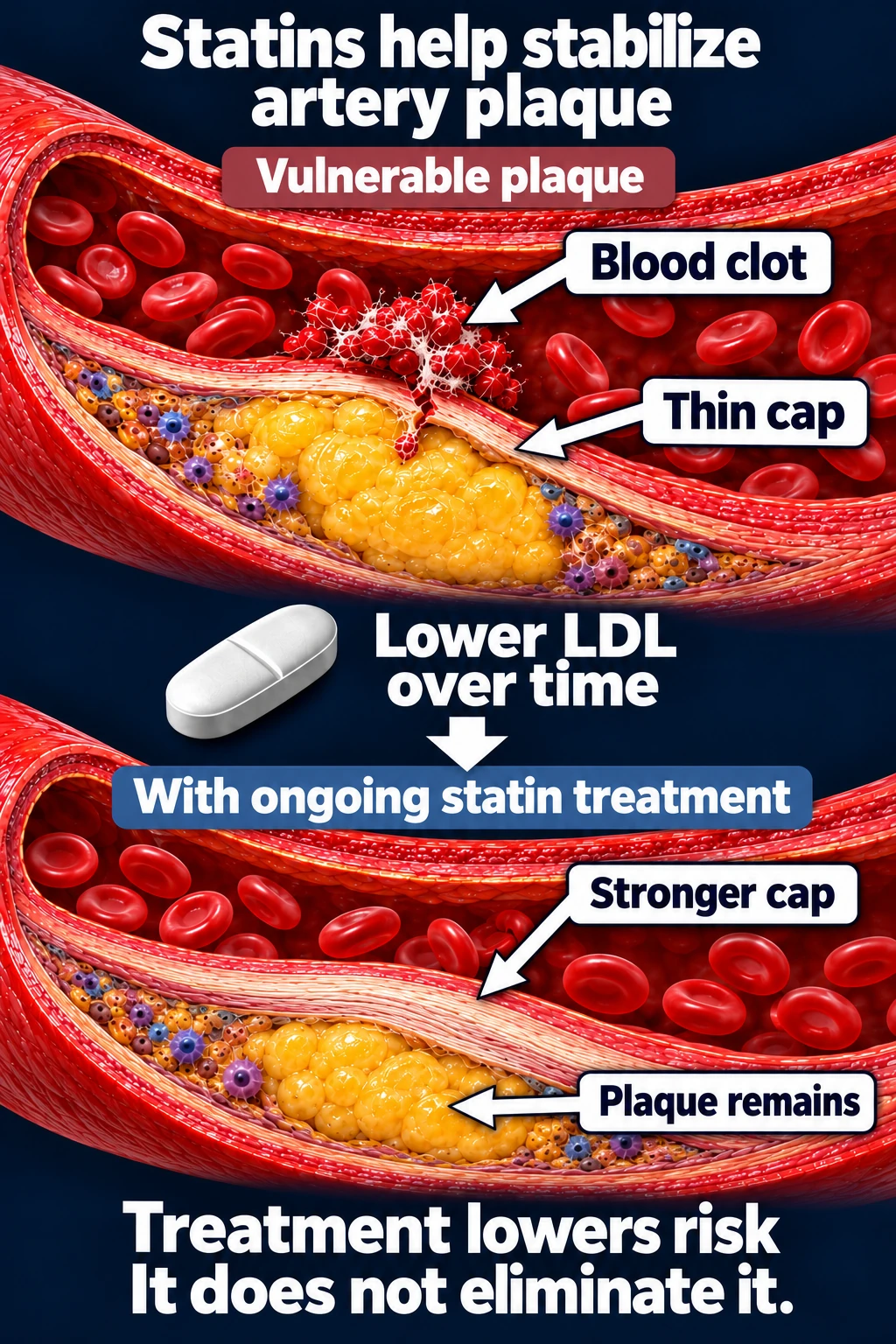
Statins lower hepatic cholesterol production and reduce ASCVD events. High-intensity examples are atorvastatin 40–80 mg or rosuvastatin 20–40 mg daily, typically targeting ≥50% LDL reduction. Use the maximally tolerated regimen matched to risk.
LDL reduction and plaque stabilization lower event risk. Treatment does not erase all plaque or eliminate risk.Open full-size image →
Review interactions and pregnancy plans. Most pregnant patients should discontinue statins; exceptional high-risk situations require specialist guidance.[6]
Add-on and alternative therapies
Ezetimibe
Oral reduction of intestinal cholesterol absorption; commonly added to a statin.
PCSK9 monoclonal antibodies
Alirocumab/evolocumab: injectable LDL reduction with cardiovascular outcome evidence.
Bempedoic acid
Oral option for additional lowering, including selected statin-intolerant patients.
Inclisiran
Reduces PCSK9 synthesis; an injectable option selected around clinical circumstances and access.
Choose by the LDL gap, evidence, tolerance, patient preference, and access. These agents have different evidence and monitoring needs.[7]
Take muscle symptoms seriously
Assess timing, severity, interactions, thyroid status, and other causes. Severe weakness or dark urine requires prompt assessment. For nonsevere symptoms, a supervised pause and rechallenge, a different statin, or a lower dose may identify a tolerated regimen.
Statin intolerance may be partial or complete. Usually at least two statins should be tried, including one at the lowest approved dose. Avoid leaving a high-risk patient untreated while evaluating symptoms; consider nonstatin therapy.[8]
Prevention extends beyond LDL
Support a diet rich in plants, fiber, and unsaturated fats; limit saturated fat and highly processed foods. Address activity, weight, tobacco, BP, diabetes, and sleep. Dietary supplements do not substitute for proven lipid therapy.
Triglyceride treatment depends on pancreatitis risk and ASCVD risk. Prescription products have specific indications; over-the-counter fish oil is not interchangeable with icosapent ethyl.
Repeat a lipid panel about 4–12 weeks after initiation/intensification, then periodically. Review adherence, response, adverse effects, and whether the goal has been reached.[9][6]