Understand lipid measures, plaque formation, and inherited risk.
Cholesterol is carried in particles
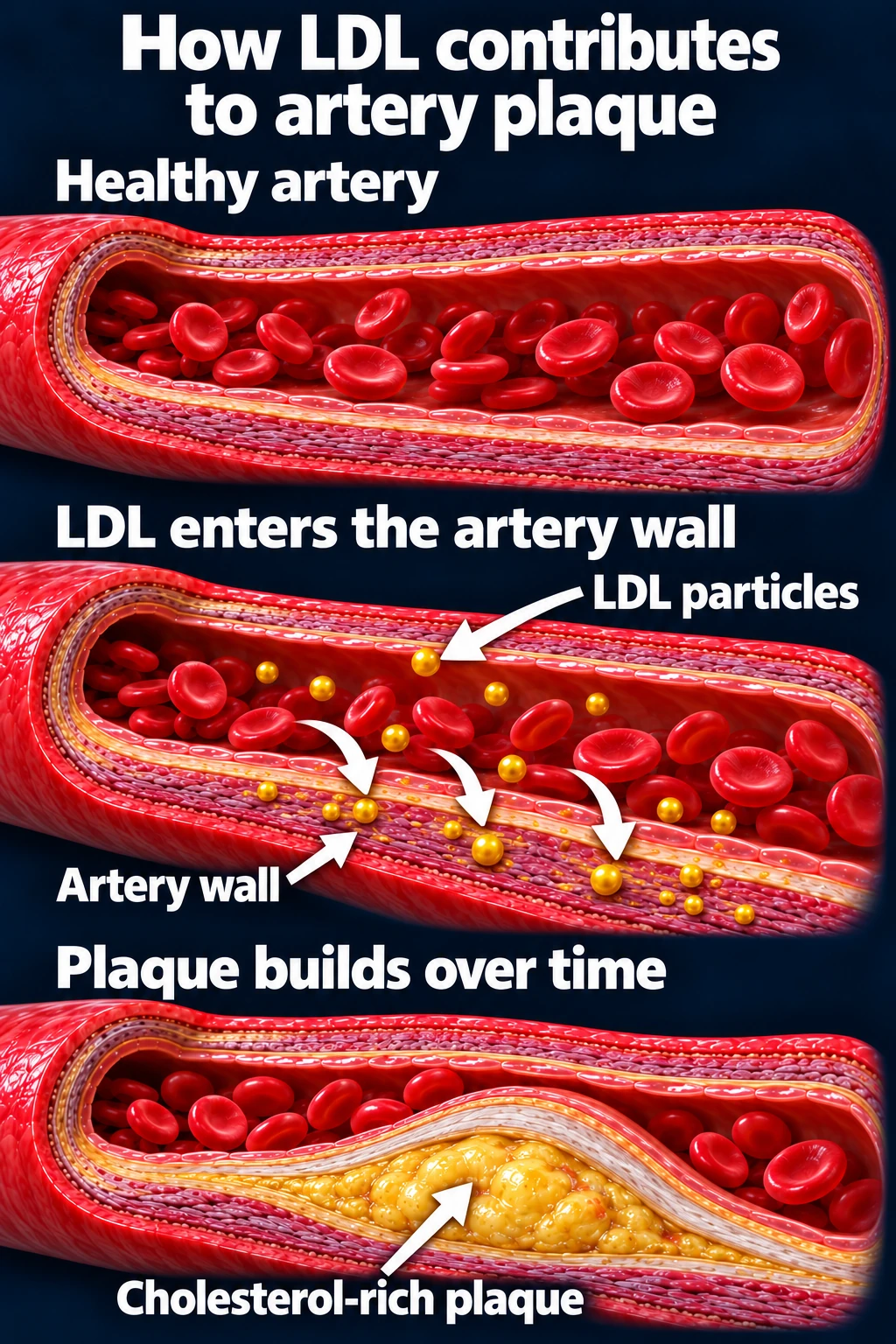
The body needs cholesterol for cells and hormones. The clinical concern is prolonged exposure to atherogenic lipoproteins, which can enter artery walls and promote plaque. High cholesterol usually produces no symptoms; waiting for chest pain misses the prevention opportunity.[1]
Conceptual plaque development. Plaque can narrow the lumen or become unstable; its severity cannot be inferred from one cholesterol value.Open full-size image →
Read the lipid panel
LDL-C
Cholesterol within LDL particles; the main treatment target.
Non–HDL-C
Total cholesterol minus HDL-C; includes cholesterol carried in multiple atherogenic particles.
HDL-C
A risk marker. High HDL does not cancel elevated LDL or other risk factors.
Primary prevention: reduce the chance of a first ASCVD event. Secondary prevention: reduce recurrent events in established ASCVD, such as coronary disease, atherosclerotic stroke, or peripheral arterial disease.
Risk reflects age, BP, smoking, diabetes, kidney disease, family history, and cumulative lipid exposure. The same LDL value can warrant different treatment in different patients. A young adult’s low 10-year risk can conceal substantial lifetime exposure.[3][4]
Recognize inherited risk
Untreated LDL-C ≥190 mg/dL, premature ASCVD, or a striking family history should raise concern for familial hypercholesterolemia (FH). The LDL threshold alone does not prove FH.
Measure Lp(a) at least once in adulthood. Elevated Lp(a) supports more intensive overall risk reduction. Report the laboratory’s units; mg/dL and nmol/L are not interchangeable through a universal conversion.[3][5]