Recognize referral candidates and the importance of postimplant care.
When to discuss LAA closure
Refer to EP/structural heart for selected patients with nonvalvular AF who need stroke protection and have a contraindication to long-term anticoagulation, substantial bleeding concerns, or an informed preference for a procedural option. Selection is individualized and includes procedural risk, life expectancy, anatomy, and the ability to complete short-term therapy and surveillance.
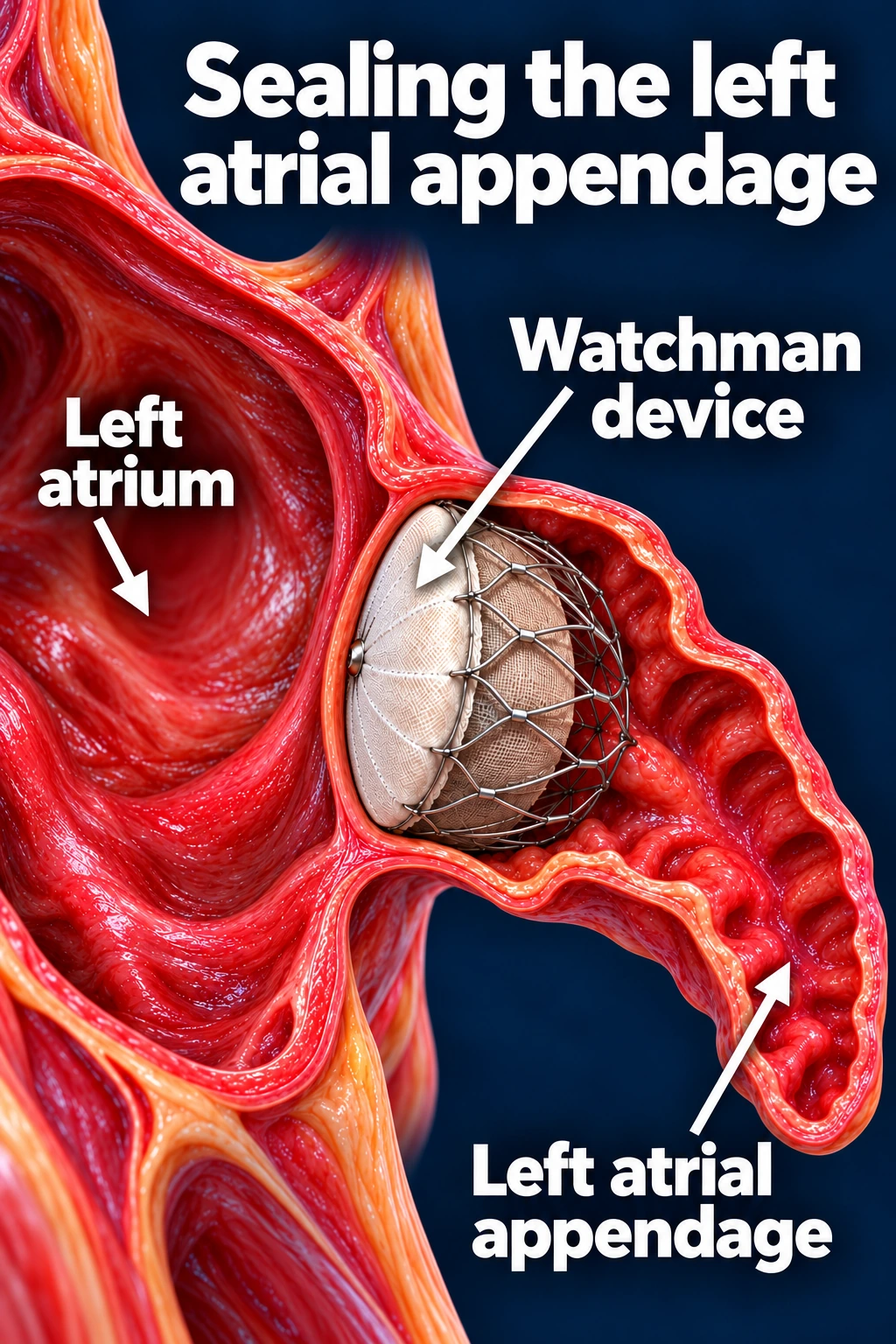
One LAA closure device example. Watchman and Amulet have different designs and protocols.Open full-size image →[3]
What the procedure changes
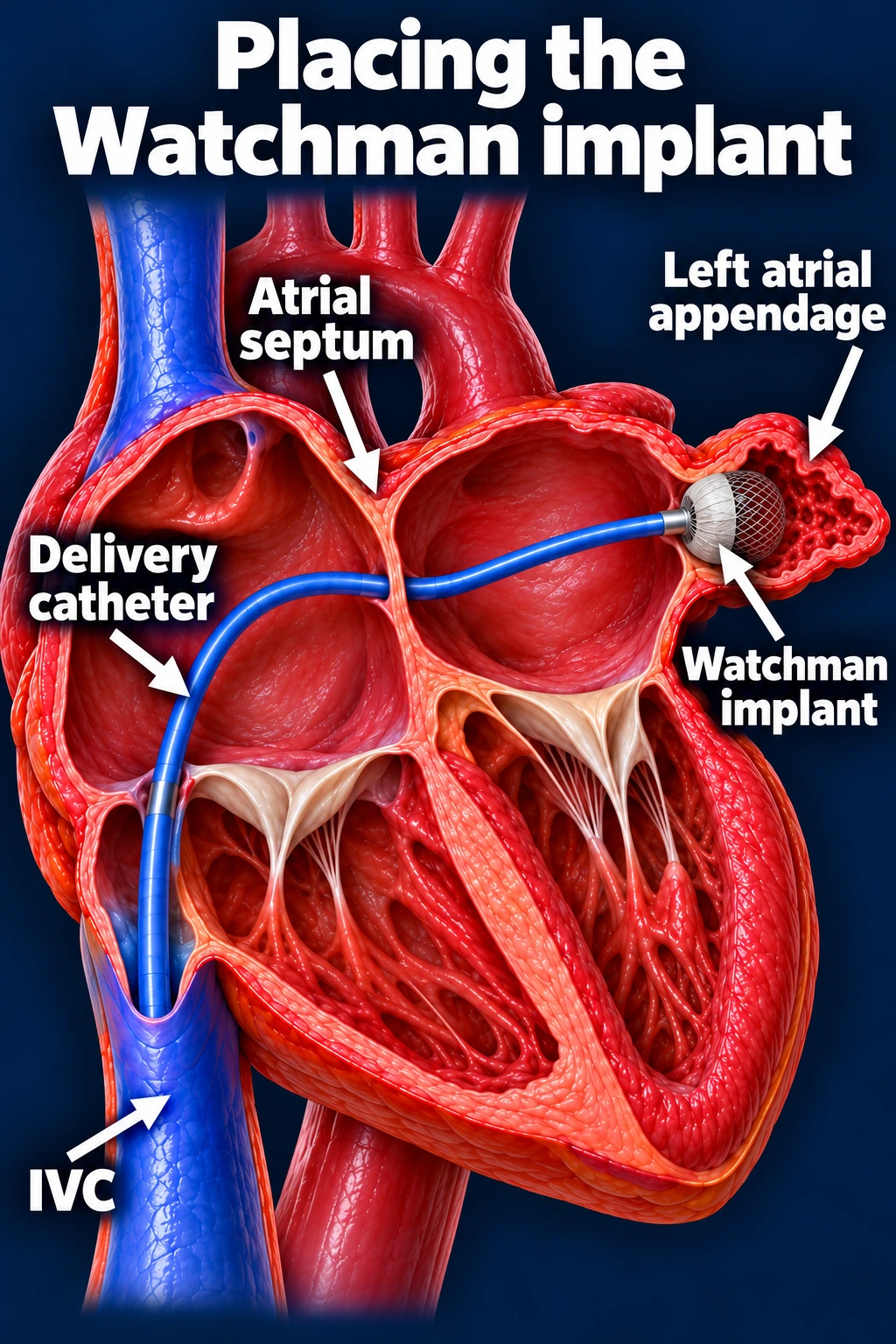
A catheter typically enters through femoral venous access, crosses the atrial septum, and delivers an implant into the LAA. Preprocedure TEE or CT assesses anatomy and thrombus.
Conceptual catheter route. The implant reduces LAA-related embolic risk; it does not treat AF itself.Open full-size image →
LAA closure does not remove another anticoagulation indication such as DVT/PE or a mechanical valve. Surgical LAA exclusion also does not automatically justify stopping anticoagulation.
Postimplant anticoagulation or dual antiplatelet therapy is selected by the implant team; do not promise immediate freedom from all blood-thinning therapy. Follow-up TEE or CT checks device position, leak, and device-related thrombus, often around 45–90 days under the specific protocol.
Device-related thrombus may require anticoagulation. Medication changes follow the team’s assessment of imaging and other indications. Send the stroke-risk assessment, bleeding records, current regimen, and relevant labs with referral.