PATIENT EDUCATION · THE SIMPLE EXPLANATION
Slow heartbeat & heart block, made clear.
A few pictures. Short explanations. Start here, then explore the full guide when you’re ready.
01 · SLOW HEARTBEAT & HEART BLOCK
How does a normal heartbeat travel?
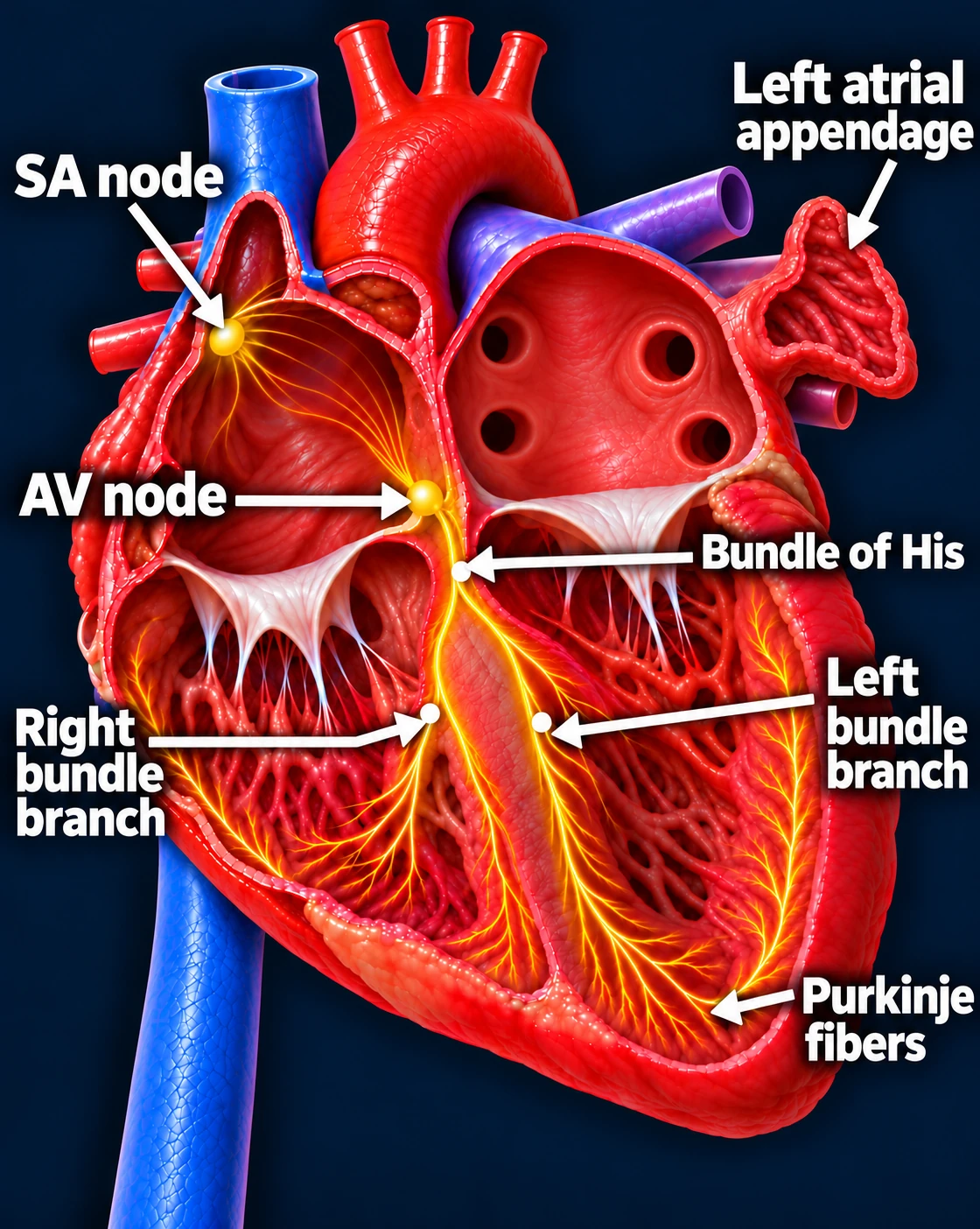
The SA node starts the signal. It spreads through the atria, passes through the AV node, and travels to the ventricles. This lets the upper and lower chambers squeeze in sequence.
02 · SLOW HEARTBEAT & HEART BLOCK
What can slow the heartbeat?
The natural pacemaker may fire too slowly or pause. With heart block, signals do not travel reliably from the upper to the lower chambers. Medicines can also slow the pulse.
A low pulse is not always dangerous. Symptoms and the type of rhythm matter.
03 · SLOW HEARTBEAT & HEART BLOCK
When does a pacemaker help?
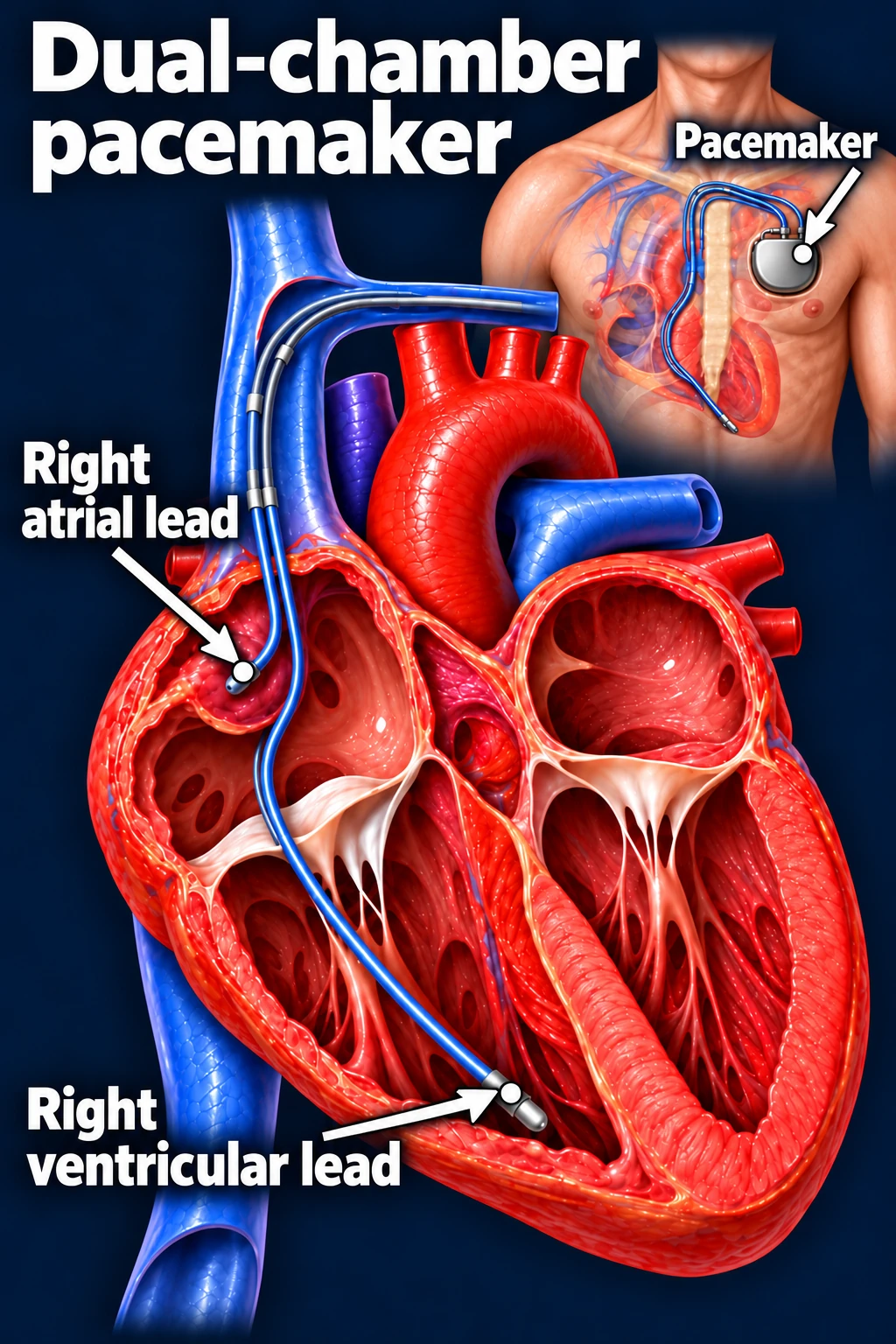
An EKG or monitor helps connect symptoms with a slow rhythm. A pacemaker sends small electrical signals when needed to support the heartbeat. Not everyone with a slow pulse needs one.
A pacemaker treats selected slow rhythms; it does not fix every cause of dizziness or fainting.
Updated October 2026. Educational information; your own care plan may differ. Heart illustrations are simplified for teaching.