PATIENT EDUCATION · THE SIMPLE EXPLANATION
Pacemakers, ICDs, and CRT: implant and recovery, made clear.
A few pictures. Short explanations. Start here, then explore the full guide when you’re ready.
01 · PACEMAKERS, ICDS, AND CRT: IMPLANT AND RECOVERY
Pacemaker: help for a slow heartbeat
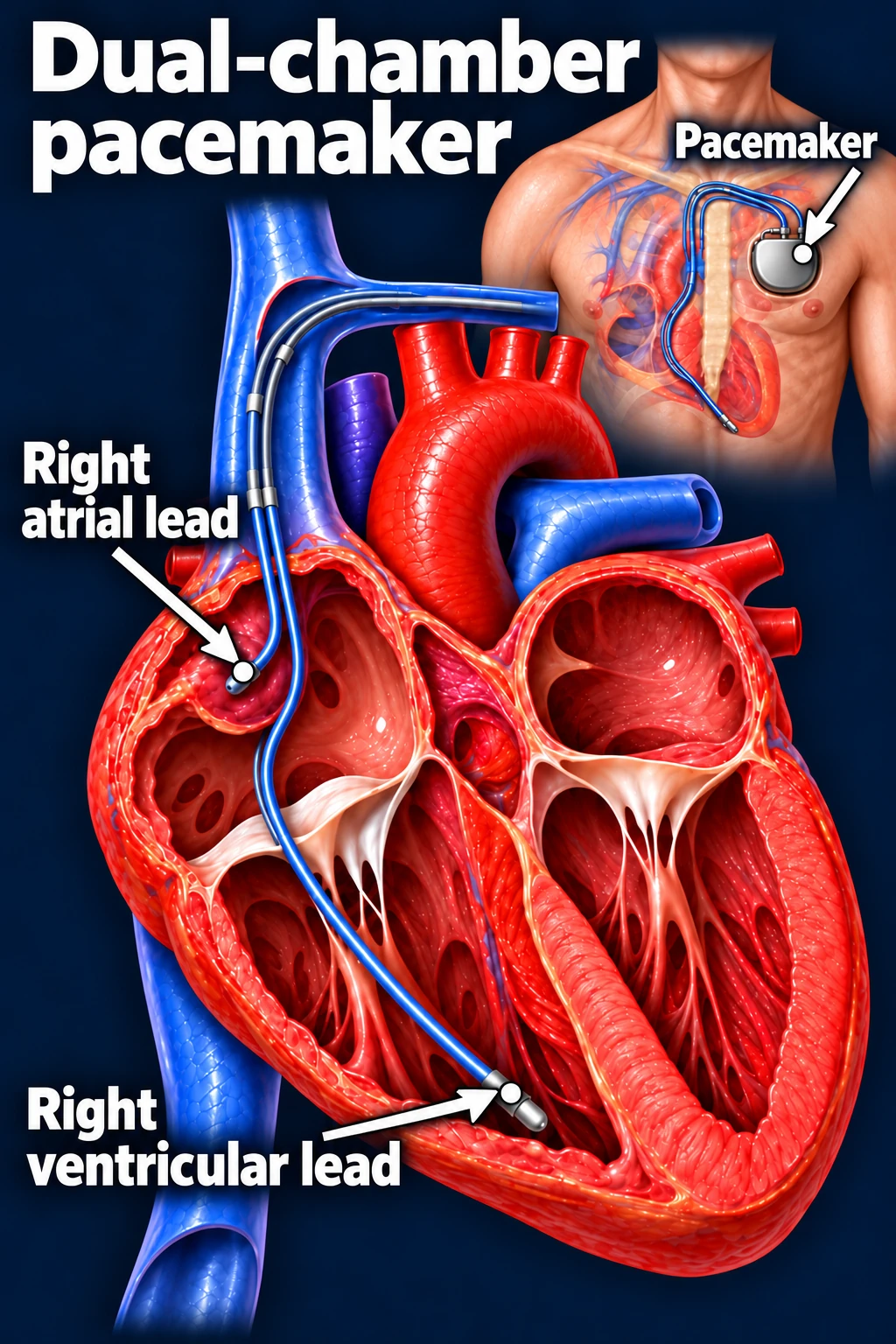
A pacemaker sends small electrical signals when needed to support the heartbeat. Most have a generator under the chest skin and wires called leads connected to the heart.
Some patients can use a leadless pacemaker placed inside the heart.
02 · PACEMAKERS, ICDS, AND CRT: IMPLANT AND RECOVERY
ICD: protection from dangerous fast rhythms
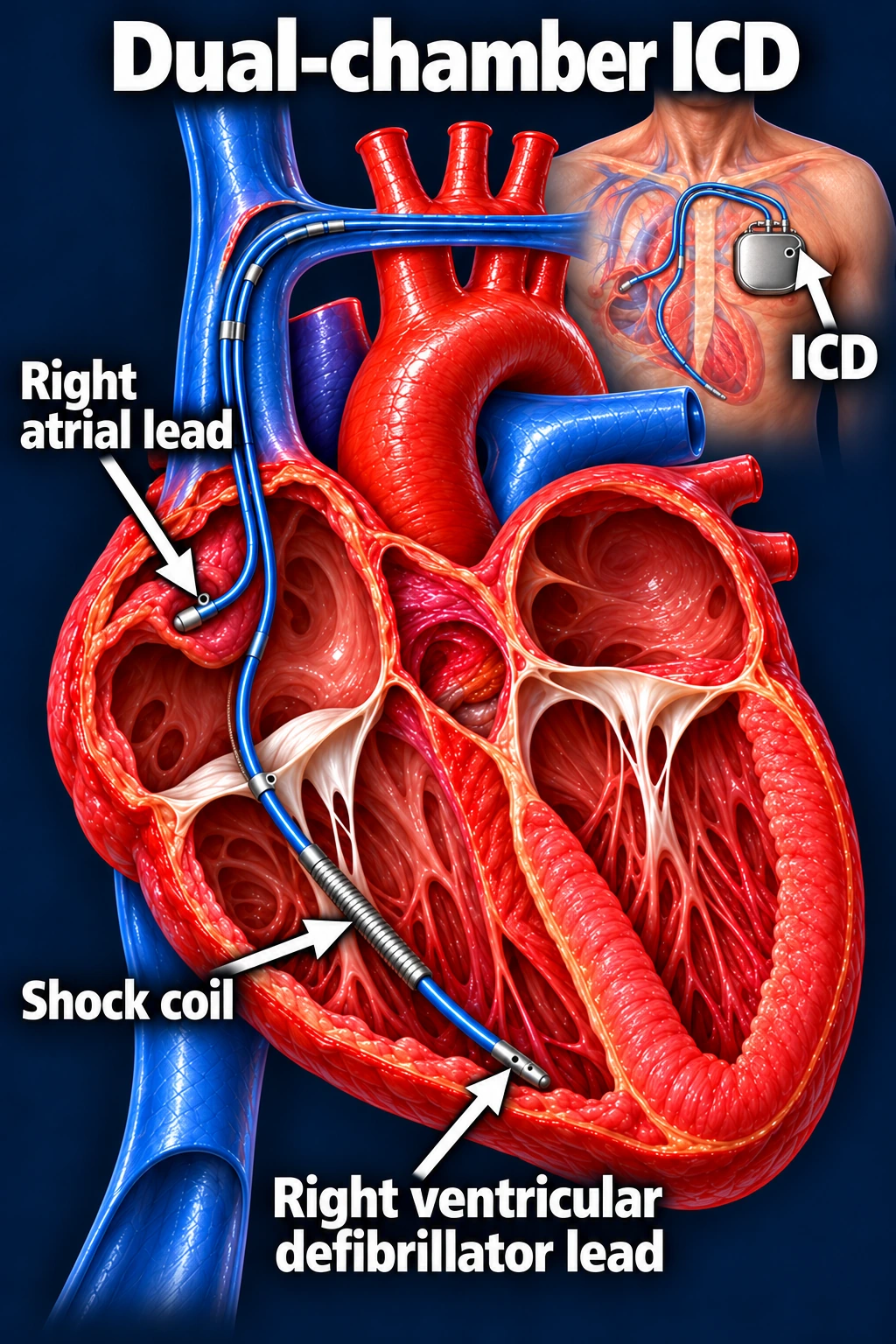
An ICD can treat dangerous fast rhythms with pacing or a shock.
03 · PACEMAKERS, ICDS, AND CRT: IMPLANT AND RECOVERY
CRT: helping the lower chambers squeeze together
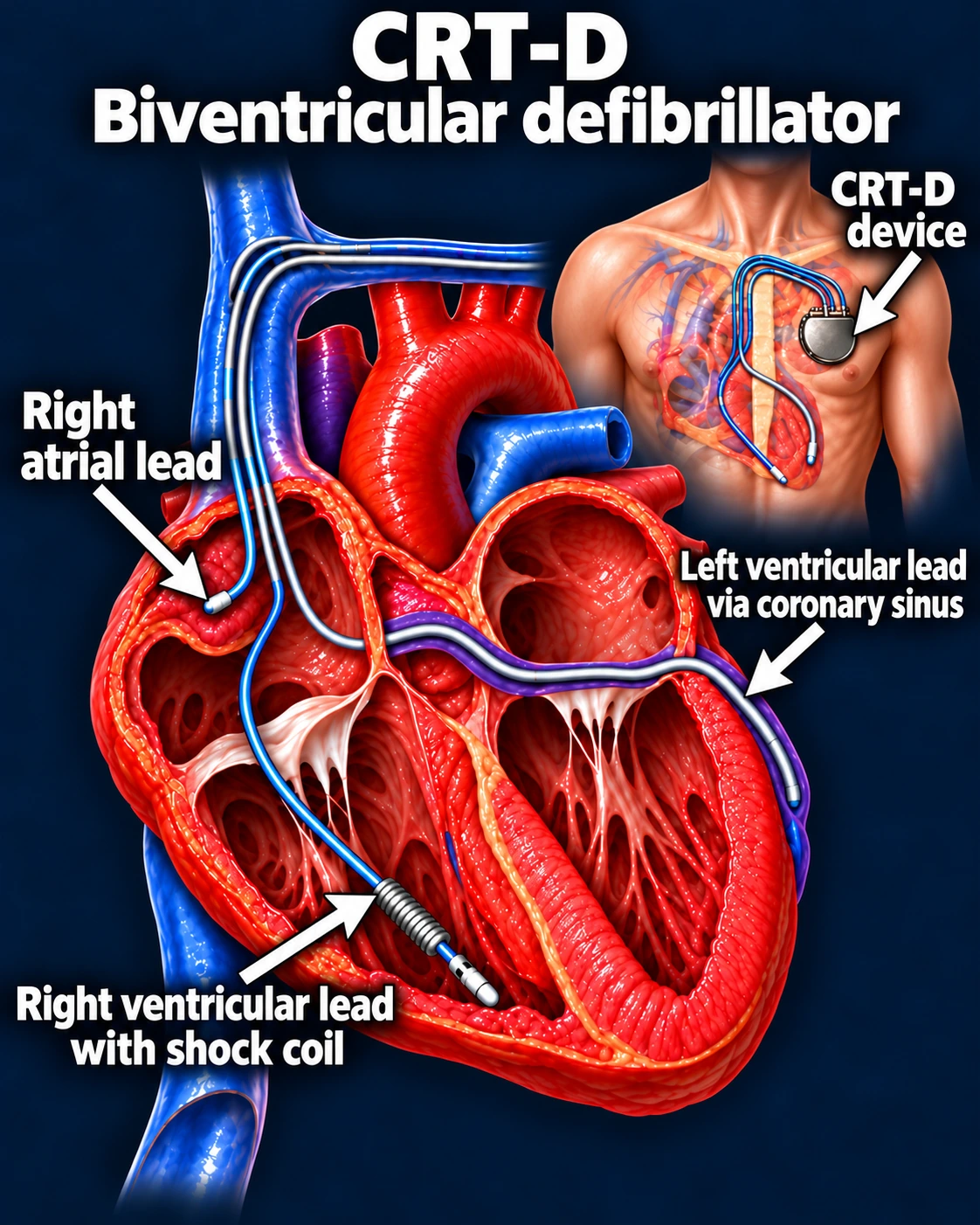
CRT helps the lower chambers squeeze together. A CRT-D provides both coordination and defibrillator protection.
Your rhythm and pumping function help determine which device fits your needs.
04 · PACEMAKERS, ICDS, AND CRT: IMPLANT AND RECOVERY
What should I expect around the implant?
Follow your personal fasting and medication instructions. Arrange a ride home, care for the wound, and follow the arm and lifting plan given for your device. Keep remote monitoring and checkups connected.
No driving for 48 hours after the procedure. An ICD, fainting, or your underlying condition may require longer restrictions.
Updated October 2026. Educational information; your own care plan may differ. Medical illustrations are simplified examples for teaching.