Understand medical support, repair, replacement, and ongoing care.
Medical support and structural treatment
Medicines can treat congestion, hypertension, heart failure, arrhythmias, and other contributors. The structural valve problem may still require repair or replacement. In secondary regurgitation, optimizing the underlying heart condition is an important part of the treatment plan.[1], [4]
The valve team balances symptoms, severity, chamber response, anatomy, procedural risk, durability, expected lifespan, and patient preferences.
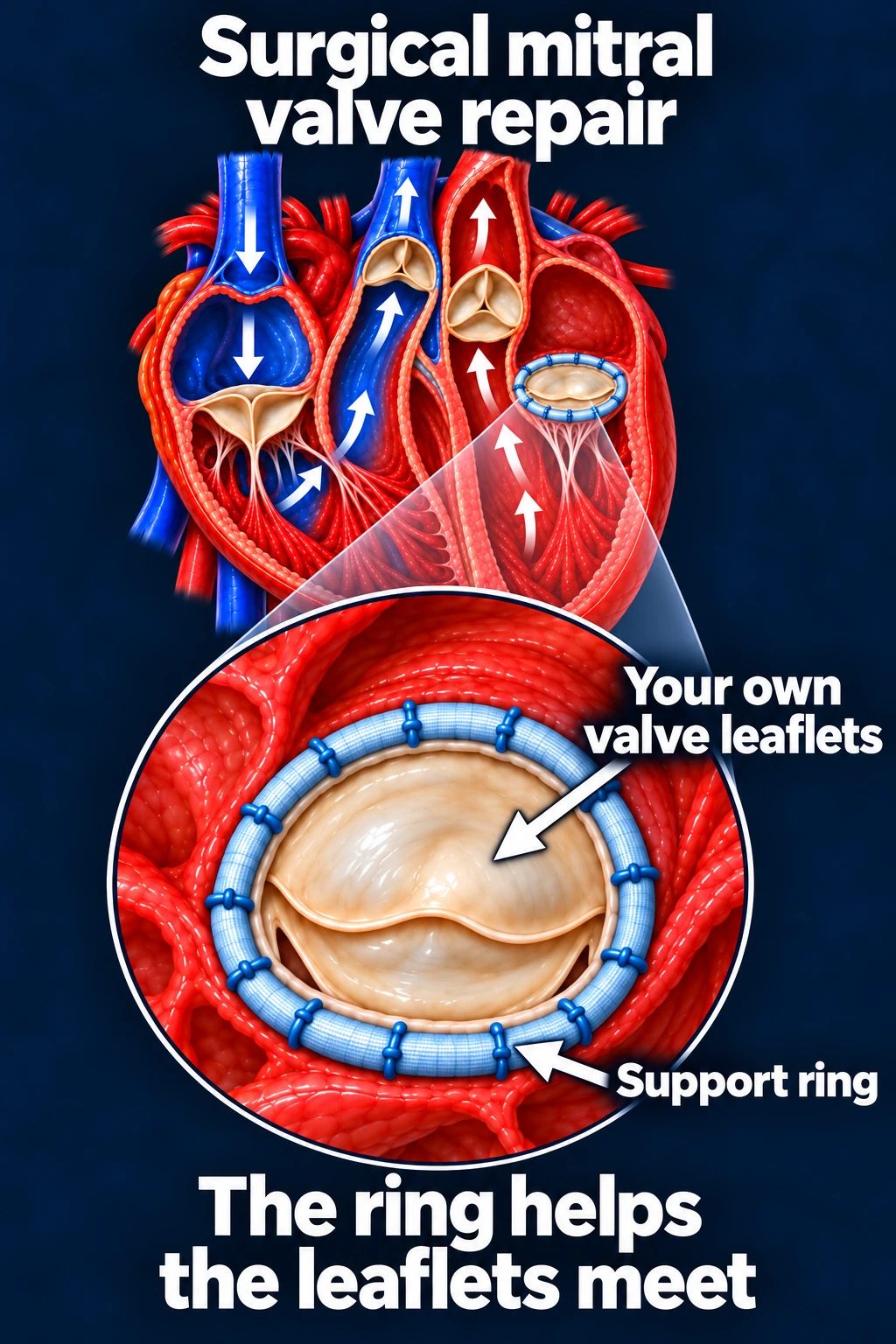
Surgical repair · Preserve the native valve
When a durable repair is feasible, surgery can restore valve function while retaining the patient’s own leaflets. A ring may support the annulus; other techniques address the specific lesion.
Example mitral repair. The ring supports leaflet closure; not every valve problem can be repaired in this way.Open full-size image →
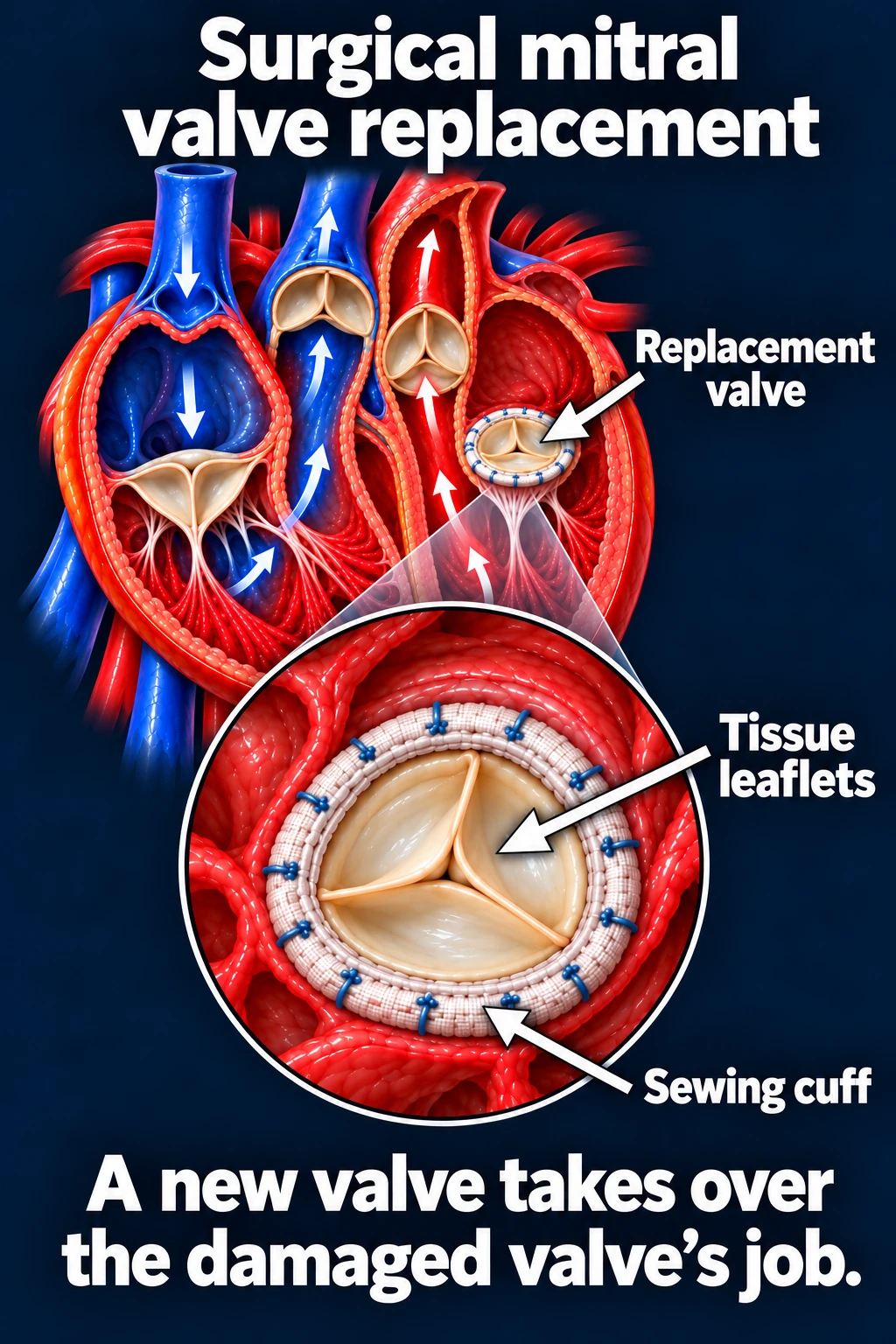
Surgical replacement · Implant a new valve
Replacement is used when appropriate repair is not feasible or another replacement strategy is preferred. Prosthesis selection is a shared decision.
Example tissue mitral replacement. Valve position and prosthesis type vary.Open full-size image →
Mechanical
Durable, with lifelong vitamin K antagonist anticoagulation—usually warfarin—and INR monitoring. DOACs are not appropriate for mechanical valves.
Bioprosthetic/tissue
Can degenerate over time. Antithrombotic treatment depends on the procedure, time since implant, and other indications; a tissue valve does not automatically eliminate a need for anticoagulation.
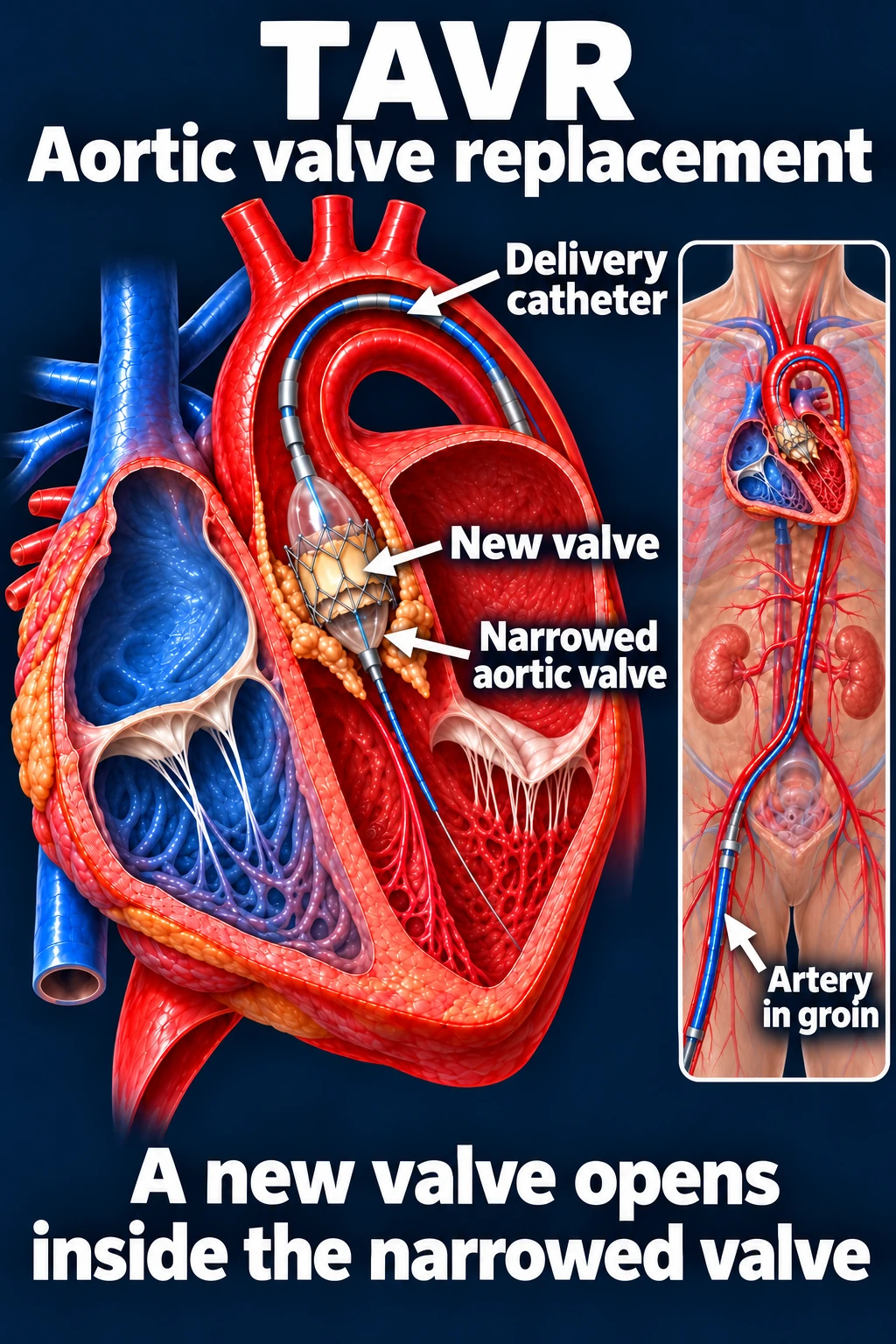
TAVR · Replace the aortic valve through a catheter
For selected aortic valve disease, a catheter-delivered valve can expand within the native valve. Access is often through a femoral artery.
Illustrative transfemoral TAVR. Access, anatomy, and the overall treatment strategy require valve-team planning.Open full-size image →
TAVR versus surgery depends on anatomy, age/lifetime planning, other surgical needs, and patient goals. Less invasive access does not make it the right choice for every patient. Current guidance also supports earlier intervention consideration in selected asymptomatic severe disease.[3]
Transcatheter repair and other options
Mitral TEER approximates portions of the leaflets to reduce regurgitation. It can benefit selected high-risk primary MR patients or selected secondary MR patients who remain symptomatic despite optimized HF treatment.
Tricuspid transcatheter therapies include repair and replacement for selected patients with severe regurgitation. Anatomy, RV function, pulmonary pressures, clinical condition, and expected benefit determine candidacy.[1], [3], [6]
After repair or replacement
Confirm the prosthesis/procedure, follow-up imaging plan, and treating valve team.
Reconcile antithrombotic therapy; coordinate changes and planned interruptions.
Assess new dyspnea, edema, syncope, fever, or clinical decline promptly.
After TAVR, new conduction abnormalities or syncope may need rhythm/device evaluation.
Encourage regular dental care. Antibiotic prophylaxis is reasonable for qualifying invasive dental procedures in selected high-risk patients, including those with prosthetic valves, prosthetic valve-repair material, or prior endocarditis. A murmur alone is not an indication.[5]
Clinical takeaway: Identify the lesion, refer before irreversible consequences develop, and coordinate lifelong care after intervention.